What factors affect how much venom India’s most dangerous snakes produce?

Jim Crocker
4th November, 2025

What factors affect how much venom India’s most dangerous snakes produce?

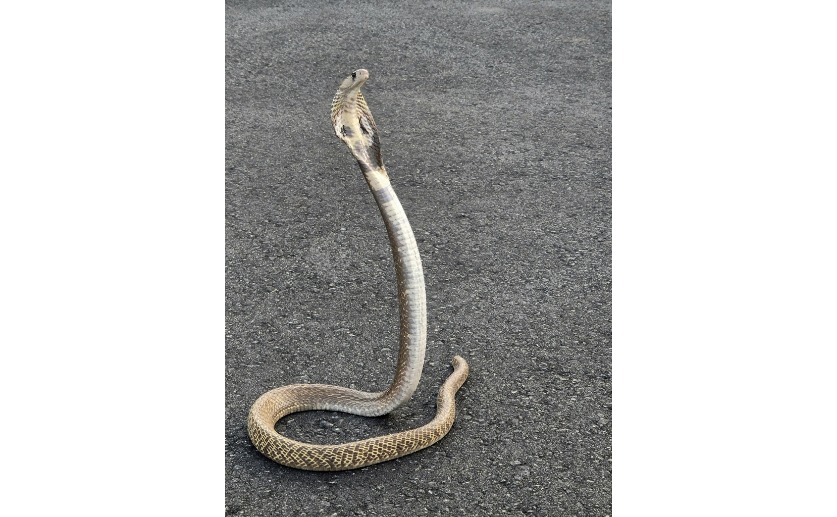
Indian Cobra (Naja naja), one of the four venomous snake species covered in the study.

Photographer: Siya ul haque / CC BY (Source)

Key Findings

  • This Indian study analyzed venom yields from over 330 wild snakes – the “big four” species – across diverse regions
  • Adult snakes consistently produced significantly more venom than juveniles, highlighting life stage as a key factor
  • Indian cobra and Russell’s viper generally injected the highest average venom amounts, while common krait and saw-scaled viper produced less
Snakebite is a significant public health issue, particularly in India, which has historically been considered a global hotspot for these incidents[2]. Accurate data on the frequency and severity of snakebites have been challenging to obtain, with earlier estimates of annual mortality ranging dramatically, from 1,300 to 50,000 deaths[2]. This wide range stemmed from difficulties in reporting, as many bites occur in rural areas with limited access to medical facilities. A national mortality survey conducted in the early 2000s refined these estimates, suggesting around 45,900 snakebite deaths occur annually in India[2], highlighting the scale of the problem. Understanding the venom produced by snakes is critical for developing effective treatments. Snake venom isn't a single substance, but a complex mixture of toxins[3][4]. The composition and potency of this venom can vary considerably, even within the same species, making it difficult to create universally effective antivenoms. Recent advances in ‘omics’ technologies – genomics, transcriptomics, and proteomics – collectively known as ‘venomics’ – have allowed researchers to comprehensively characterize venom compositions and understand the molecular basis of this variation[3]. A recent study by researchers at the Indian Institute of Science & Fundacao de Medicina Tropical[1] addressed a critical gap in our knowledge: the documentation of venom yields in the clinically most important snakes of India – commonly known as the “big four”: Naja naja (Indian cobra), Daboia russelii (Russell’s viper), Bungarus caeruleus (common krait), and Echis carinatus (saw-scaled viper). Despite their significance in causing snakebites, detailed information on how much venom these snakes produce was lacking. The study involved analyzing venom yields from 338 snake specimens collected from diverse regions and environments across India. Researchers systematically examined variations in venom production based on gender, geographic location, and the snake’s life stage (juvenile, subadult, or adult). They also measured the dry weight of each snake to investigate the relationship between body size and venom yield. The findings revealed substantial differences in venom production, both between species and within them. Naja naja and Daboia russelii consistently produced the highest average venom yields, meaning they generally inject more venom per bite, while Bungarus caeruleus and Echis carinatus produced considerably less. Interestingly, geographic variation in venom yield was only significant for Bungarus caeruleus, suggesting environmental factors play a more prominent role in venom production for this species. The study found no correlation between venom yield and gender, but a clear relationship with life stage: adult snakes produced significantly more venom than younger snakes. The researchers also compared venom yields from snakes in the wild versus those in captivity, finding no substantial differences. This suggests that keeping snakes in captivity doesn’t significantly alter their venom production capabilities. This study builds upon earlier research that highlighted the importance of considering physiological and environmental factors in understanding venom evolution[5]. The finding that venom potency is prey-specific[5] underscores the complexity of venom and the need to understand the ecological context of snakebites. The study's documentation of venom yield, combined with toxicity data, provides a more nuanced understanding of the envenomation strategies employed by each of the “big four” snakes. This information is crucial for improving antivenom production, ensuring that antivenoms are tailored to the specific venom compositions encountered in different regions and from snakes at different life stages. It also has implications for clinical management, allowing healthcare professionals to better assess the severity of bites and administer appropriate treatment.

WildlifeAnimal ScienceEvolution

References

Main Study

1) Hiss and tell: What influences venom yields of India’s big four snakes?

Published 3rd November, 2025

https://doi.org/10.1371/journal.pntd.0013676


Related Studies

2) Snakebite mortality in India: a nationally representative mortality survey.

https://doi.org/10.1371/journal.pntd.0001018


3) Ecological venomics: How genomics, transcriptomics and proteomics can shed new light on the ecology and evolution of venom.

https://doi.org/10.1016/j.jprot.2015.09.015


4) Causes and Consequences of Snake Venom Variation.

https://doi.org/10.1016/j.tips.2020.05.006


5) Snake venom potency and yield are associated with prey-evolution, predator metabolism and habitat structure.

https://doi.org/10.1111/ele.13216


Related Articles

An unhandled error has occurred. Reload 🗙