
Extraordinary Siblings: Understanding Unique Relationships
Jenn Hoskins
29th March, 2025


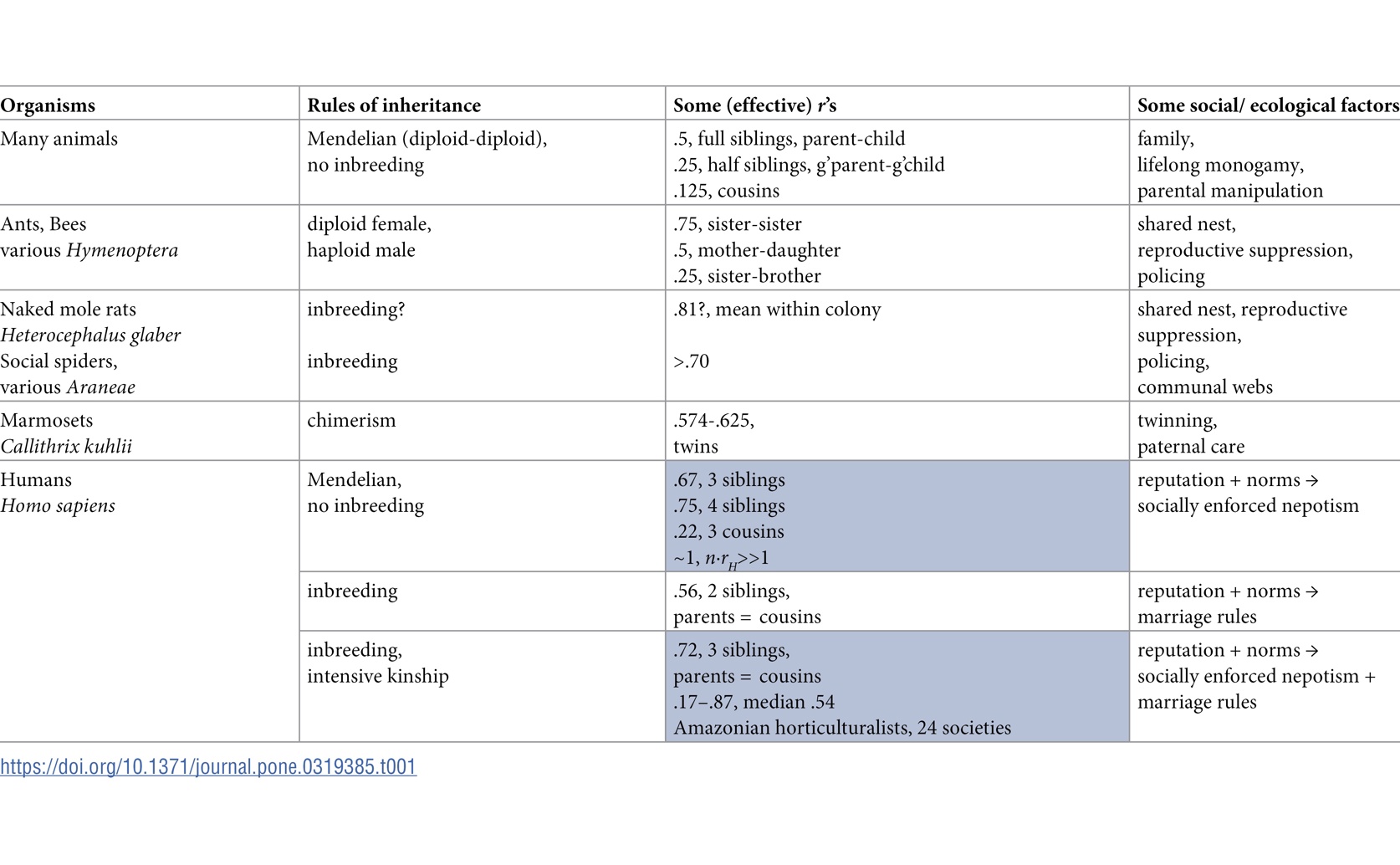
Coefficients of relatedness, Hamiltonian and effective.
Key Findings
- A University of Utah study found that in societies like lowland South America, social norms greatly enhance cooperative behaviors among siblings beyond just genetic ties
- Using the "Brothers Karamazov Game" model, researchers showed that enforced social rules can make siblings more willing to help each other, strengthening family support networks
- The study suggests that cultural practices and social structures play a key role in fostering human cooperation, extending altruistic behavior to broader social groups
WildlifeAnimal ScienceEvolution
References
Main Study
1) Extraordinary siblings: Mole rats, marmosets, and Radcliffe-Brown
Published 28th March, 2025
https://doi.org/10.1371/journal.pone.0319385
Related Studies
2) Socially Enforced Nepotism: How Norms and Reputation Can Amplify Kin Altruism.
3) Large-scale cooperation driven by reputation, not fear of divine punishment.
4) Genetic and cultural kinship among the Lamaleran whale hunters.
Related Articles
 21st March, 2025 | Jenn Hoskins