Harmalacidine shows promise against common respiratory infections

Greg Howard
5th November, 2025

Harmalacidine shows promise against common respiratory infections

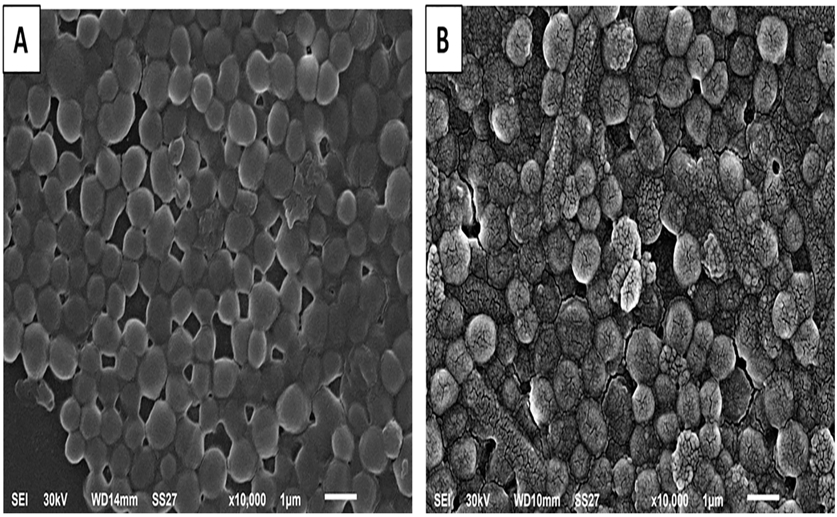
Scanning electron micrograph of a biofilm forming S. aureus isolate A) before and B) after treatment with harmalacidine hydrochloride.

Image adapted from: Alossaimi et al. / CC BY (Source)

Key Findings

  • Researchers in Egypt investigated compounds from a plant source for activity against H1N1 influenza virus and Staphylococcus aureus bacteria, common causes of respiratory infections
  • Harmalacidine hydrochloride showed the most promise, inhibiting H1N1 virus replication and preventing S. aureus growth in lab tests
  • Harmalacidine hydrochloride disrupts bacterial cell membranes and interferes with biofilm formation, potentially reducing infection severity by targeting bacterial communication
Respiratory infections continue to pose a significant threat to global health, demanding the development of new treatments. A recent study conducted by researchers at Prince Sattam Bin Abdulaziz University, Mansoura University, Tanta University, Kafrelsheikh University, and University of Coimbra[1] investigated the potential of three compounds – harmine, harmaline, and harmalacidine hydrochloride – to combat both the H1N1 influenza virus and Staphylococcus aureus, two common culprits in respiratory illnesses. The study focused on in vitro testing, meaning experiments were conducted in a laboratory setting using cells and microorganisms rather than living organisms. Researchers first examined the compounds’ ability to prevent the H1N1 virus from replicating. Of the three, harmalacidine hydrochloride showed the most promise, inhibiting viral activity at a concentration of 68.2 µg/mL. Harmine and harmaline did not demonstrate significant antiviral effects at concentrations that weren’t harmful to cells. The team then assessed the compounds’ antibacterial properties against Staphylococcus aureus. Again, harmalacidine hydrochloride proved most effective, preventing bacterial growth at concentrations ranging from 16 to 128 µg/mL. This initial success prompted further investigation into how harmalacidine hydrochloride was impacting the bacteria. The researchers discovered that the compound disrupted the integrity of the bacterial cell membrane, making it more permeable – essentially, more leaky. Scanning electron microscopy revealed visible damage to the bacteria’s structure after exposure to harmalacidine hydrochloride. Importantly, the compound also interfered with biofilm formation. Biofilms are communities of bacteria encased in a protective matrix, making them notoriously difficult to eradicate with traditional antibiotics. Harmalacidine hydrochloride reduced the expression of genes associated with biofilm development. To understand the mechanism behind this antibacterial activity, researchers used a technique called molecular docking. This simulates how molecules fit together, allowing them to predict how harmalacidinium ion (the charged form of harmalacidine hydrochloride) interacts with bacterial proteins. Results indicated a strong binding affinity between the compound and AgrA, a key protein involved in quorum sensing. Quorum sensing is a communication system bacteria use to coordinate their behavior, including the production of virulence factors – substances that contribute to disease. By blocking AgrA, harmalacidine hydrochloride appears to disrupt this communication, reducing the bacteria’s ability to cause infection. The molecular docking also revealed a strong affinity between harmalacidinium ion and two proteins of the H1N1 virus: neuraminidase and polymerase basic protein 2 (PB2). These proteins are crucial for viral replication, suggesting a potential mechanism for the observed antiviral activity. These findings build upon previous research highlighting the importance of addressing bacterial co-infections in respiratory illnesses.[2][3][4] Studies have shown that bacterial infections are present in a significant proportion of patients hospitalized with influenza, substantially increasing the risk of death – around a 3.4-fold increase, according to a meta-analysis of nearly 50,000 patients[4]. Streptococcus pneumoniae and Staphylococcus aureus are consistently identified as the most common bacterial pathogens involved in these secondary infections[4]. The study adds to this understanding by identifying a single compound with activity against both H1N1 and S. aureus, potentially offering a broader therapeutic approach. Furthermore, the focus on disrupting bacterial virulence, rather than simply killing bacteria, is noteworthy. The increasing prevalence of antibiotic resistance[3] necessitates exploring alternative strategies, and targeting quorum sensing represents a promising avenue. While these in vitro results are encouraging, the researchers emphasize the need for further studies. Experimental enzyme assays are required to confirm the interactions observed through molecular docking. Crucially, in vivo studies – experiments conducted in living organisms – are necessary to validate the antiviral and antibacterial mechanisms and assess the safety and efficacy of harmalacidine hydrochloride as a potential therapeutic agent. The study[5] highlights the importance of early antiviral treatment in influenza, and any new treatment would need to be tested for its ability to reduce morbidity and mortality when administered early in the course of infection.

MedicineGeneticsBiochem

References

Main Study

1) Antibacterial and antiviral potential of harmalacidine hydrochloride, a β-carboline alkaloid, against respiratory tract pathogens: Staphylococcus aureus and H1N1 influenza virus

Published 4th November, 2025

https://doi.org/10.1371/journal.pone.0335014


Related Studies

2) A Narrative Review of Influenza: A Seasonal and Pandemic Disease.

Journal: Iranian journal of medical sciences, Issue: Vol 42, Issue 1, Jan 2017


3) Secondary Bacterial Infections Associated with Influenza Pandemics.

https://doi.org/10.3389/fmicb.2017.01041


4) Determinants of poor clinical outcome in patients with influenza pneumonia: A systematic review and meta-analysis.

https://doi.org/10.1016/j.ijid.2023.04.003


5) The potential application of probiotics for the prevention and treatment of COVID-19.

https://doi.org/10.1186/s43042-022-00252-6


Related Articles

An unhandled error has occurred. Reload 🗙