Gene Mutation in a Key Regulator Causes Antibiotic Resistance via Efflux Pumps

Greg Howard
2nd June, 2025

Gene Mutation in a Key Regulator Causes Antibiotic Resistance via Efflux Pumps

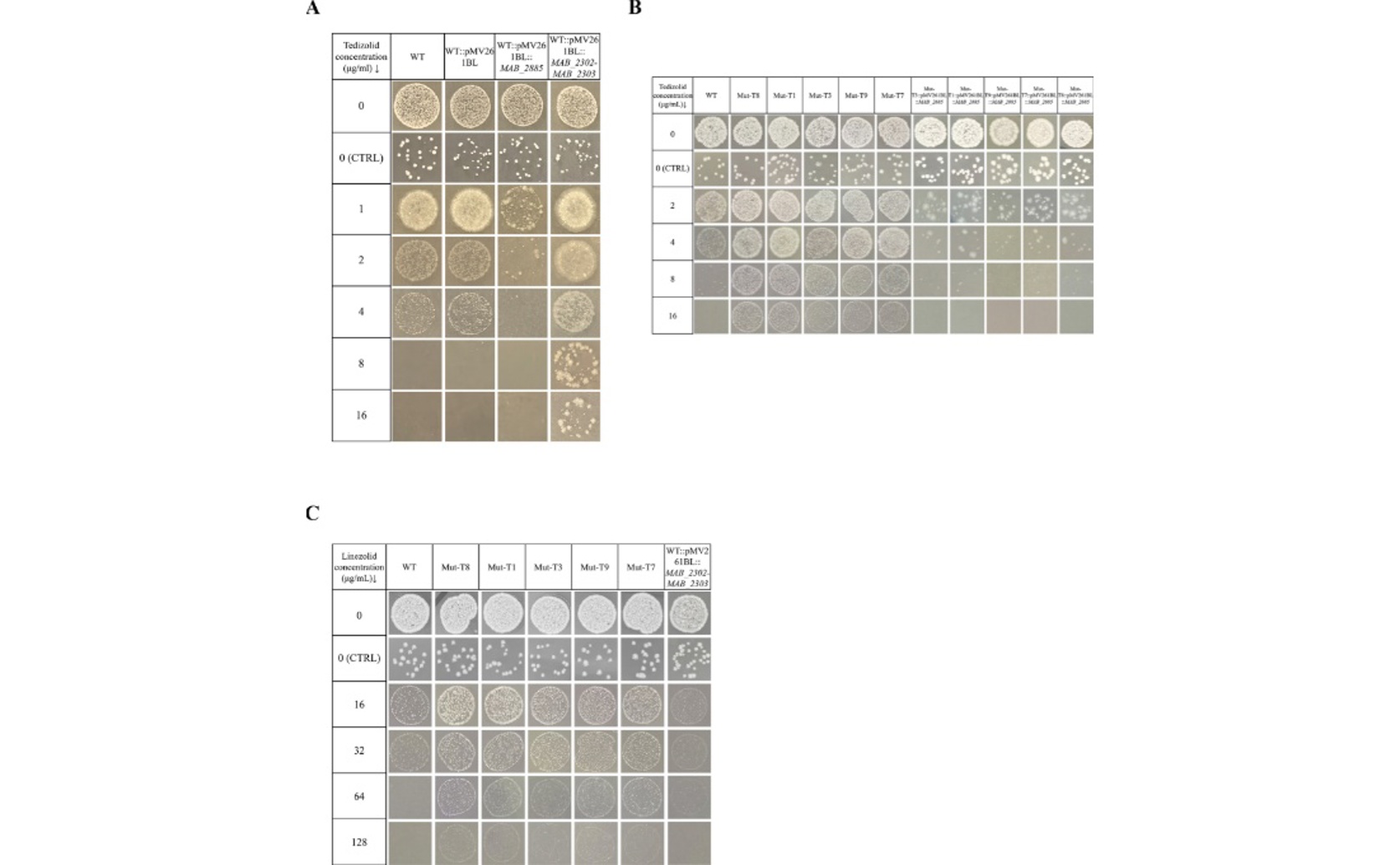
Susceptibility assays in Mycobacterium abscessus reveal that overexpression of the MAB_2302-MAB_2303 efflux pump confers resistance to tedizolid (a) and linezolid (c), while the MAB_2885 regulator mitigates this resistance, as demonstrated by restored sensitivity following its overexpression (a) or complementation in resistant mutants (b).

Image adapted from: Zhang et al. / CC BY (Source)

Key Findings

  • Researchers from Shanghai and New Jersey studied M. abscessus infections that threaten patients with chronic lung diseases like cystic fibrosis
  • They discovered that mutations in a key regulatory gene disable control over a pump that expels antibiotics, leading to greater drug resistance
  • Restoring the normal gene function in experiments reversed resistance, suggesting a possible target for improved testing and treatment
Mycobacterium abscessus (MAB) is an important pathogen known for its resistance to multiple antibiotics, posing a serious health risk especially to patients with cystic fibrosis. This risk is further compounded by the organism’s ability to withstand standard treatments. A recent study by researchers from Fudan University, Shanghai Sci-Tech Inno Center for Infection & Immunity, and New Jersey Medical School ([1]) has shed new light on the mechanisms behind the resistance of MAB to tedizolid (TZD), a drug from the oxazolidinone class. TZD is often used as an alternative treatment for patients who cannot tolerate first-line drugs or whose bacterial isolates have already become resistant. The study focused on identifying genetic mutations that confer resistance to TZD and another related drug, linezolid (LZD). When pathogens like MAB develop resistance, they are able to survive despite the host’s treatment regimen. Previous research had highlighted how MAB’s intrinsic resistance comes partly from its complex cell envelope and various mechanisms that neutralize drugs or expel them from the cell ([2]). The current study builds on this knowledge by exploring mutations in genes that affect TZD resistance. Researchers isolated 23 TZD-resistant mutants of MAB by exposing the bacteria to the drug until resistant populations emerged. They then performed whole-genome sequencing (WGS) on these mutants to identify genetic differences when compared with non-resistant strains. Two genes stood out. The first, MAB_2885, encodes a protein believed to function as a TetR transcriptional regulator—a type of protein that can turn the expression of other genes on or off. The second, MAB_2303, codes for a protein that is part of a larger family known as mycobacterial membrane protein large (MmpL). MmpL proteins are often involved in transporting various substances across the bacterial cell membrane. The researchers found frequent mutations in MAB_2885 among the resistant mutants. Subsequent drug susceptibility testing confirmed that changes in MAB_2885 not only contributed to resistance against TZD but also against LZD. This finding was significant because for many years, acquired resistance in MAB had been primarily linked to mutations in genes coding for drug targets. The discovery that mutations in a regulatory gene could also lead to multidrug resistance expands the understanding of how resistance can emerge in this challenging pathogen. To further explore the regulatory role of MAB_2885, the team used RNA sequencing (RNA-seq) analysis. RNA-seq is a technique that examines the levels at which different genes are active. By reintroducing the normal, or wild-type, version of MAB_2885 into the resistant mutants, they observed a decrease in the expression of a neighboring gene pair, MAB_2302-MAB_2303. This result indicated that the wild-type version of MAB_2885 normally acts to suppress these genes. In addition, the team used an electrophoretic mobility shift assay (EMSA) to verify that the MAB_2885 protein directly binds to DNA near the MAB_2302-MAB_2303 genes. EMSA is a technique used to study protein-DNA interactions; it can reveal whether a protein binds to a particular region of DNA. The assay confirmed that under normal circumstances, MAB_2885 binds to its target sequence upstream of the efflux pump genes, suggesting a direct regulatory relationship. A closer look at one specific mutation in MAB_2885 (a change from tryptophan to arginine at position 91, designated W91R) revealed that this mutation impaired the DNA-binding activity of the protein. In practical terms, this means that when MAB_2885 is mutated, it loses much of its ability to suppress the activity of the MAB_2302-MAB_2303 genes. Without proper regulation, these genes are expressed at higher levels, leading to the overproduction of an efflux pump. An efflux pump is a mechanism used by bacteria to actively transport antibiotics out of the cell, reducing the drugs’ effectiveness. The role of the MAB_2302-MAB_2303 gene pair as a direct efflux pump for TZD was confirmed with liquid chromatography-tandem mass spectrometry (LC-MS/MS), a method that allows scientists to quantify and characterize molecules within a sample. The results clearly demonstrated that when the efflux pump was overproduced, the bacteria were more capable of expelling TZD, leading to increased resistance. Beyond the experiments in MAB strains isolated from patients, the researchers also observed a similar trend when overexpressing the wild-type MAB_2885 gene in different MAB subspecies, specifically MAB subsp. bolletii and MAB subsp. massiliense. In these cases, higher levels of MAB_2885 led to reduced expression of the efflux pump genes and increased susceptibility to TZD. This finding suggests that the regulatory mechanism identified is conserved across different strains of MAB, making it a potentially valuable target for broader therapeutic interventions. The interplay between genetic regulation and drug resistance observed in this study helps to explain why some strains of MAB are so difficult to treat. While previous research has looked at barriers like the complex cell envelope and drug-neutralizing enzymes ([2]), the current findings from provide clear evidence that regulatory mutations play a direct role. Specifically, by compromising the function of MAB_2885 through mutation, the bacteria effectively lift the suppression on an efflux pump system that actively removes TZD from the cell. By identifying a specific mutation (W91R) in MAB_2885 that disrupts its normal function, the study points to a potential biomarker for detecting TZD and LZD resistance. Clinicians might in the future monitor for such mutations as part of routine diagnostic testing in order to choose the most effective treatment approach for patients. It also opens the door to the development of adjunctive therapies, possibly aimed at restoring the regulatory function or inhibiting the efflux pump, thereby resensitizing the bacteria to drugs like TZD. Overall, this study exemplifies how detailed genetic and biochemical examinations can illuminate the sophisticated methods employed by MAB to evade treatment. In doing so, it reinforces earlier case studies that outlined the physical and enzymatic barriers to treatment ([2]) while adding an important layer of understanding regarding the role of genetic regulation in antibiotic resistance.

MedicineGeneticsBiochem

References

Main Study

1) Mutations in the transcriptional regulator MAB_2885 confer tedizolid and linezolid resistance through the MmpS-MmpL efflux pumps MAB_2302-MAB_2303 in Mycobacterium abscessus

Published 30th May, 2025

https://doi.org/10.1371/journal.ppat.1013190


Related Studies

2) Mycobacterium abscessus: a new antibiotic nightmare.

https://doi.org/10.1093/jac/dkr578


Related Articles

An unhandled error has occurred. Reload 🗙