Energy Molecules Boost Resilience in High-Risk Glaucoma

Jim Crocker
26th April, 2025

Energy Molecules Boost Resilience in High-Risk Glaucoma

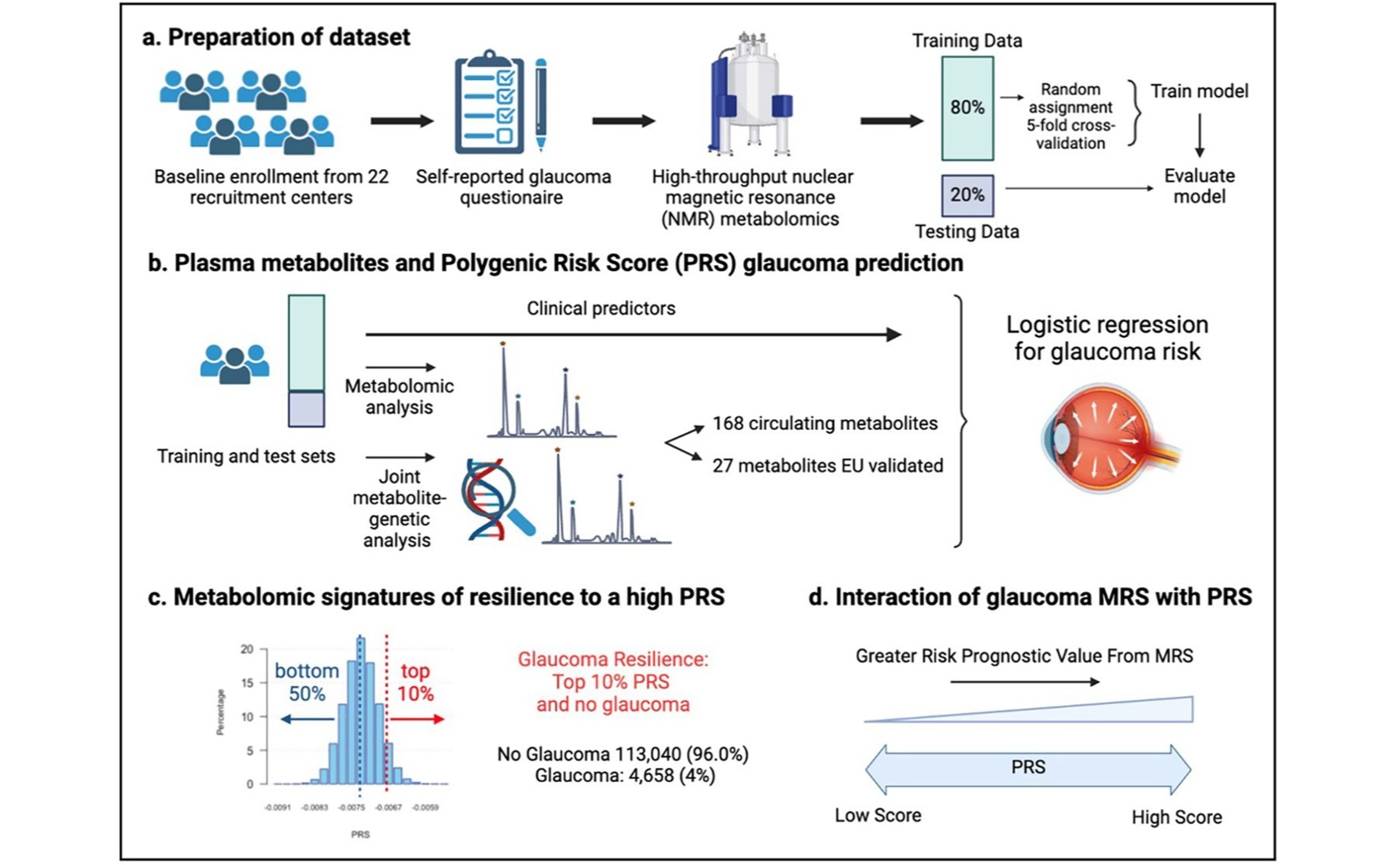
This study analyzed metabolomic and genetic data from 117,698 individuals to determine if metabolites enhance glaucoma risk prediction (a, b) and to identify a metabolic signature of resilience in people with a high genetic predisposition for the disease (c, d).

Image adapted from: Li et al. / CC BY (Source)

Key Findings

  • Researchers at Icahn School combined genetic scores with blood metabolite profiles to better predict glaucoma risk
  • Higher levels of lactate, pyruvate, and citrate in the blood were linked to lower glaucoma risk in genetically high-risk individuals
  • Feeding mice with pyruvate reduced eye pressure and protected optic nerves, suggesting potential treatments for glaucoma
Glaucoma, a leading cause of irreversible vision loss, affects millions worldwide. Early detection and personalized treatment are crucial for preventing optic nerve damage and preserving vision. Recent advancements in genetics and metabolomics offer promising avenues for improving glaucoma risk prediction and understanding protective factors. A study conducted by researchers at the Icahn School of Medicine at Mount Sinai[1] explores how combining genetic risk scores with plasma metabolite profiles can enhance glaucoma prediction and identify metabolic signatures associated with resilience against the disease. Genetic factors play a significant role in glaucoma risk. Previous research has demonstrated that polygenic risk scores (PRS), which aggregate the effects of numerous genetic variants, can effectively stratify individuals based on their likelihood of developing glaucoma[2]. However, not all individuals with high PRS go on to develop the disease, suggesting that other factors, such as metabolic processes, may influence disease progression and resilience. In the study, the researchers analyzed data from 4,658 glaucoma patients and 113,040 control participants from the UK Biobank. They aimed to determine whether plasma metabolites could improve glaucoma prediction beyond genetic risk factors and to identify metabolic signatures that might protect high-risk individuals from developing glaucoma. Using ultra-high resolution nuclear magnetic resonance (NMR) spectroscopy, they measured 168 metabolites in plasma samples. Metabolomics, the comprehensive study of small molecules in biological systems, provides insights into the biochemical activities within cells and tissues. Previous studies have highlighted the importance of altered lipid metabolism in glaucoma[3], but the current research seeks to expand this understanding by integrating metabolomic data with genetic risk scores. The researchers employed logistic regression models to assess the predictive value of metabolites alongside PRS. While metabolites alone provided a modest prediction ability (Area Under the Curve = 0.579), their inclusion slightly improved the accuracy of PRS-based models (p=0.004). More importantly, the study identified a specific metabolomic signature associated with resilience in individuals with high genetic risk for glaucoma. This signature included elevated levels of glycolysis-related metabolites: lactate[4], pyruvate, and citrate[5]. Glycolysis is the metabolic pathway that breaks down glucose to produce energy, while the tricarboxylic acid (TCA) cycle, also known as the Krebs cycle, further processes these products to generate ATP, the cell's primary energy currency[5]. Lactate, traditionally viewed as a byproduct of anaerobic metabolism, is now recognized for its roles in energy production, gluconeogenesis, and cellular signaling[4]. The study found that higher levels of lactate, pyruvate, and citrate were linked to a reduced prevalence of glaucoma among individuals in the top PRS decile. This suggests that enhanced glycolytic and TCA cycle activity may confer protective effects against glaucoma. To validate these findings, the researchers conducted experiments using a mouse model of glaucoma. They administered dietary pyruvate to mice genetically predisposed to elevated intraocular pressure, a major risk factor for glaucoma. The results were promising: dietary pyruvate significantly reduced both intraocular pressure (p=0.002) and optic nerve damage (p<0.0003). These findings indicate that pyruvate-related metabolism plays a protective role in glaucoma, supporting the metabolomic signature identified in human subjects. The integration of genetic and metabolomic data provides a more comprehensive understanding of glaucoma risk and resilience. By identifying individuals with high genetic risk who also possess protective metabolic profiles, healthcare providers can tailor preventive strategies more effectively. Moreover, the discovery of metabolites like pyruvate as potential therapeutic agents opens new avenues for treatment. This study builds on previous research that has elucidated the dynamic nature of metabolic pathways in disease states. For instance, the flexibility of the TCA cycle and its ability to adapt to different cellular needs[5], along with the multifaceted roles of lactate in energy regulation[4], underscore the complexity of metabolic influences on glaucoma. Additionally, earlier metabolomic analyses have highlighted altered lipid metabolism in glaucoma patients[3], which the current study complements by focusing on energy-related metabolites. Furthermore, the use of a polygenic risk score aligns with findings from genetic studies that emphasize the polygenic nature of glaucoma[2]. By combining genetic and metabolic data, the study offers a more nuanced approach to risk assessment and highlights the interplay between genetics and metabolism in disease manifestation. In conclusion, the research from the Icahn School of Medicine at Mount Sinai demonstrates that incorporating plasma metabolite profiles with genetic risk scores can enhance glaucoma prediction and uncover metabolic factors that confer resilience against the disease. Elevated levels of glycolysis-related metabolites, particularly lactate and pyruvate, emerge as potential protective agents, offering new targets for therapeutic intervention. This integrative approach paves the way for personalized medicine in glaucoma care, enabling earlier and more effective interventions for those at highest risk.

MedicineGeneticsBiochem

References

Main Study

1) Pyruvate and related energetic metabolites modulate resilience against high genetic risk for glaucoma

Published 24th April, 2025

https://doi.org/10.7554/eLife.105576


Related Studies

2) Multitrait analysis of glaucoma identifies new risk loci and enables polygenic prediction of disease susceptibility and progression.

https://doi.org/10.1038/s41588-019-0556-y


3) Metabolome-Wide Association Study of Primary Open Angle Glaucoma.

https://doi.org/10.1167/iovs.15-16702


4) Lactate as a fulcrum of metabolism.

https://doi.org/10.1016/j.redox.2020.101454


5) Regulation and function of the mammalian tricarboxylic acid cycle.

https://doi.org/10.1016/j.jbc.2022.102838


Related Articles

An unhandled error has occurred. Reload 🗙