
How plant defenses can disable fungal infection pathways
Greg Howard
1st November, 2025


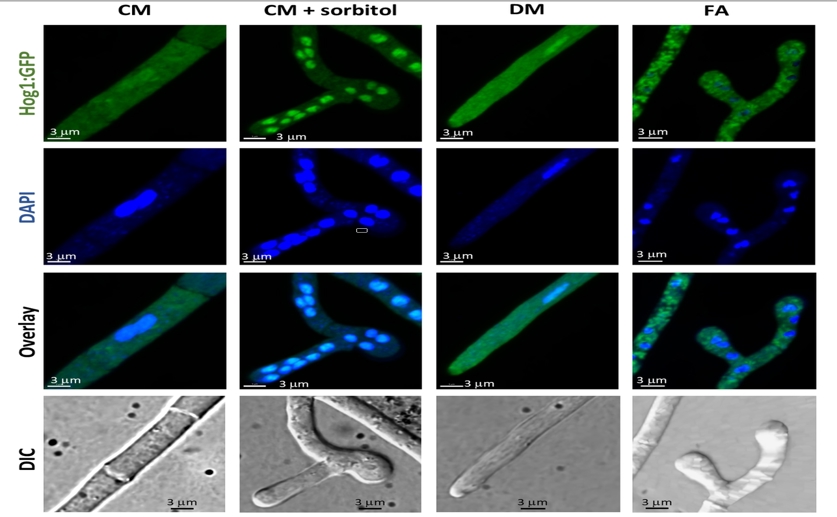
In response to a plant defense chemical (ferulic acid), a fungal stress protein (green) is sequestered into cytoplasmic clumps, preventing it from entering the nucleus (blue) as it normally would under osmotic stress.
Key Findings
- In the maize pathogen Cochliobolus heterostrophus, a defense compound called ferulic acid causes a key signaling protein, Hog1, to move from the cell nucleus to cytoplasmic spots
- These cytoplasmic spots contain RNA and proteins involved in RNA processing and mitochondrial function, suggesting Hog1 is being actively relocated and sequestered
- Ferulic acid suppresses the typical Hog1 response to osmotic stress, preventing its movement to the nucleus and hindering the fungus’s ability to respond to multiple stressors simultaneously
References
Main Study
1) Cytoplasmic sequestering of a fungal stress-activated MAPK in response to a host plant phenolic acid
Published 30th October, 2025
https://doi.org/10.1371/journal.ppat.1013620
Related Studies
2) Hog1: 20 years of discovery and impact.
3) Stress contingent changes in Hog1 pathway architecture and regulation in Candida albicans.
4) Plant phenolic acids induce programmed cell death of a fungal pathogen: MAPK signaling and survival of Cochliobolus heterostrophus.
5) Fungal adaptation to plant defences through convergent assembly of metabolic modules.
Related Articles
 6th March, 2025 | Greg Howard