
How Fungal-Fighting Peptides Reduce Cell Communication via Vesicles
Jim Crocker
23rd September, 2025


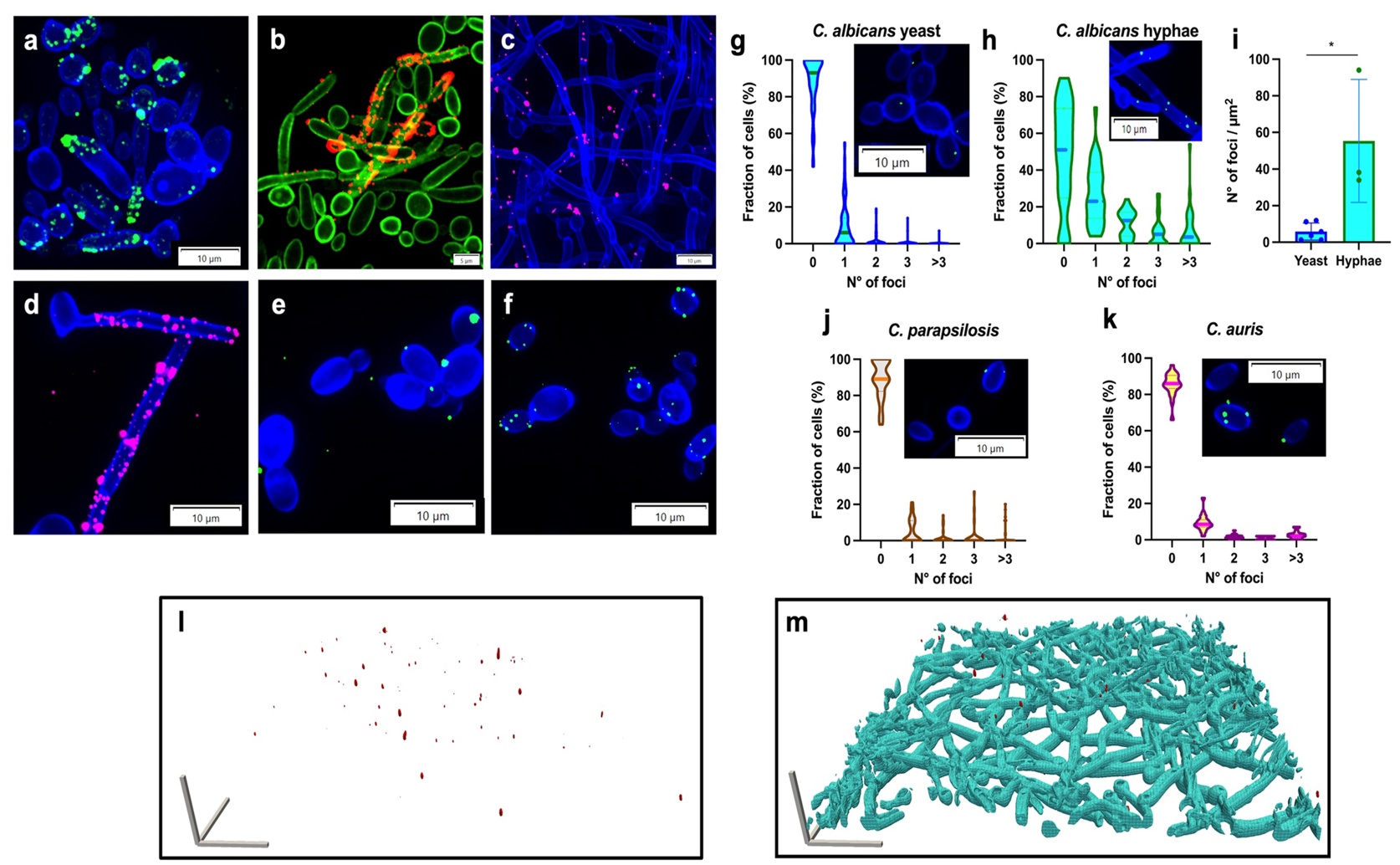
Fluorescence microscopy demonstrates that the EntV68 protein and a derived 12-amino acid peptide bind to the cell surfaces of C. albicans (a–d), C. parapsilosis (e), and C. auris (f) in distinct focal patterns (g–k) and penetrate throughout fungal biofilms (l–m).
Key Findings
- Researchers at multiple universities studied Candida albicans infections, a growing healthcare concern, focusing on reducing fungal virulence rather than killing the fungus
- A peptide called EntV weakens Candida’s ability to cause infection by disrupting the release of extracellular vesicles (EVs), which are crucial for biofilm formation
- EntV binds to the fungal cell surface and interferes with the ESCRT pathway, a cellular system involved in EV production, ultimately reducing the amount of EVs secreted by Candida albicans
References
Main Study
1) The antifungal mechanism of EntV-derived peptides is associated with a reduction in extracellular vesicle release
Published 22nd September, 2025
https://doi.org/10.1371/journal.ppat.1013519
Related Studies
2) Candida sp. Infections in Patients with Diabetes Mellitus.
3) Drug-Resistant Fungi: An Emerging Challenge Threatening Our Limited Antifungal Armamentarium.
4) Fungi-derived lipopeptide antibiotics developed since 2000.
Related Articles
 5th November, 2024 | Greg Howard