
Carabrone slows growth of a wheat pathogen by disrupting energy production
Greg Howard
6th October, 2025


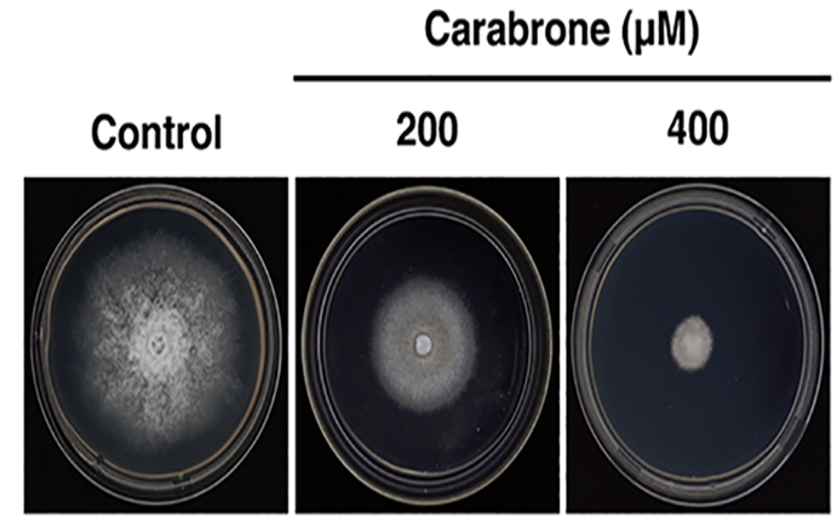
Growth of a fungal colony (white) is dramatically halted with increasing concentrations of carabrone from left (Control) to right (400 µM).
Key Findings
- In wheat, carabrone, a plant compound, disrupts energy production within fungal cells, impacting disease development
- Carabrone reduces the ratio of vital energy molecules NAD⁺ to NADH in the fungus, hindering its metabolism
- The study identifies mitochondrial respiratory chain complex I as carabrone’s direct target, inhibiting its function and ultimately killing the fungus
References
Main Study
1) Carabrone inhibits Gaeumannomyces tritici growth by targeting mitochondrial complex I and destabilizing NAD⁺/NADH homeostasis
Published 3rd October, 2025
https://doi.org/10.1371/journal.ppat.1013567
Related Studies
2) The global burden of pathogens and pests on major food crops.
3) Threats to global food security from emerging fungal and oomycete crop pathogens.
4) Fungicide Resistance: Progress in Understanding Mechanism, Monitoring, and Management.
Related Articles
 26th January, 2025 | Jim Crocker