Garlic and Gum Arabic nanoparticles protect stored grains from beetle damage

Jenn Hoskins
25th October, 2025

Garlic and Gum Arabic nanoparticles protect stored grains from beetle damage

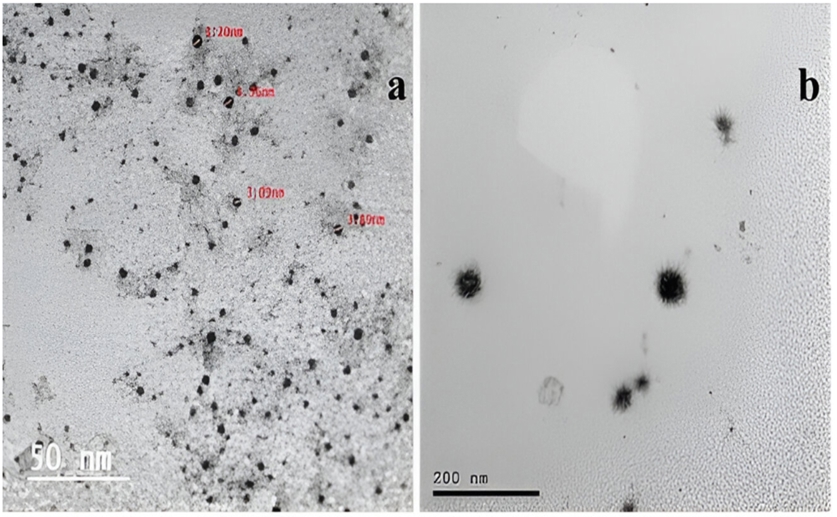
A microscopic view reveals how empty gum arabic nanoparticles (left) are filled with garlic essential oil (right) to create a more potent and persistent eco-friendly pesticide.

Image adapted from: Elbehery et al. / CC BY (Source)

Key Findings

  • Researchers in Egypt studied how to better use garlic oil to protect stored cowpea seeds from the cowpea weevil, a common pest
  • Encapsulating garlic oil within Gum Arabic nanoparticles significantly increased its toxicity to weevils, requiring a lower amount for the same effect
  • The nano-encapsulation process not only boosted the oil’s immediate killing power but also extended its protective effect for over 30 days, disrupting the weevil’s reproductive cycle
Stored product pests cause significant economic losses globally, impacting food security and trade. Traditional control methods often rely on synthetic insecticides, raising concerns about environmental damage and the development of pest resistance. Consequently, researchers are actively seeking alternative, eco-friendly solutions. Essential oils, derived from plants, offer a promising avenue, exhibiting insecticidal properties and generally lower toxicity to mammals[2]. A recent study conducted by researchers at the National Research Centre; Genetic Engineering and Biotechnology Research Institute; Al-Azhar University; Ross Lifescience Limited[1] investigated the potential of nano-encapsulation to enhance the effectiveness of garlic essential oil (GO) against the cowpea weevil, Callosobruchus maculatus, a major pest of stored beans. The core idea was to improve the delivery and persistence of GO, maximizing its impact while minimizing the amount needed. The study focused on utilizing Gum Arabic nanoparticles (GA NPs) to encapsulate the GO. GA NPs are tiny particles made from Gum Arabic, a natural gum derived from acacia trees. These nanoparticles act as protective carriers for the GO, shielding it from degradation and improving its dispersion. The process involved freeze-drying, a technique where the mixture is frozen and then water is removed through sublimation, resulting in a stable nanoparticle formulation. The chemical composition of the garlic essential oil used in the study was analyzed using Gas Chromatography-Mass Spectrometry, identifying diallyl trisulfide, allyl methyl trisulfide, and diallyl disulfide as the primary active compounds. Importantly, the produced GA NPs were confirmed to be stable and uniform, with an average particle size of approximately 15.10 nanometers – incredibly small, allowing for better penetration and distribution. The encapsulation efficiency, meaning the percentage of GO successfully trapped within the nanoparticles, was high, at 84.74%. Bioassays were conducted to assess the toxicity of both the GO alone and the GO-GA NPs against adult C. maculatus. The weevils were exposed to varying concentrations of the oils, and the lethal concentration (LC) – the amount needed to kill 50% of the population (LC50) – was determined. The results demonstrated that the GO-GA NPs were significantly more toxic than the GO alone, with an LC50 of 1.14 µL/L air compared to 2.08 µL/L air for GO. This suggests that the nano-encapsulation process enhances the oils insecticidal properties. Further investigation revealed a notable “post-effect” of the GO-GA NPs. Exposure to a sublethal concentration (LC40) significantly reduced the number of eggs laid by the weevils and drastically decreased the percentage of adult emergence, from 61.33% with GO to just 15.23% with GO-GA NPs. This highlights the potential of the nanoparticles to disrupt the pest’s reproductive cycle. Previous research has shown that essential oils from clove and cinnamon can also effectively control C. maculatus, with similar insecticidal activity to synthetic pyrethroids[3]. These studies also indicated that exposing female weevils to sublethal doses of these oils impaired their oviposition (egg-laying)[3]. The current research builds upon these findings by demonstrating that nano-encapsulation of garlic oil can further enhance this effect, potentially by improving the delivery of the active compounds to the female weevils. A key advantage of the GO-GA NP formulation is its increased persistence. The nanoparticles exhibited a continued toxic effect for over 30 days, significantly longer than the 12.79 days observed with the non-encapsulated GO. This extended activity, measured as a PT50 (time to kill 50% of the population), is crucial for long-term grain protection. Studies on garlic powder have also demonstrated antimicrobial activity against enteric bacteria[4], suggesting a broader potential for protecting stored products from both insect pests and microbial contamination. Furthermore, research identifying specific compounds within garlic oil, such as diallyl disulfide, as particularly toxic to Tenebrio molitor larvae, pupae and adults[5], reinforces the importance of GO as a potent insecticidal agent, and the need to optimize its delivery. The study confirms that nano-formulation enhances the efficiency of garlic oil as an eco-friendly grain protectant to control Callosobruchus maculatus adults. The findings suggest that GA NPs can improve the stability, delivery, and persistence of GO, making it a more effective and sustainable alternative to synthetic insecticides.

HerbsAgricultureBiochem

References

Main Study

1) Gum Arabic containing Allium sativum L. essential oil-based nanoparticles as biofumigant grain protectant against Callosobruchus maculatus F.

Published 24th October, 2025

https://doi.org/10.1371/journal.pone.0334926


Related Studies

2) Insecticidal Activity of 25 Essential Oils on the Stored Product Pest, Sitophilus granarius.

https://doi.org/10.3390/foods10020200


3) Toxicity to, oviposition and population growth impairments of Callosobruchus maculatus exposed to clove and cinnamon essential oils.

https://doi.org/10.1371/journal.pone.0207618


4) Antimicrobial properties of garlic oil against human enteric bacteria: evaluation of methodologies and comparisons with garlic oil sulfides and garlic powder.

Journal: Applied and environmental microbiology, Issue: Vol 67, Issue 1, Jan 2001


5) Insecticidal activity of garlic essential oil and their constituents against the mealworm beetle, Tenebrio molitor Linnaeus (Coleoptera: Tenebrionidae).

https://doi.org/10.1038/srep46406


Related Articles

An unhandled error has occurred. Reload 🗙