Saffron varieties differ in chemical makeup and effects on cells

Jenn Hoskins
13th October, 2025

Saffron varieties differ in chemical makeup and effects on cells

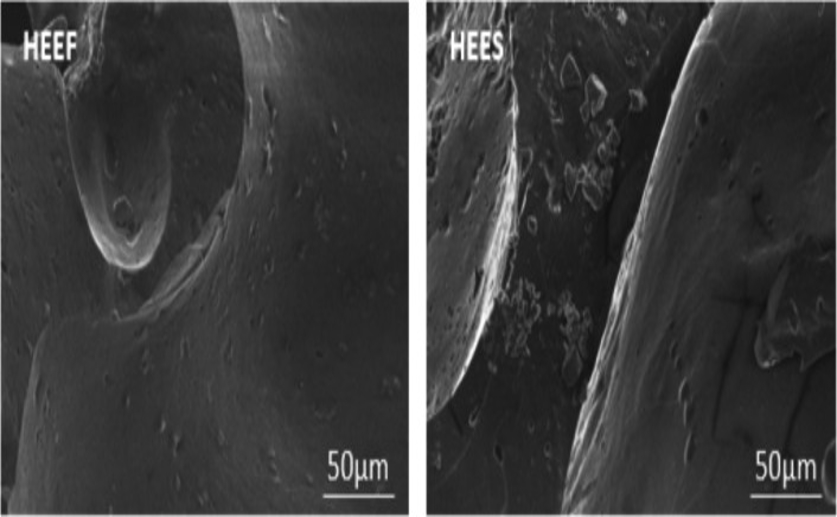
SEM image of Crocus sativus L. corms extract. HEEF: hydroethanolic extract of fresh corms. HEES: hydroethanolic extract of stocked corms

Image adapted from: Baddaoui et al. / CC BY (Source)

Key Findings

  • Saffron corms, particularly those from Morocco, contain valuable compounds that researchers are investigating for health benefits
  • Storing saffron corms increases levels of beneficial compounds like phenols, flavonoids, and carotenoids, enhancing their antioxidant activity
  • While stored corms show stronger antioxidant effects, both fresh and stored corms exhibit genotoxic and cytotoxic effects at higher concentrations, requiring careful dosage consideration
Saffron, derived from Crocus sativus L., is renowned as a high-value spice, but its cultivation generates a significant amount of corm waste – the underground storage organ of the plant. These corms are often too small for direct use in spice production, leading to their disposal. Researchers at Université Mohammed Premier (UMP)[1] have investigated whether these discarded corms possess valuable health-promoting properties, specifically focusing on the differences between freshly harvested and stored corms. The aim was to determine if storage affects the chemical composition and biological activity of the corms, potentially turning a waste product into a useful resource. The core issue is that while saffron’s petals have shown promise in combating obesity[2], the corms have remained largely unexplored. Saffron itself is unique in its propagation method; it reproduces vegetatively through corms rather than via seeds due to its triploid nature, making the corm composition crucial to the plant’s life cycle and potentially its bioactive content[3]. This study builds on previous understanding of saffron’s metabolic changes during corm development, specifically the shift from dormancy to active growth and the associated accumulation of sugars and metabolites involved in essential pathways[3]. The UMP study compared fresh (HEEF) and stored (HEES) saffron corms, extracting compounds using ethanol. They then meticulously quantified several key bioactive molecules, including polyphenols, flavonoids, carotenoids, lycopene, anthocyanins, saponins, and sugars. The results revealed that storage significantly altered the corm’s chemical profile. Stored corms contained considerably higher concentrations of phenolic compounds, flavonoids, and carotenoids than fresh corms. Crucially, the increased concentration of these compounds translated to enhanced antioxidant activity. Antioxidants protect cells from damage caused by unstable molecules called free radicals, and the stored corms demonstrated a much stronger ability to neutralize these radicals in laboratory tests (DPPH, FRAP, and β-carotene assays). This finding is consistent with the broader understanding of saffron’s inherent antioxidant properties, which contribute to its traditional use as a food preservative[4]. However, the study didn’t stop at antioxidant effects. It also investigated potential negative effects – genotoxicity (DNA damage) and cytotoxicity (cell toxicity). Using the comet assay, a method for detecting DNA strand breaks[5], both extracts were found to be genotoxic at a concentration of 50 µg/mL. Furthermore, both extracts exhibited cytotoxicity towards normal colon cells (CCD18) at approximately 300 µg/mL. These findings present a complex picture. While stored saffron corms are a richer source of beneficial compounds with greater antioxidant capacity, they also exhibit potentially harmful effects at higher concentrations. This highlights the importance of dosage and careful evaluation before considering their use in therapeutic applications. The study underscores the need for further research to identify safe and effective dosages and to understand the mechanisms underlying the observed genotoxic and cytotoxic effects.

HerbsMedicineBiochem

References

Main Study

1) Comparative study between two types of Crocus sativus L. corms: chemical composition, antioxidant, genotoxic, and cytotoxic effects

Published 10th October, 2025

https://doi.org/10.1186/s40643-025-00889-2


Related Studies

2) Crocus sativus tepals extract suppresses subcutaneous adipose tissue hypertrophy and improves systemic insulin sensitivity in mice on high-fat diet.

https://doi.org/10.1002/biof.2043


3) Metabolic shift in sugars and amino acids regulates sprouting in Saffron corm.

https://doi.org/10.1038/s41598-017-10528-2


4) The Pharmacological Activities of Crocus sativus L.: A Review Based on the Mechanisms and Therapeutic Opportunities of its Phytoconstituents.

https://doi.org/10.1155/2022/8214821


5) Comet assay: a versatile but complex tool in genotoxicity testing.

https://doi.org/10.1093/toxres/tfaa093


Related Articles

An unhandled error has occurred. Reload 🗙