
Geologists find no trace of major river in Libya, challenging theories on Mediterranean deep water circulation
Jenn Hoskins
9th October, 2025


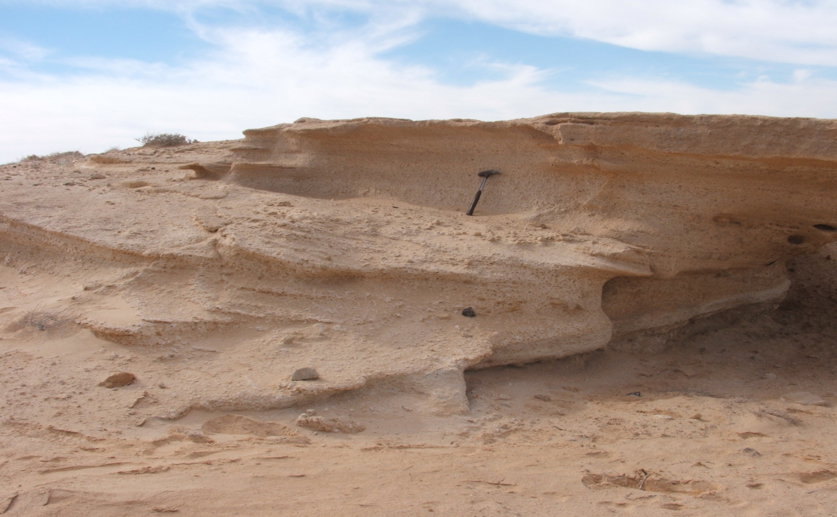
This ~200,000-year-old lake deposit in Tunisia provides evidence for the actual source of Saharan freshwater, solving the puzzle of a river that never reached the sea.
Key Findings
- This study, focused on Libya’s Gulf of Sirt, investigated ancient river systems potentially active during a wetter period (MIS 5, 130,000-71,000 years ago) linked to human migration
- Analysis of sediment and geological data revealed no major river system reached the Gulf of Sirt during MIS 5, suggesting limited direct freshwater flow to this area
- Evidence indicates water accumulated in the Chott El Jerid depression in Tunisia, supporting a potential route for water from the Irharhar river system and contributing to past habitable corridors
EnvironmentEcologyOceanography
References
Main Study
1) Where did the river go? Testing the hypothesis of rivers discharging into the Gulf of Sirt (East Mediterranean) during the late Pleistocene
Published 8th October, 2025
https://doi.org/10.1371/journal.pone.0331681
Related Studies
2) Were rivers flowing across the Sahara during the last interglacial? Implications for human migration through Africa.
3) Dynamics of green Sahara periods and their role in hominin evolution.
4) Sea level change through the last glacial cycle.
Journal: Science (New York, N.Y.), Issue: Vol 292, Issue 5517, Apr 2001
Related Articles
 30th September, 2025 | Jenn Hoskins