
Protein in mosquito antennae detects insecticide, triggering defense response
Greg Howard
8th October, 2025


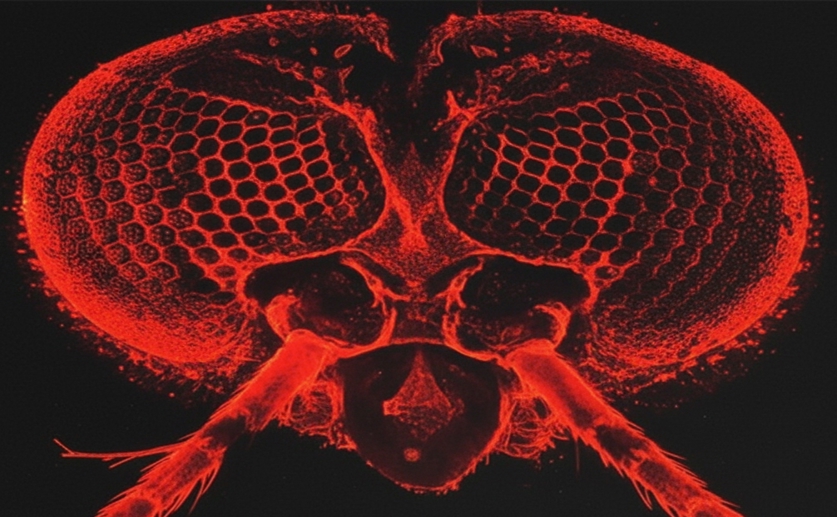
This magnified image, captured with a laser-scanning microscope, uses a glowing dye to reveal a surge of the AcSAP1 protein in a mosquito after insecticide exposure, visualizing its chemical alarm system in action.
Key Findings
- In India, research on Anopheles culicifacies mosquitoes revealed that Sensory Appendage Protein 1 (AcSAP1) is highly expressed during the night, coinciding with peak host-seeking activity
- Reducing AcSAP1 levels delayed mosquitoes’ attraction to hosts, indicating this protein plays a key role in finding blood meals
- Mosquitoes can detect the common insecticide deltamethrin, and exposure to it significantly increased AcSAP1 expression in olfactory tissues, legs, wings, and surprisingly, the eyes
References
Main Study
1) Sensory appendage protein triggers alarm to pyrethroid in Indian malarial vector Anopheles culicifacies
Published 7th October, 2025
https://doi.org/10.1371/journal.pone.0333483
Related Studies
2) Olfaction in Anopheles mosquitoes.
3) Olfaction, experience and neural mechanisms underlying mosquito host preference.
4) Soluble proteins of chemical communication: an overview across arthropods.
5) Odorant reception in insects: roles of receptors, binding proteins, and degrading enzymes.
Related Articles
 7th July, 2025 | Greg Howard