Genetic Links Between Vitamin D and Bone Health in German Landrace pigs

Jim Crocker
5th August, 2025

Genetic Links Between Vitamin D and Bone Health in German Landrace pigs

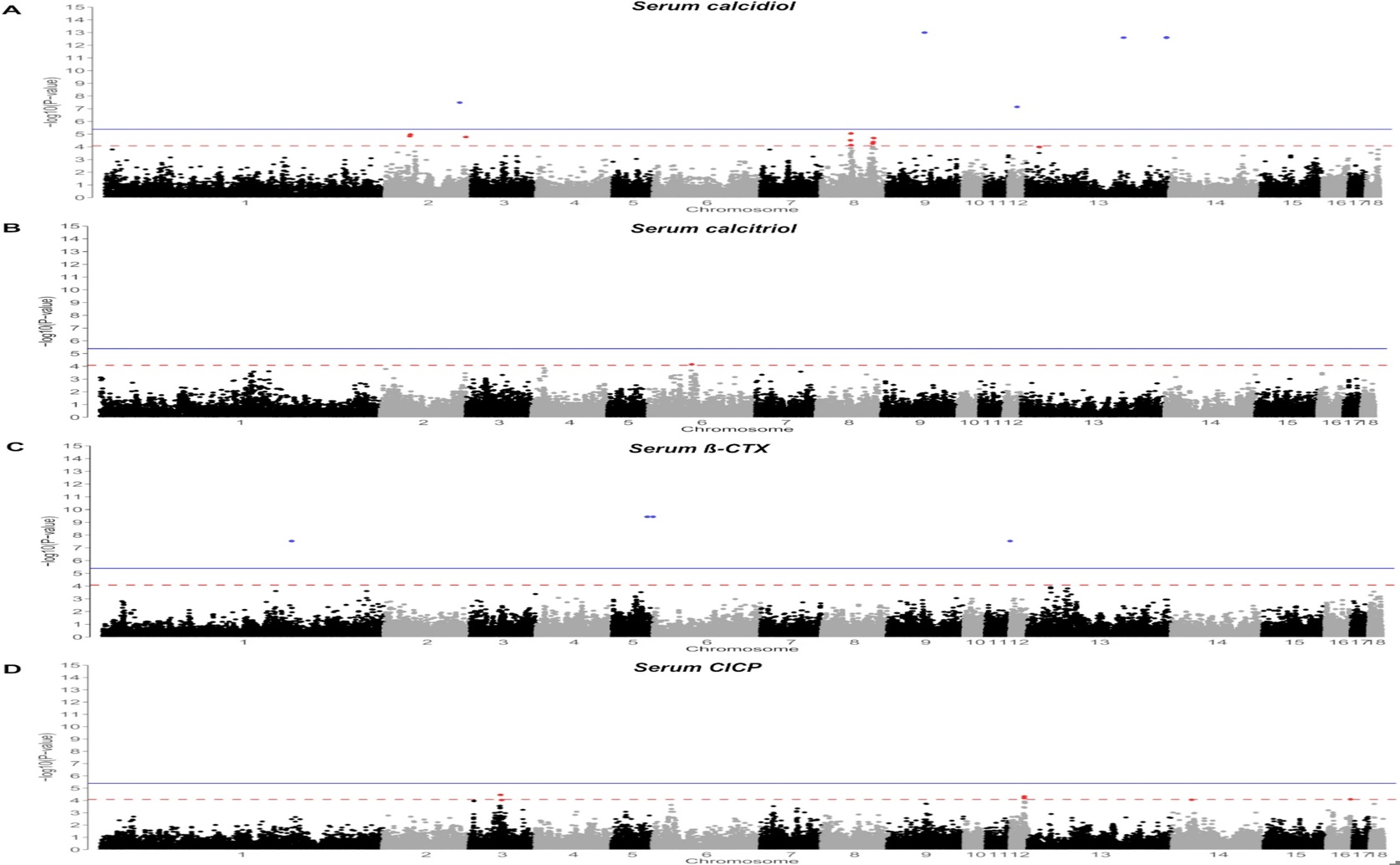
A genome-wide association study of German Landrace pigs identified specific genetic regions significantly associated with serum levels of the vitamin D metabolites calcidiol (A) and calcitriol (B), and the bone remodeling markers ß-CTX (C) and CICP (D).

Image adapted from: Paul et al. / CC BY (Source)

Key Findings

  • A study in German Landrace pigs found that genetics moderately influences bone health, identifying 17 regions and 23 genes, like PTH, linked to vitamin D and bone remodeling
  • This genetic understanding can help breeders select pigs for stronger bones and more efficient mineral use, improving animal welfare and promoting sustainable farming
Bone integrity is fundamental for the health and well-being of farm animals, particularly pigs. Strong bones are essential for their mobility, growth, and overall welfare, directly impacting sustainable livestock farming practices. Ensuring animals receive adequate minerals like phosphorus and calcium is crucial for bone development[2]. However, the body's management of these minerals, known as mineral homeostasis, is a complex process involving various biological systems and regulatory factors[3][4]. Phosphorus, for instance, plays a vital role in numerous bodily functions, from energy transfer to forming the structural components of bones[3][4]. Its balance is tightly controlled by the body, involving sensors that detect changes in its concentration and trigger responses to conserve or excrete it[3]. Key hormones and regulatory factors, such as the vitamin D system and parathyroid hormone (PTH), are known to be important in this long-term regulation[3][4]. For example, parathyroid hormone (PTH) is a crucial regulator of calcium and phosphorus levels in the blood, and its production is strictly controlled in the parathyroid glands, as shown in studies on pigs[5]. Similarly, calcitriol, the active form of vitamin D, works alongside PTH to maintain stable mineral levels in the blood[4]. Despite these sophisticated regulatory mechanisms, there is significant natural variation among individual animals in how efficiently they utilize minerals and develop strong bones. This variability makes it challenging for farmers and veterinarians to accurately assess bone health and optimize diets. To address this, recent research by the Research Institute for Farm Animal Biology (FBN)[1] aimed to uncover the genetic factors contributing to these differences in pigs. Their study focused on specific indicators in the blood serum that reflect bone metabolism and development. The study investigated the genetic determinants of four key serum markers in a population of 610 purebred German Landrace pigs. These markers included calcidiol (the storage form of vitamin D3) and calcitriol (the active form of vitamin D3), both essential for calcium and phosphorus absorption and bone mineralization. The study also looked at β-CTX (beta C-terminal telopeptide) and CICP (type I C-terminal collagen propeptide). β-CTX is a marker indicating the rate at which bone is being broken down, while CICP reflects the rate of new bone formation. Together, these markers provide a snapshot of bone remodeling, the continuous process where old bone tissue is removed and new bone tissue is formed. To identify the genetic influences, the researchers conducted a genome-wide association study (GWAS). This method involves scanning the entire genetic code (genome) of many individuals to find small variations, called single-nucleotide polymorphisms (SNPs), that are statistically linked to a particular trait. By comparing the genetic makeup of pigs with high or low levels of these bone markers, the scientists could pinpoint specific regions on the chromosomes that might contain genes influencing bone health. The findings from the FBN study revealed that the genetic contribution to the variation in these bone markers was moderate to low. This means that while genetics plays a role, environmental factors like diet and management also significantly influence a pig's bone health. Specifically, the heritability estimates were 0.14 for serum calcidiol, 0.12 for calcitriol, 0.15 for β-CTX, and 0.12 for CICP. A heritability of 0.15, for example, means that 15% of the variation in that trait within the population can be attributed to genetic differences. Crucially, the study identified 17 distinct genomic regions across different chromosomes that contained SNPs significantly associated with these four bone health indicators. Further analysis helped narrow down a list of 23 candidate genes that are likely involved in these processes. For instance, the genes PTH, GC, and ALB were found to be highly relevant for serum calcidiol levels. The identification of PTH (parathyroid hormone) as a candidate gene is particularly significant. As previous research has shown, PTH is a central hormone in maintaining mineral balance, and its expression and secretion are tightly regulated in the parathyroid glands of pigs in response to dietary phosphorus levels[3][4][5]. This new genetic finding from the FBN study adds a layer of understanding by showing that genetic variations in or near the PTH gene can influence vitamin D storage levels, further highlighting the intricate genetic and hormonal interplay in bone health. Other candidate genes identified include PDPN for serum calcitriol, BTG1, FASN, and FOXK2 for bone breakdown (β-CTX), and RETSAT, ATOH8, FGF11, and ALOX15 for bone formation (CICP). This research provides valuable insights that build upon earlier understandings of mineral metabolism. Previous studies established the critical role of phosphorus and calcium in pig health and the environment, emphasizing the need for precise dietary supply to avoid both deficiencies and excessive waste[2]. They also detailed the complex hormonal control of phosphorus homeostasis involving the vitamin D system and parathyroid hormone[3][4], and specifically in pigs, how dietary changes influence parathyroid gland function and PTH regulation[5]. The FBN study now bridges these physiological and nutritional understandings with a genetic perspective. By pinpointing specific genes that influence how pigs regulate their bone minerals and remodel their bones, it offers a new avenue for improving animal health. The implications of these findings are substantial for livestock farming. By understanding the genetic basis of bone health and mineral utilization efficiency, breeders can potentially develop innovative breeding criteria. This means they could select pigs with a genetic predisposition for stronger bones and more efficient use of dietary minerals, leading to healthier animals and potentially reducing the amount of phosphorus excreted in manure, which is a significant environmental concern[2]. While the exact improvement in mineral utilization efficiency still needs to be demonstrated empirically through further research, this genetic approach offers a proactive strategy to enhance animal welfare and contribute to more sustainable agricultural practices.

GeneticsBiochemAnimal Science

References

Main Study

1) Genome-wide association study of blood vitamin D metabolites and bone remodelling markers in pigs

Published 2nd August, 2025

https://doi.org/10.1186/s12864-025-11914-1


Related Studies

2) Effects of excessive or restricted phosphorus and calcium intake during early life on markers of bone architecture and composition in pigs.

https://doi.org/10.1111/jpn.13286


3) Novel mechanisms in the regulation of phosphorus homeostasis.

https://doi.org/10.1152/physiol.00034.2008


4) Role of phosphate sensing in bone and mineral metabolism.

https://doi.org/10.1038/s41574-018-0076-3


5) mRNA Profiles of Porcine Parathyroid Glands Following Variable Phosphorus Supplies throughout Fetal and Postnatal Life.

https://doi.org/10.3390/biomedicines9050454


Related Articles

An unhandled error has occurred. Reload 🗙