How Repeated Blood Draws Affect Relaxed Oyster Muscles

Jenn Hoskins
23rd September, 2025

How Repeated Blood Draws Affect Relaxed Oyster Muscles

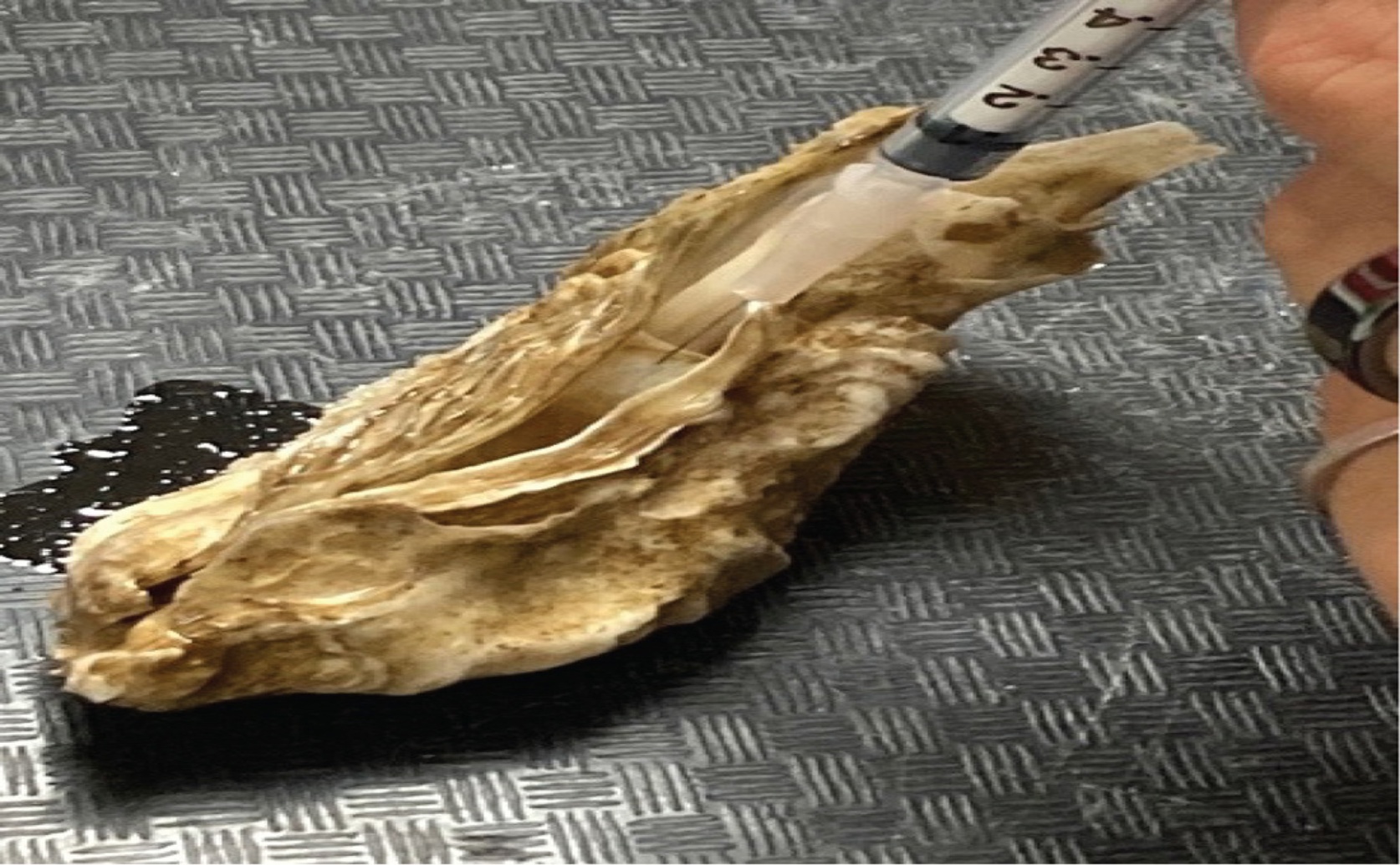
Hemolymph withdrawal from the adductor muscle of a relaxed Pacific oyster (Magallana gigas).

Image adapted from: Song et al. / CC0 1.0 (Source)

Key Findings

  • Researchers in Oregon and Sydney successfully collected repeated hemolymph samples from Pacific oysters in both lab and natural settings with relatively low mortality
  • Repeated sampling led to a small increase in mortality (10% lab, 22% natural) primarily after the final collection, suggesting cumulative stress may be a factor
  • Oysters in natural conditions showed a shift towards a male sex ratio with repeated sampling, potentially indicating physiological stress affecting gametogenesis
Pacific oysters (Magallana gigas) are economically and ecologically important bivalves, but studying their health is challenging. Traditional methods often require sacrificing the oysters to collect samples, limiting long-term investigations. Researchers at Oregon State University and the University of Sydney[1] have now investigated whether repeated, non-lethal sampling of oyster hemolymph – the oyster equivalent of blood – is a viable option for monitoring their physiological state without causing significant harm. The problem stems from the difficulty in understanding the complex factors influencing oyster health and mortality. Mass mortality events are a recurring issue in both farmed and wild oyster populations[2], and identifying the early warning signs of these events is crucial. Previous research has shown that changes in gene expression within the hemolymph can indicate an oyster’s impending death[2], but these studies relied on lethal sampling. The ability to collect hemolymph repeatedly from the same individuals would allow for a more detailed understanding of how oysters respond to changing environmental conditions and disease pressures. The study focused on five-year-old Pacific oysters, dividing them into two groups: those reared in a controlled laboratory environment and those living in a natural bay setting (Yaquina Bay, Oregon, USA). A key aspect of the study was the comparison of oysters from which hemolymph was extracted multiple times (sampled group) against a control group that underwent the same relaxation procedure but without hemolymph removal. The researchers aimed to determine if the sampling process itself had a detrimental effect on oyster survival. Hemolymph was collected using a magnesium sulphate relaxation technique, a method designed to minimize stress on the oysters. The sampling occurred during gonad maturation, a period of significant physiological activity. The results showed that repeated sampling did lead to some mortality, but the rates were relatively low – 10% in the laboratory group after four samplings and 22% in the natural group after seven samplings. Importantly, most deaths occurred after the final sampling event, suggesting the cumulative effect of repeated sampling may be a contributing factor. Interestingly, the study revealed a difference in sex ratios between the sampled and control groups in the natural setting. The repeatedly sampled group exhibited a male bias (58% male) compared to the control group (28% male). The reason for this shift is currently unknown and warrants further investigation, but it highlights the potential for sampling procedures to influence physiological parameters beyond simple survival rates. This study builds upon earlier work demonstrating the importance of the oyster microbiome – the community of bacteria, viruses, and other microorganisms living within the oyster – in overall health[3]. While this study didn’t directly examine the microbiome, the ability to repeatedly collect hemolymph samples opens the door for detailed investigations into how environmental changes and disease impact the microbial communities within the oyster’s hemolymph. Furthermore, the research complements investigations into the molecular mechanisms underlying oyster mortality[2][4], providing a means to track gene expression changes over time in response to stress. The findings of suggest that repeated hemolymph sampling is a feasible technique for long-term monitoring of oyster physiology, despite some associated mortality. This is a significant advancement, as it allows researchers to move beyond single-point-in-time assessments and gain a more comprehensive understanding of the factors driving oyster health and disease. This non-lethal approach enables more in-depth studies into the complex interactions between the oyster, its environment, and its microbiome, potentially leading to improved strategies for oyster aquaculture and conservation.

EcologyAnimal ScienceMarine Biology

References

Main Study

1) Effects of repeated hemolymph sampling from adductor muscles of relaxed Pacific oysters (Magallana gigas)

Published 22nd September, 2025

https://doi.org/10.1371/journal.pone.0333208


Related Studies

2) Mass mortality in Pacific oysters is associated with a specific gene expression signature.

https://doi.org/10.1111/j.1365-294X.2011.05152.x


3) Oyster hemolymph is a complex and dynamic ecosystem hosting bacteria, protists and viruses.

https://doi.org/10.1186/s42523-020-00032-w


4) Immune-suppression by OsHV-1 viral infection causes fatal bacteraemia in Pacific oysters.

https://doi.org/10.1038/s41467-018-06659-3


Related Articles

An unhandled error has occurred. Reload 🗙