How Dragon’s Blood Helps Heal Ulcerative Colitis Through Immune System Pathways

Jim Crocker
20th September, 2025

How Dragon’s Blood Helps Heal Ulcerative Colitis Through Immune System Pathways

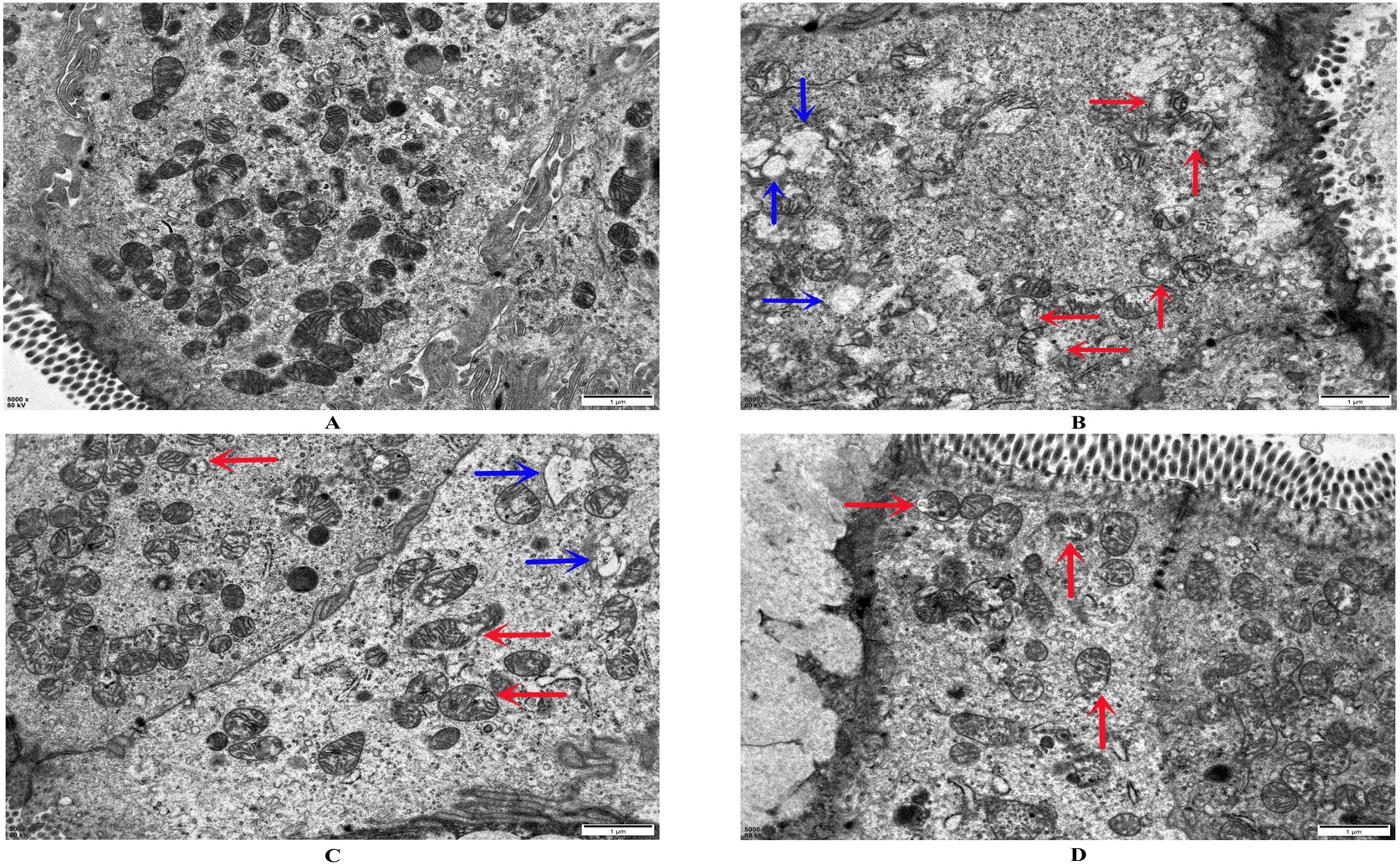
Transmission electron microscopy reveals that dragon’s blood treatment (C) significantly alleviates pyroptosis-induced ultrastructural damage, such as mitochondrial swelling and membrane blebbing, in the colonic mucosa of ulcerative colitis model mice (B) comparable to the inhibitor Z-VAD-FMK (D) relative to the intact control group (A).

Image adapted from: Cai et al. / CC BY (Source)

Key Findings

  • In a mouse model of UC, dragon’s blood (DB) reduced colon injury and inflammation, suggesting potential as a UC treatment
  • DB works by dampening the NF-κB/NLPR3/Caspase-1 pathway, a key driver of inflammation and cell death in UC
  • DB’s active compounds, including 6,4’-Dimethoxy-7-hydroxyisoflavone and Apigenin, directly interact with proteins involved in inflammation, offering a multi-target approach to UC management
Ulcerative colitis (UC) is a chronic inflammatory condition affecting the colon, characterised by inflammation and ulceration of the large intestine. The number of people affected by UC is increasing globally[2], and current treatments, while improving, don’t always provide complete relief, and can have significant side effects. Management focuses on reducing inflammation and achieving remission – a period with no symptoms – but for some, surgery to remove the colon remains necessary. Researchers are constantly seeking new and more effective therapies, often looking towards traditional medicines for potential solutions. A recent study conducted by researchers at Guangxi University of Chinese Medicine, in collaboration with First Affiliated Hospital of Guangxi University of Chinese Medicine and Noorda College of Osteopathic Medicine[1], investigated the potential of dragon’s blood (DB) as a treatment for UC. DB is a resin extracted from certain species of Daemonorops trees and has been used in traditional Chinese medicine for centuries. The aim of this research was to understand how DB might work at a molecular level to alleviate the symptoms of UC. The study began by identifying the active compounds within DB that are absorbed into the bloodstream. Using a technique called LC-MS (Liquid Chromatography-Mass Spectrometry), they found 255 compounds, with 6,4’-Dimethoxy-7-hydroxyisoflavone, 7-hydroxy-2-(4-methoxyphenyl) chromen-4-one, and Apigenin being particularly prominent. To understand how these compounds might interact with the body to treat UC, the researchers employed network pharmacology. This involves creating a complex map of potential interactions between the DB compounds and various proteins within the body. This network analysis pointed to several key molecular targets, including NLPR3, MAPK1, TP53, HIF1A, and PTGS2. These proteins are involved in different pathways related to inflammation, cell death, and the immune response. Further computational modelling, known as molecular docking, helped predict how strongly the DB compounds would bind to these target proteins. The results suggested a strong interaction, indicating a potential for DB to directly influence these pathways. Crucially, the study didn’t stop at computational predictions. The researchers then used a mouse model of UC, induced by administering 4% dextran sulfate sodium (DSS) – a common method to mimic the inflammation seen in UC. Mice treated with DB showed a significant reduction in colonic injury compared to untreated mice. This provided in vivo (within a living organism) evidence that DB could alleviate the symptoms of UC. The core finding of the study was the identification of the NF-κB/NLPR3/Caspase-1 pathway as central to DB’s therapeutic effects. NF-κB is a protein complex that controls the expression of genes involved in inflammation. NLPR3 is a protein that forms part of an inflammasome, a complex that triggers the release of inflammatory molecules. Caspase-1 is an enzyme that activates these inflammatory molecules, leading to a form of programmed cell death called pyroptosis. The researchers found that DB effectively dampened down this entire pathway. Interestingly, this finding aligns with and expands upon previous research. Studies have shown that Shaoyao decoction (SYD), another traditional Chinese medicine, also exerts protective effects against UC by inhibiting the NF-κB and P38 pathways[3]. Furthermore, canagliflozin, a drug used to treat diabetes, was found to reduce inflammation in UC by downregulating p38 MAPK and NF-κB[4]. The current study builds on these observations by pinpointing NLPR3 as a key player downstream of NF-κB, suggesting a more detailed mechanism of action for these therapies. The SYD study also highlights the importance of MKP1, an enzyme that regulates the MAPK cascade, and its role in the anti-inflammatory effects, something DB may also influence. The study also identified the role of PTGS2, a protein involved in the production of inflammatory molecules, and TP53 and HIF1A, proteins involved in cell survival and response to low oxygen levels, as important targets. This multi-component, multi-target approach is a key strength of DB, as it likely addresses multiple aspects of the complex inflammatory process that characterizes UC. By inhibiting the NF-κB/NLPR3/Caspase-1 pyroptosis pathway, DB appears to protect the integrity of the intestinal barrier and reduce inflammation. The researchers concluded that NLPR3 is a viable target for DB intervention in UC, opening up possibilities for the development of new and more targeted therapies.

MedicineHealthBiochem

References

Main Study

1) Molecular mechanisms of dragon’s blood in treating ulcerative colitis based on NF-κb/NLPR3/Caspase-1 pyroptosis signaling pathway

Published 19th September, 2025

https://doi.org/10.1371/journal.pone.0331570


Related Studies


3) Shaoyao decoction attenuates DSS-induced ulcerative colitis, macrophage and NLRP3 inflammasome activation through the MKP1/NF-κB pathway.

https://doi.org/10.1016/j.phymed.2021.153743


4) Canagliflozin ameliorates ulcerative colitis via regulation of TLR4/MAPK/NF-κB and Nrf2/PPAR-γ/SIRT1 signaling pathways.

https://doi.org/10.1016/j.ejphar.2023.176166


Related Articles

An unhandled error has occurred. Reload 🗙