Antibiotic-Resistant Bacteria Found in Skin Ulcers

Jenn Hoskins
28th May, 2025

Antibiotic-Resistant Bacteria Found in Skin Ulcers

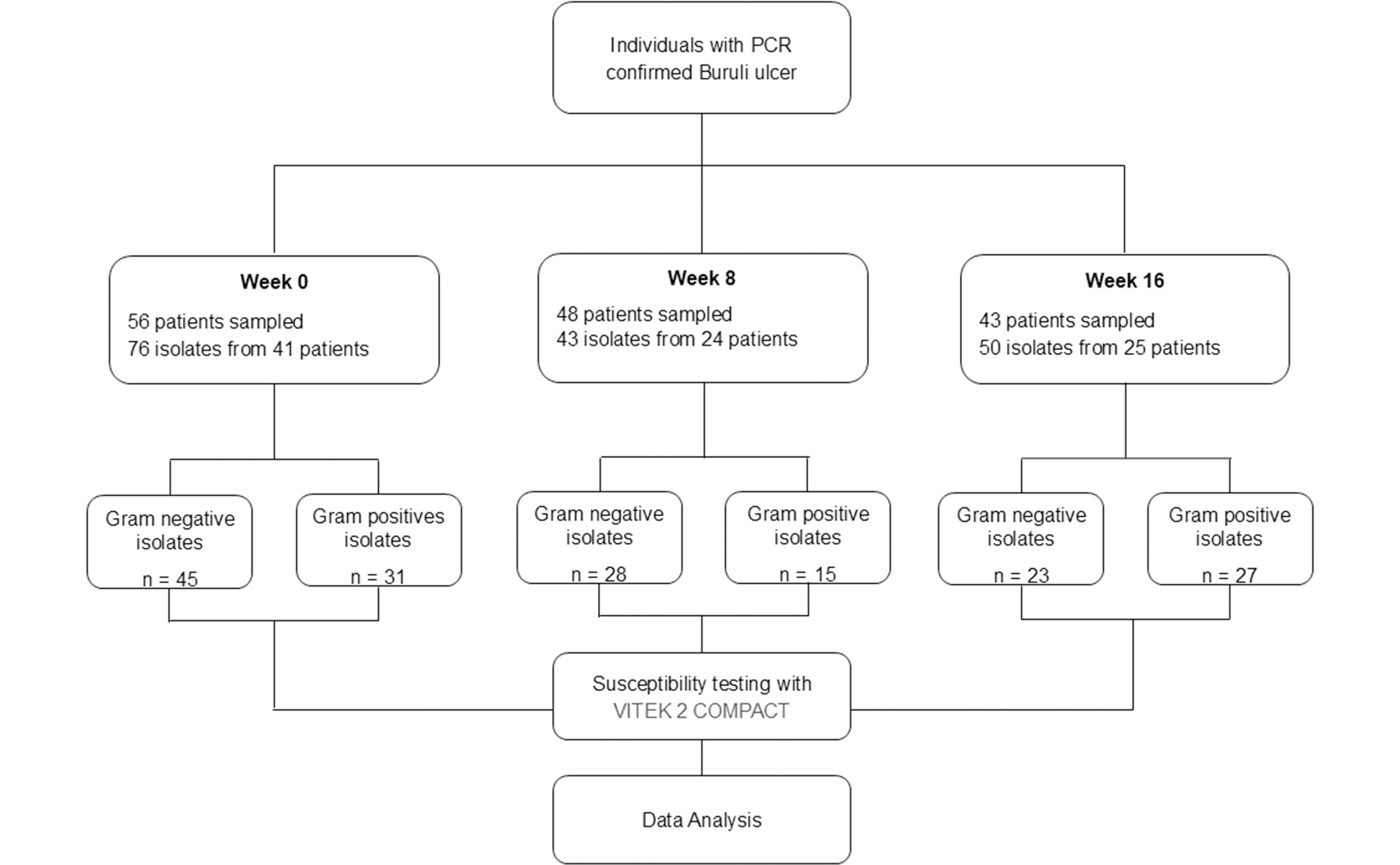
The longitudinal sampling workflow utilized at baseline, week 8, and week 16 allowed for the monitoring of bacterial persistence in unhealed Buruli ulcer lesions, facilitating the detection of multidrug-resistant pathogens emerging after the standard antibiotic treatment.

Image adapted from: Ackam et al. / CC BY (Source)

Key Findings

  • In Ghana, researchers found that bacteria in Buruli ulcer wounds were frequently resistant to standard antibiotics
  • While some resistant bacteria decreased after treatment, the number of tough-to-treat MRSA strains actually rose
  • These results emphasize the need for improved monitoring and customized antibiotic treatments to combat resistance
Antimicrobial resistance (AMR) poses a significant threat to global health, undermining the effectiveness of treatments for various infectious diseases[2]. This issue is particularly concerning in the context of neglected tropical diseases (NTDs), where the rising resistance to drugs complicates efforts to control and eliminate these conditions[3]. A recent study conducted by the Kumasi Centre for Collaborative Research in Tropical Medicine (KCCR) in Ghana sheds light on the prevalence of antimicrobial-resistant bacteria in Buruli ulcer (BU) lesions, highlighting the urgent need for enhanced surveillance and treatment strategies[1]. Buruli ulcer is a chronic debilitating skin and soft tissue infection caused by the bacterium Mycobacterium ulcerans. While antibiotics have been effective in treating BU, the presence of secondary bacterial infections within BU lesions can complicate patient outcomes. The study by KCCR aimed to understand the extent of antimicrobial resistance among these secondary bacteria, providing crucial insights into how resistance develops and spreads in BU patients. Between August 2021 and June 2024, researchers collected wound swabs from laboratory-confirmed BU patients across several hospitals in Ghana. These samples were analyzed to identify the types of bacteria present and to assess their resistance to commonly used antibiotics. The VITEK 2 compact system was employed to determine the antibiotic susceptibility of the isolates. Out of 166 bacterial isolates, eight different species were identified, with a slight majority being Gram-negative bacilli (56.9%) compared to Gram-positive cocci (43.1%). One of the alarming findings was that all bacterial isolates exhibited resistance to at least one antibiotic at the baseline. Specifically, 30% of the Gram-negative isolates produced Extended Spectrum Beta-Lactamases (ESBL), which are enzymes that confer resistance to a wide range of beta-lactam antibiotics, including penicillins and cephalosporins. Additionally, 50% of the Staphylococcus aureus isolates were identified as Methicillin-resistant Staphylococcus aureus (MRSA), a well-known multi-drug resistant pathogen. Over the course of the study, there was a notable shift in the resistance patterns. The prevalence of ESBL-producing Gram-negative bacteria declined to 0%, suggesting that BU-specific antibiotic treatment was effective in reducing these resistant strains. However, the proportion of MRSA increased from 50% to 60% after treatment, indicating that the antibiotics used may have selectively pressured the bacterial population, favoring the survival and proliferation of MRSA strains. These findings are particularly concerning when placed in the broader context of AMR. The earlier study highlighted by KCCR emphasized that the misuse and overuse of antibiotics in both healthcare and agricultural settings have significantly contributed to the rise of AMR[2]. Additionally, the systematic review on NTDs revealed that while some regions, particularly in Africa, have higher occurrences of resistant strains, there is a lack of comprehensive monitoring systems to track and manage AMR effectively[3]. The KCCR study reinforces these points by demonstrating the high prevalence of resistant bacteria in BU lesions and the dynamic nature of resistance in response to antibiotic treatment. The increase in MRSA prevalence post-treatment underscores the complexity of managing secondary infections in BU patients. MRSA is notorious for its resistance to multiple antibiotics, making infections difficult to treat and increasing the risk of severe outcomes. This trend highlights the need for tailored antibiotic strategies that consider the existing resistance patterns and the potential for resistance development during treatment. To address these challenges, the study by KCCR advocates for the development of integrated guidelines that can guide the surveillance and treatment of secondary bacterial infections in BU. Such guidelines would benefit from incorporating robust monitoring systems to detect resistance early and implementing strategies to mitigate its spread. This approach aligns with global recommendations to combat AMR, which emphasize the importance of surveillance, regulation of antibiotic use, and international collaboration[2][3]. Moreover, the findings from this study can inform public health policies in Ghana and similar regions where BU is prevalent. By understanding the specific resistance mechanisms at play, healthcare providers can make more informed decisions about antibiotic prescriptions, potentially reducing the reliance on drugs that are increasingly becoming ineffective. Additionally, the decline in ESBL-producing bacteria suggests that current BU treatments may still be effective against certain resistant strains, but the rise in MRSA indicates a need for vigilance and possibly the inclusion of alternative or additional antibiotics in treatment protocols. The collaborative efforts of institutions like KCCR are crucial in the fight against AMR. By conducting longitudinal studies that track resistance patterns over time, researchers can identify trends and emerging threats, enabling proactive measures to curb the spread of resistance. This proactive stance is essential to prevent the scenario where AMR leads to a postantibiotic era, where common infections could become untreatable and routine medical procedures could carry high risks of infection[2]. In conclusion, the study conducted by the Kumasi Centre for Collaborative Research in Tropical Medicine highlights the pressing issue of antimicrobial resistance in Buruli ulcer lesions. With a significant prevalence of resistant bacteria, including MDR, ESBL-positive, and MRSA pathogens, there is an urgent need for integrated surveillance and treatment guidelines. These efforts are vital to improving patient outcomes and safeguarding the effectiveness of antibiotics in treating infectious diseases amidst the growing threat of AMR[2][3].

MedicineHealthBiochem

References

Main Study

1) Antimicrobial resistant bacteria isolated from Buruli ulcer lesions in Ghana

Published 27th May, 2025

https://doi.org/10.1371/journal.pntd.0013140


Related Studies

2) Antimicrobial Resistance: A Growing Serious Threat for Global Public Health.

https://doi.org/10.3390/healthcare11131946


3) Emerging Resistance of Neglected Tropical Diseases: A Scoping Review of the Literature.

https://doi.org/10.3390/ijerph16111925


Related Articles

An unhandled error has occurred. Reload 🗙