A Gas Manages Cell Balance and Energy to Combat COVID-19

Greg Howard
20th May, 2025

A Gas Manages Cell Balance and Energy to Combat COVID-19

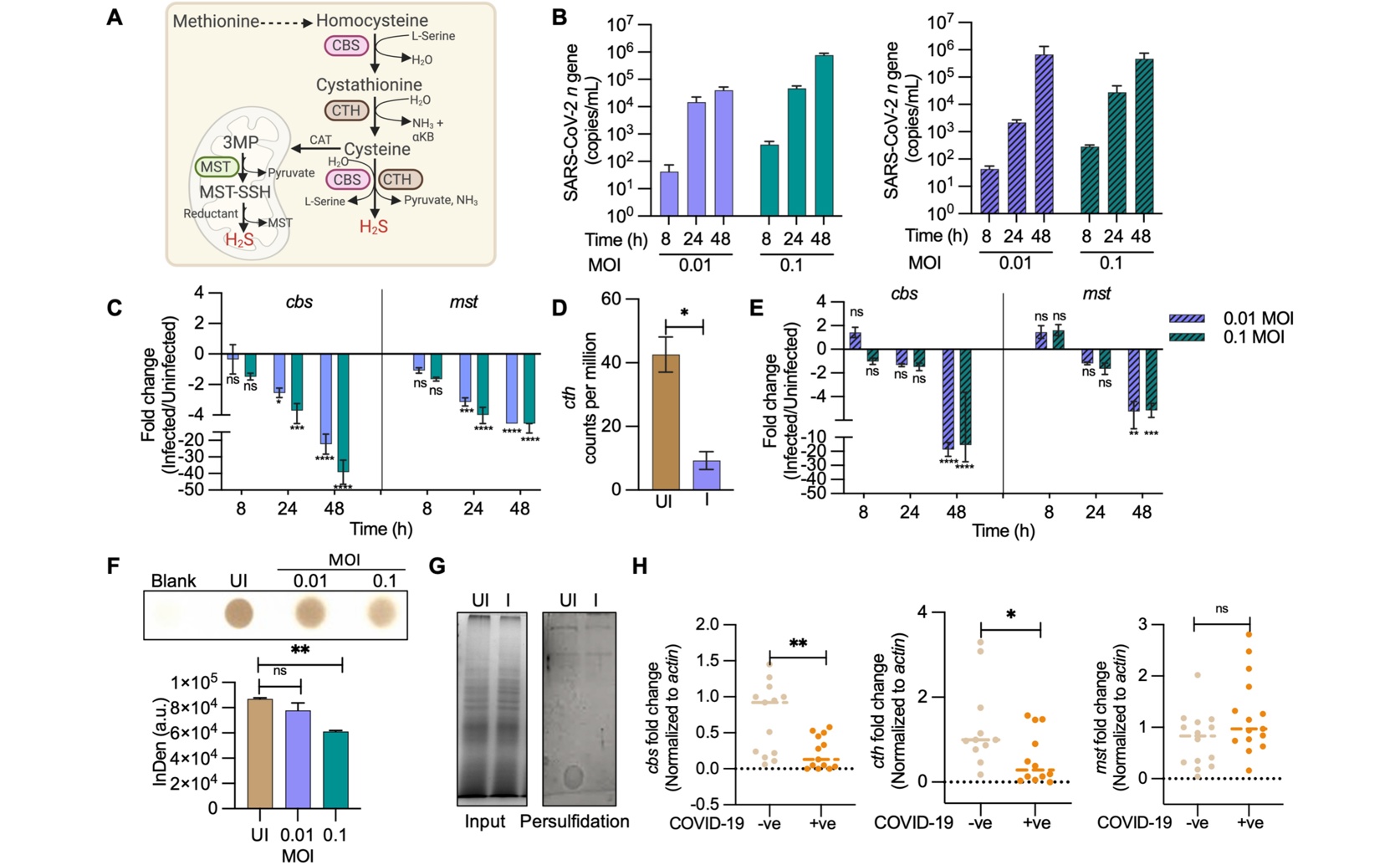
SARS-CoV-2 replication (b) was associated with the significant downregulation of H2S-synthesizing enzymes (a), specifically cbs, cth, and mst, in VeroE6 cells (c–e) and human nasopharyngeal swabs (h), leading to diminished endogenous H2S levels (f) and protein persulfidation (g).

Image adapted from: Agrawal et al. / CC BY (Source)

Key Findings

  • *University of Illinois Chicago researchers found that COVID-19 lowers hydrogen sulfide (H₂S) levels in cells, weakening their defenses against the virus.*
  • *Reduced H₂S allows the virus to replicate more easily, leading to increased lung damage and inflammation.*
  • *Adding an H₂S-releasing compound blocked virus growth and improved lung health in infected mice and hamsters.*
The COVID-19 pandemic, caused by the SARS-CoV-2 virus, has highlighted the urgent need for effective treatments. Researchers at the University of Illinois Chicago[1] have made significant strides in understanding how SARS-CoV-2 interacts with the host's cellular machinery, particularly focusing on a molecule called hydrogen sulfide (H₂S). Hydrogen sulfide is one of several gasotransmitters—gaseous molecules that play crucial roles in various biological processes[2]. These molecules, including nitric oxide (NO) and carbon monoxide (CO), are involved in regulating the immune system and maintaining cellular balance. Abnormal levels of gasotransmitters have been linked to several diseases, and recent studies have shown their potential in treating inflammatory conditions[2][3]. However, their role in viral infections, especially in the context of SARS-CoV-2, has been less explored. The study conducted by the University of Illinois Chicago team found that SARS-CoV-2 disrupts the host's production of H₂S. Specifically, the virus down-regulates enzymes responsible for producing H₂S, including cystathionine-β-synthase (CBS), cystathionine-γ-lyase (CTH), and 3-mercaptopyruvate sulfurtransferase (3-MST). This reduction in H₂S levels compromises the cell's ability to maintain redox balance and efficient mitochondrial function, which are essential for controlling viral replication. To investigate the impact of reduced H₂S levels, the researchers conducted experiments using both cell lines and samples from symptomatic COVID-19 patients. They observed that cells infected with SARS-CoV-2 had significantly lower H₂S levels and reduced S-sulfhydration, a protein modification facilitated by H₂S that is important for cellular functions. When the production of H₂S was genetically silenced or chemically inhibited, the virus was able to replicate more effectively. This suggests that H₂S plays a protective role in limiting viral proliferation. Building on these findings, the researchers tested the effects of supplementing H₂S using a slow-releasing donor called GYY4137. They found that GYY4137 effectively diminished the replication of SARS-CoV-2 in infected cells. Further analysis revealed that GYY4137 activated the Nrf2/Keap1 pathway, a key regulator of the cellular response to oxidative stress. By restoring redox balance and normalizing carbon metabolism, GYY4137 enhanced mitochondrial oxidative phosphorylation, thereby inhibiting the virus's ability to hijack the host's cellular machinery. The study also extended these findings to animal models. Mice and hamsters infected with SARS-CoV-2 and treated with GYY4137 showed suppressed viral replication and reduced lung damage. Additionally, treated animals exhibited lower levels of inflammatory cytokines—a marker of severe COVID-19—and restored expression of antioxidant genes regulated by the Nrf2 pathway. Importantly, non-invasive measurements of respiratory function indicated that GYY4137 improved lung function, reducing indicators of pulmonary obstruction and enhancing overall respiratory health. These results align with previous research highlighting the multifaceted role of H₂S in physiology and immune regulation[3]. H₂S has been recognized for its ability to modulate redox balance, influence metabolism, and protect against oxidative stress in various biological systems[3]. The current study expands this understanding by demonstrating that H₂S not only helps maintain cellular homeostasis but also actively combats viral infections by limiting SARS-CoV-2 replication. Additionally, the study contributes to the broader knowledge of gasotransmitters in immune responses[2][4]. While previous research has established the importance of gasotransmitters like NO and CO in regulating immune functions and combating pathogens, this study underscores the unique role of H₂S in viral infections. Unlike NO and H₂S, which can be detoxified by microbes, CO has been noted for its antimicrobial properties[4]. The findings from the University of Illinois Chicago suggest that enhancing H₂S levels could be a viable therapeutic strategy against viruses, adding a new dimension to the potential applications of gasotransmitters in medicine. In conclusion, the research conducted by the University of Illinois Chicago team provides compelling evidence that hydrogen sulfide plays a critical role in controlling SARS-CoV-2 replication. By restoring H₂S levels through supplementation with GYY4137, it is possible to inhibit the virus, reduce inflammation, and improve lung function in infected individuals. This study not only advances our understanding of the interplay between gasotransmitters and viral infections but also opens new avenues for developing treatments for COVID-19 and potentially other coronavirus-related diseases.

MedicineHealthBiochem

References

Main Study

1) Hydrogen sulfide (H2S) coordinates redox balance, carbon metabolism, and mitochondrial bioenergetics to suppress SARS-CoV-2 infection

Published 19th May, 2025

https://doi.org/10.1371/journal.ppat.1013164


Related Studies

2) Gasotransmitters and the immune system: Mode of action and novel therapeutic targets.

https://doi.org/10.1016/j.ejphar.2018.07.026


3) Hydrogen sulfide in physiology and pathogenesis of bacteria and viruses.

https://doi.org/10.1002/iub.1740


4) Gasotransmitters, poisons, and antimicrobials: it's a gas, gas, gas!

https://doi.org/10.12703/P5-28


Related Articles

An unhandled error has occurred. Reload 🗙