Bacterial MarA Protein Boosts Natural Antibiotic Resistance

Jenn Hoskins
7th May, 2025

Bacterial MarA Protein Boosts Natural Antibiotic Resistance

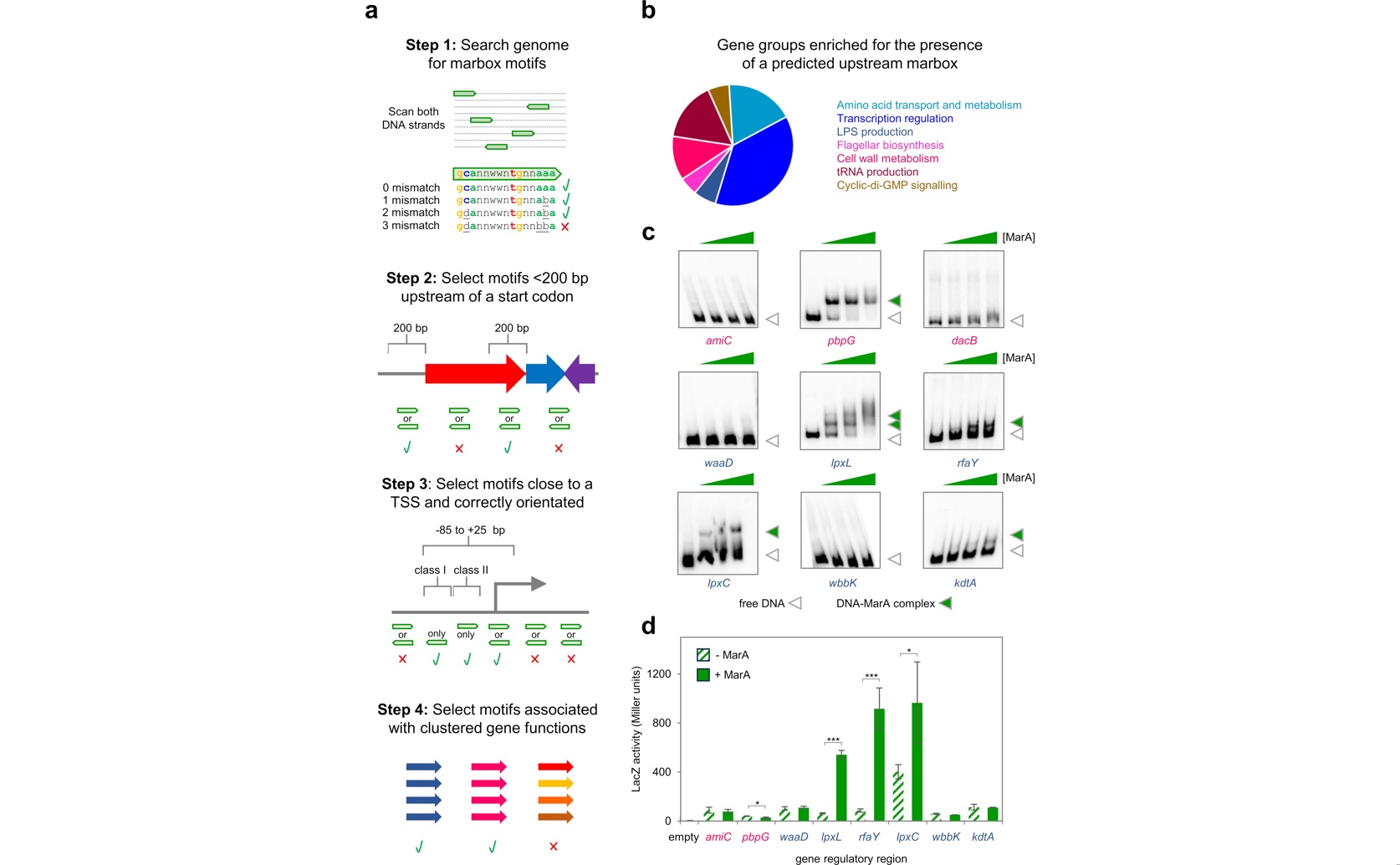
A systematic bioinformatic screen of the Escherichia coli chromosome (a) identified functionally-relevant MarA binding sites adjacent to genes involved in lipopolysaccharide (LPS) synthesis and cell wall remodeling (b), which were confirmed to be new regulatory targets through direct binding (c) and gene expression assays (d).

Image adapted from: Trigg et al. / CC BY (Source)

Key Findings

  • Researchers from the University of Birmingham and Norwegian University mapped how the MarA protein helps E. coli resist antibiotics
  • They found that MarA turns on genes that strengthen the bacterial membrane and turns off genes that make the cell wall more permeable
  • Disrupting MarA’s control makes E. coli more susceptible to antibiotics, highlighting new targets for treatments
Antibiotic resistance remains a significant challenge in treating bacterial infections, particularly those caused by enteric pathogens like Escherichia coli. A key player in this resistance is the MarA protein, a transcription factor that regulates genes involved in antibiotic defense mechanisms. Researchers from the University of Birmingham and the Norwegian University of Life Sciences have advanced our understanding of how MarA contributes to antibiotic resistance by mapping its binding sites across the E. coli genome[1]. Previous studies have established that MarA, along with other regulators such as SoxS and RamA, modulates the expression of efflux pumps and porins, which bacteria use to expel antibiotics and prevent their entry[2][3]. For instance, overexpression of marA has been linked to increased resistance to fluoroquinolones, a class of antibiotics commonly used to treat bacterial infections[2]. Additionally, research has shown that MarA activates genes necessary for DNA repair and lipid trafficking, further enhancing the bacteria's ability to withstand antibiotic-induced damage[3]. In the recent study, the research team employed a computational approach to screen the E. coli genome for MarA binding sites. This method was complemented by global maps of transcription initiation and the clustering of predicted targets based on gene function. By integrating these techniques, the researchers minimized the risk of inaccurately identifying MarA binding sites, a common issue in earlier studies. This precision allowed for a more accurate depiction of MarA’s regulatory network. Genetic and biochemical analyses were then conducted to validate the computational predictions. The team discovered that MarA directly activates genes involved in lipopolysaccharide (LPS) biosynthesis, a crucial component of the bacterial outer membrane, and represses a cell wall remodeling enzyme known as an endopeptidase. LPS plays a vital role in protecting bacteria from hostile environments, including the presence of antibiotics, by maintaining the integrity of the cell envelope. To explore the functional implications of these findings, the researchers mutated specific MarA binding sites, effectively altering the regulon—the full set of genes regulated by MarA. This rewiring demonstrated that disrupting the regulation of either LPS production or cell wall remodeling made the bacteria more vulnerable to mutations in the lipid trafficking system, specifically the MlaFEDCB pathway. This pathway is essential for maintaining membrane lipid asymmetry, which is critical for cell viability and antibiotic resistance. These results build on previous research that highlighted the multifaceted role of MarA in antibiotic resistance. For example, earlier studies showed that strains with mutations in regulatory genes like marA exhibited higher levels of fluoroquinolone resistance when accompanied by alterations in structural genes such as gyrA and parC[2]. Furthermore, investigations into Salmonella enterica revealed that exposure to ciprofloxacin activates marA along with other regulatory genes, enhancing the expression of efflux pumps like AcrAB-TolC, which expel antibiotics from the cell[4]. By mapping the binding sites and elucidating the direct targets of MarA, the current study provides a comprehensive framework for understanding how MarA orchestrates multiple pathways to confer antibiotic resistance. The interplay between LPS biosynthesis and cell wall remodeling ensures that the bacterial cell envelope remains robust against antibiotic assaults, while efflux pumps reduce intracellular antibiotic concentrations. This integrated approach not only clarifies the role of MarA in antibiotic resistance but also highlights potential targets for novel therapeutic strategies. By disrupting the regulatory functions of MarA or its interaction with key genes involved in cell envelope maintenance, it may be possible to render bacteria more susceptible to existing antibiotics. In summary, the research from the University of Birmingham and the Norwegian University of Life Sciences advances our knowledge of antibiotic resistance mechanisms in E. coli by detailing how MarA regulates essential genes for cell envelope integrity and antibiotic defense. These insights, supported by earlier studies, underscore the complexity of bacterial resistance and the need for multifaceted approaches to combat it effectively.

MedicineHealthBiochem

References

Main Study

1) Coordination of cell envelope biology by Escherichia coli MarA protein potentiates intrinsic antibiotic resistance

Published 5th May, 2025

https://doi.org/10.1371/journal.pgen.1011639


Related Studies

2) Overexpression of the marA or soxS regulatory gene in clinical topoisomerase mutants of Escherichia coli.

Journal: Antimicrobial agents and chemotherapy, Issue: Vol 42, Issue 8, Aug 1998


3) The multiple antibiotic resistance operon of enteric bacteria controls DNA repair and outer membrane integrity.

https://doi.org/10.1038/s41467-017-01405-7


4) Expression of the marA, soxS, acrB and ramA genes related to the AcrAB/TolC efflux pump in Salmonella enterica strains with and without quinolone resistance-determining regions gyrA gene mutations.

https://doi.org/10.1016/j.bjid.2012.09.011


Related Articles

An unhandled error has occurred. Reload 🗙