
Bad E. coli Makes Parasite Move Faster on Protein by Weakening Grip
Jim Crocker
25th May, 2025


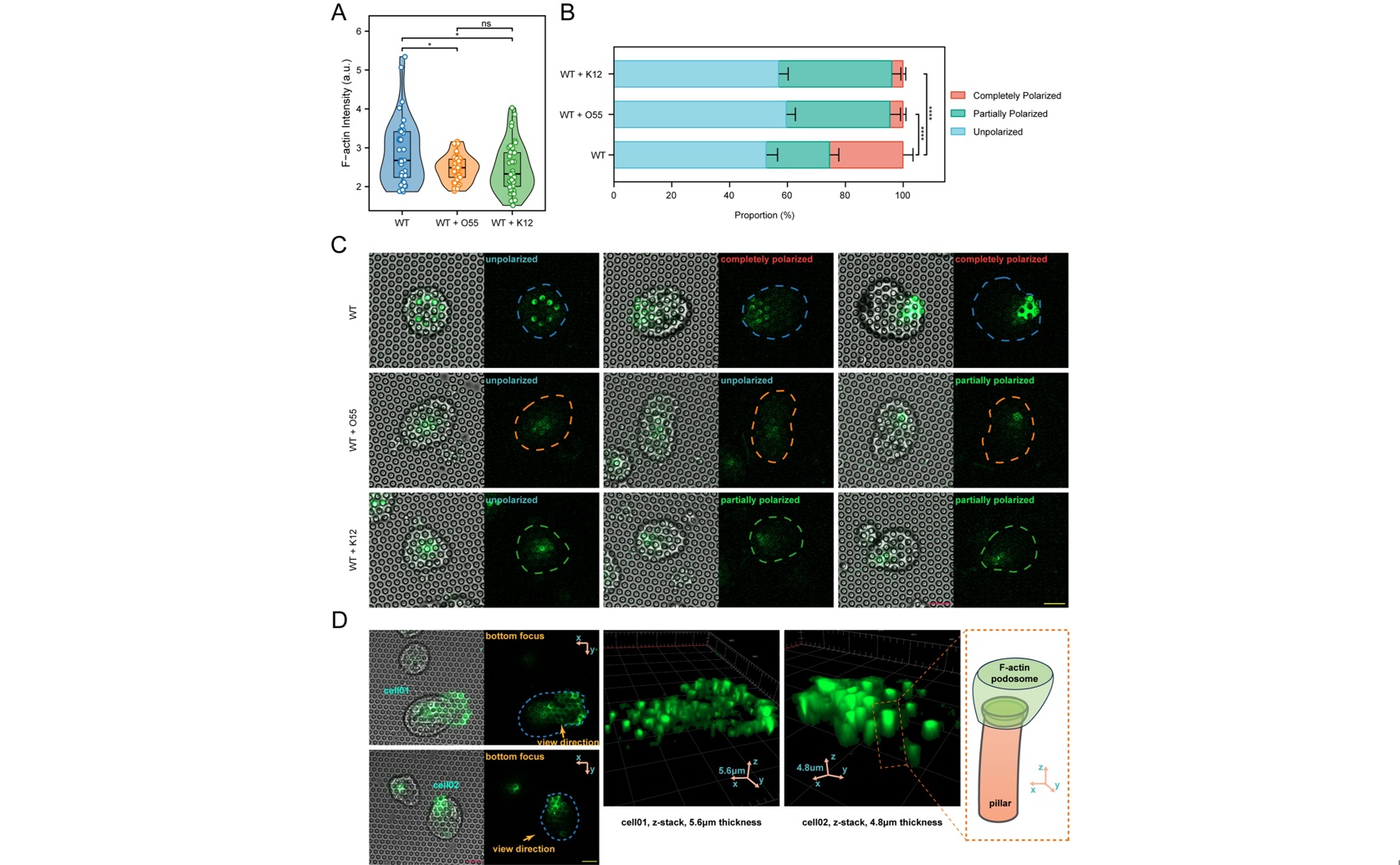
Exposure to Escherichia coli significantly reduced the intensity (a) and polarization (b, c) of the F-actin cytoskeleton in Entamoeba histolytica trophozoites, altering the podosome-like adhesion structures (d) and providing a structural basis for the reduced traction forces observed during bacterial interaction.
Key Findings
- *Study by Technion and University of Utah* found that harmful E. coli in the gut make the amoeba causing amoebiasis move faster and spread more widely
- *Interactions with E. coli* increase the amoeba's ability to damage tissues, leading to more severe infections
- *Targeting gut bacteria* could offer new ways to prevent or treat amoebiasis by limiting the amoeba's invasiveness
References
Main Study
1) Enteropathogenic Escherichia coli induces Entamoeba histolytica superdiffusion movement on fibronectin by reducing traction forces
Published 23rd May, 2025
https://doi.org/10.1371/journal.ppat.1012618
Related Studies
2) An ex-vivo human intestinal model to study Entamoeba histolytica pathogenesis.
3) Intestinal amoebiasis: 160 years of its first detection and still remains as a health problem in developing countries.
4) Host tissue invasion by Entamoeba histolytica is powered by motility and phagocytosis.
Journal: Archives of medical research, Issue: Vol 37, Issue 2, Feb 2006
5) Regulation of virulence of Entamoeba histolytica.
Related Articles
 14th May, 2025 | Greg Howard