Galanin: The Brain's Master Switch for Activity

Jenn Hoskins
7th July, 2025

Galanin: The Brain's Master Switch for Activity

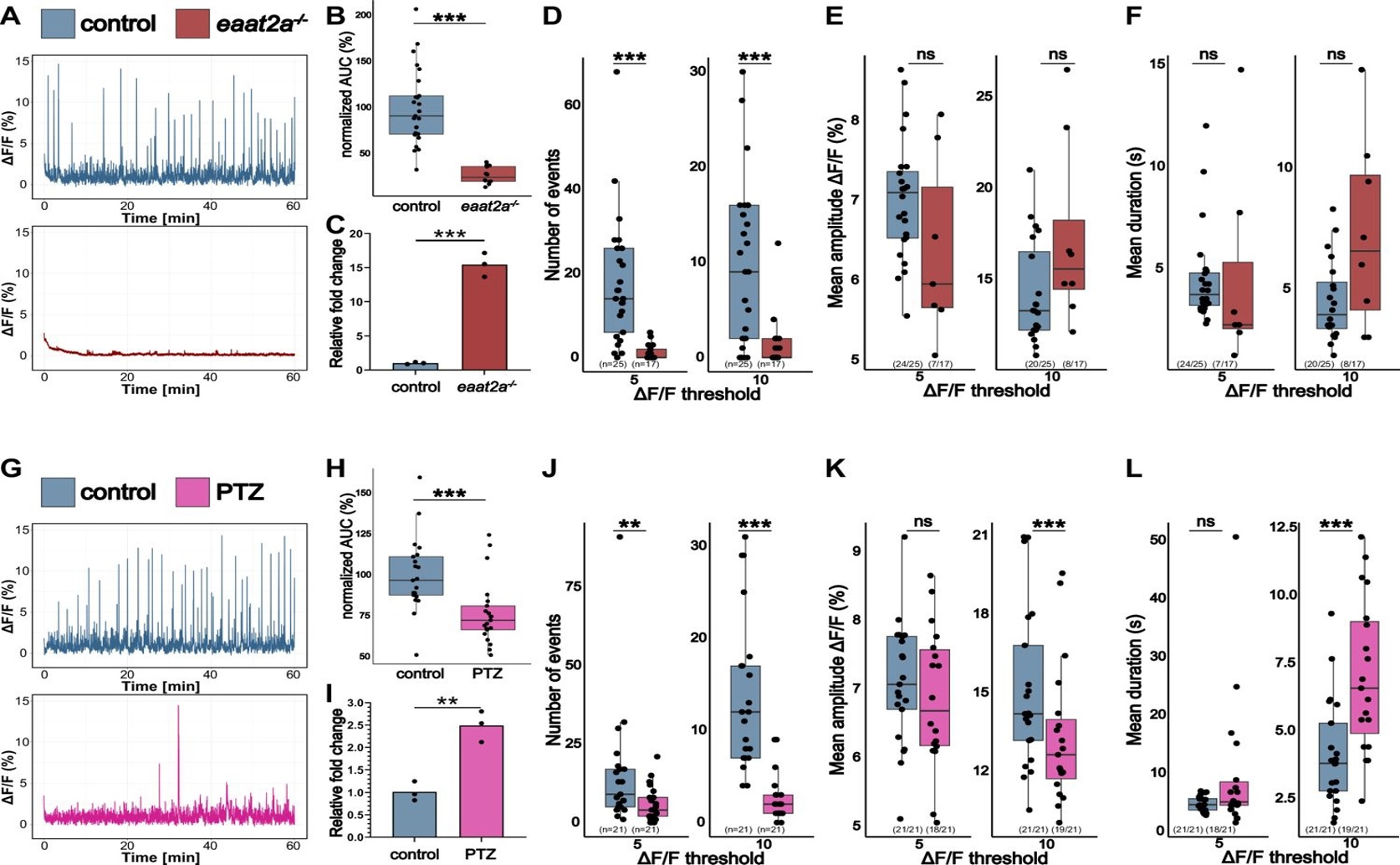
Significant whole-brain hypoactivity was correlated with upregulated gal expression in eaat2a mutant zebrafish Danio rerio (a–f) and in larvae recovering from pentylenetetrazole (PTZ) exposure (g–l), linking elevated galanin levels to periods of reduced neuronal activity.

Image adapted from: Rieser et al. / CC BY (Source)

Key Findings

  • Research at the University of Zurich on larval zebrafish found that the brain chemical galanin generally calms brain activity, even during seizures, primarily via a specific receptor
  • However, the study revealed that acute stress, like that caused by seizure-inducing drugs, weakens galanin's calming effect, leading to increased brain overactivity and more seizures
  • Interestingly, galanin's influence on seizures is complex, as it can both lessen their severity and, under different conditions, increase how often they occur
Our brains continuously manage a complex array of vital functions, from regulating our sleep and wakefulness to controlling our responses to stress. A key player in these intricate processes is a chemical messenger called galanin, a neuropeptide. Neuropeptides are small protein-like molecules used by neurons to communicate with each other, influencing brain activity and behavior. Galanin's widespread influence means it's implicated in various conditions, including anxiety, depression, and epilepsy, a neurological disorder characterized by recurrent seizures. Understanding how galanin precisely regulates brain activity, especially during challenging situations like stress or seizures, is crucial for developing new strategies to treat these disorders. Recent research from the University of Zurich[1] has shed new light on galanin's complex role by investigating its effects on whole-brain activity in larval zebrafish. The study aimed to map out how galanin influences the entire brain, both under normal conditions and during epileptic seizures. To achieve this, the researchers utilized larval zebrafish, a powerful model organism in neuroscience. Zebrafish larvae are particularly useful because they are optically translucent, meaning light can pass through them easily, allowing scientists to observe internal processes without invasive procedures. They are also genetically tractable, meaning their genes can be easily manipulated to study specific biological functions. This makes them an excellent system for investigating the genetic and neural control of processes like sleep[2] and for modeling neurological disorders such as epilepsy[3]. A core technique employed in the study was wide-field calcium imaging. Neurons, the brain's fundamental building blocks, communicate through electrical signals. When a neuron becomes active, there's a temporary increase in calcium levels within the cell. Genetically encoded calcium indicators (GECIs) are special proteins that glow when they bind to calcium, effectively acting as tiny light sensors that report neuronal activity. Early versions like GCaMP3 could detect bursts of activity[4], but significant advancements have led to more sensitive sensors like GCaMP5[4] and GCaMP6[5]. These improved GECIs allow researchers to detect even single neuronal activations and observe activity across large populations of neurons with much greater clarity and detail. By using these advanced imaging tools, the University of Zurich team could "see" how galanin affected brain-wide activity in real-time. The researchers combined this imaging approach with genetic modifications to alter galanin signaling and used pharmacological methods to increase neuronal activity, mimicking seizure conditions. For instance, they used a compound called pentylenetetrazole (PTZ), which is known to induce seizure-like activity, allowing them to study galanin's effects during an epileptic event. This approach builds on previous work using zebrafish to study epilepsy, such as the characterization of a zebrafish model for Dravet syndrome, a severe form of pediatric epilepsy, which has been used to identify potential new treatments[3]. The study's findings reveal a multifaceted role for galanin. Under normal conditions and even during epileptic seizures, galanin generally exerts a calming, sedative influence on the brain. This effect appears to be primarily mediated through a specific type of receptor on brain cells called galanin receptor 1a (galr1a). This suggests that galanin acts as a natural brake on brain overactivity. However, the researchers found that this sedative effect of galanin can be compromised by acute stressors, such as exposure to PTZ. When the brain is under stress, galanin's calming influence weakens, leading to increased brain overactivation and a higher likelihood of seizures. This highlights a critical interplay between stress and galanin's ability to regulate brain excitability. Interestingly, the study also uncovered a more nuanced and even seemingly contradictory role for galanin in seizures. While it can decrease seizure severity, it can also, under different circumstances, increase seizure occurrence. This suggests that galanin's impact might depend on which specific galanin receptor subtypes are activated, or the overall state of the brain. This bidirectional effect underscores the complexity of brain regulation and opens new avenues for research into targeted therapies. Taken together, these findings from the University of Zurich significantly advance our understanding of galanin's role in the brain. By leveraging the unique advantages of the larval zebrafish model and state-of-the-art calcium imaging techniques, which have evolved from earlier GECI developments[4][5], this study provides crucial insights into how galanin regulates whole-brain activity and shapes our responses to stress. The insights gained, particularly concerning galanin's complex role in epilepsy, could pave the way for developing novel therapeutic strategies for neurological disorders and stress-related conditions.

MedicineHealthBiochem

References

Main Study

1) Multifaceted role of galanin in brain excitability

Published 4th July, 2025

https://doi.org/10.7554/eLife.98634


Related Studies

2) Zebrafish sleep: from geneZZZ to neuronZZZ.

https://doi.org/10.1016/j.conb.2017.02.009


3) Drug screening in Scn1a zebrafish mutant identifies clemizole as a potential Dravet syndrome treatment.

https://doi.org/10.1038/ncomms3410


4) Optimization of a GCaMP calcium indicator for neural activity imaging.

https://doi.org/10.1523/JNEUROSCI.2601-12.2012


5) Ultrasensitive fluorescent proteins for imaging neuronal activity.

https://doi.org/10.1038/nature12354


Related Articles

An unhandled error has occurred. Reload 🗙