Amyloidosis in Stone-curlews

Jenn Hoskins
5th September, 2025

Amyloidosis in Stone-curlews

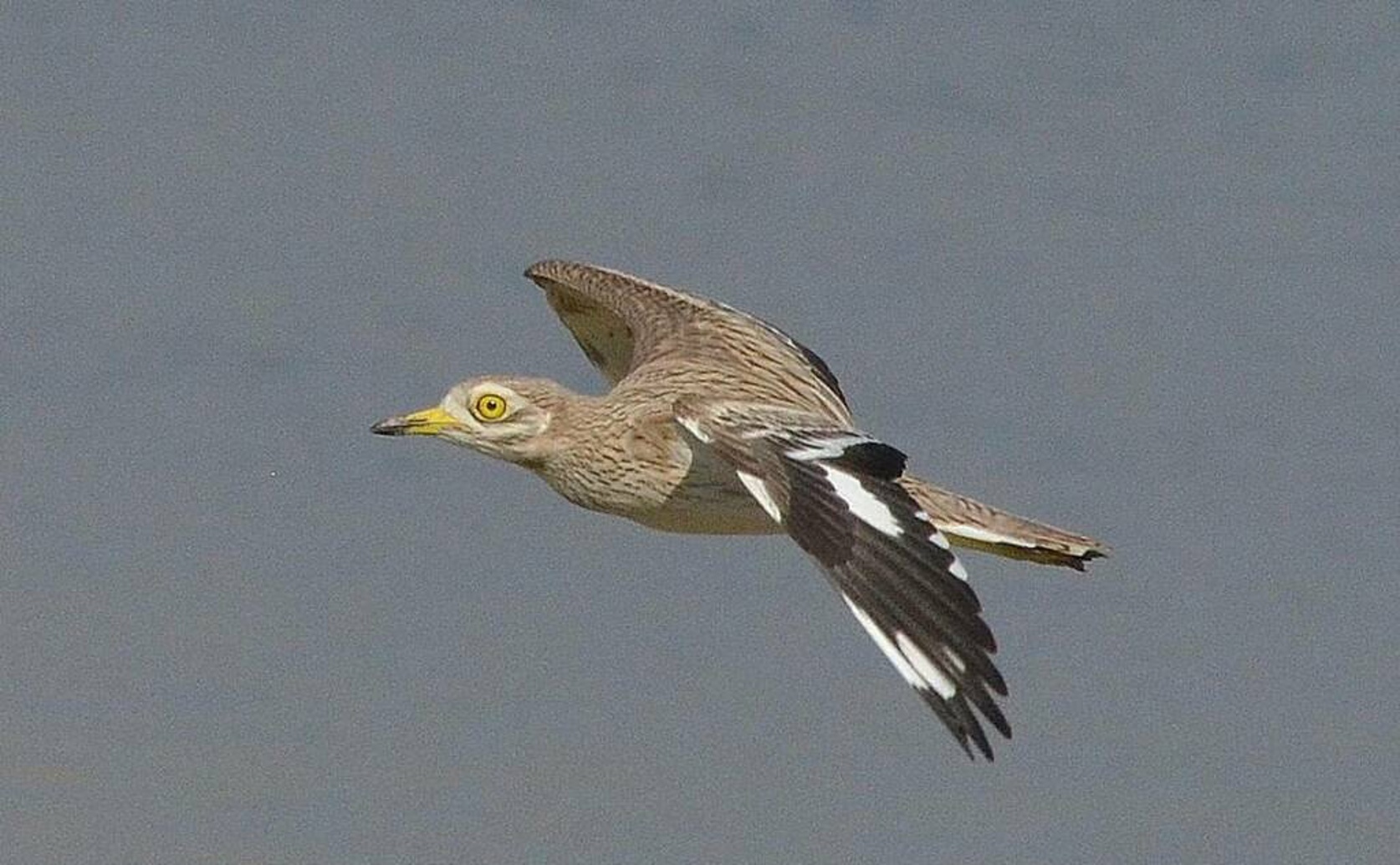
Eurasian Stone-curlew (Burhinus oedicnemus)

Photo adapted from: Mourad Harzallah / CC BY (Source)

Key Findings

  • In the Canary Islands, a study of seven Eurasian stone-curlews revealed 23% had systemic amyloidosis, a disease caused by abnormal protein buildup in organs
  • The study identified serum amyloid A (SAA) as the main protein forming the amyloid deposits, confirming AA amyloidosis, often linked to chronic inflammation
  • Additional proteins—vitronectin, apolipoprotein A-I, and apolipoprotein A-IV—were consistently found alongside SAA in the deposits, expanding knowledge of the amyloid proteome in wild birds
Amyloidosis is a group of diseases caused by abnormal protein folding, leading to protein buildup in organs and tissues. While known to affect various animals, including birds, understanding the specific proteins involved in wild bird cases has been limited. Researchers at the University of Las Palmas de Gran Canaria (ULPGC)[1] recently investigated systemic amyloidosis – where multiple organs are affected – in seven Eurasian stone-curlews found in the Canary Islands, aiming to identify the proteins contributing to the disease in this wild avian population. The study involved a comprehensive examination of tissue samples from the stone-curlews. The organs most frequently affected were the spleen, liver, kidney, proventricle (a part of the bird’s stomach), and intestine. Microscopic analysis revealed pale, homogenous deposits consistent with amyloid, and these deposits were confirmed using Congo red staining, a standard technique where the deposits exhibit a characteristic green birefringence under polarized light[2]. Electron microscopy showed the deposits were made up of non-branching fibrils approximately 10 nanometers in diameter. Crucially, the researchers didn’t stop at simply confirming the presence of amyloid. They used immunohistochemistry – a technique employing antibodies to identify specific proteins – and mass spectrometry to determine the type of amyloid protein involved. This is important because, as highlighted by the Nomenclature Committee of the International Society of Amyosis[2], each form of amyloidosis is defined by the specific protein that forms the deposits. The study identified AA amyloidosis, meaning the amyloid protein originated from a precursor protein normally produced by the liver, often in response to chronic inflammation. Further analysis using mass spectrometry revealed three additional proteins consistently found alongside the AA amyloid: vitronectin, apolipoprotein A-IV, and apolipoprotein A-I. These were identified in 85.71%, 57.14%, and 42.86% of the cases, respectively. This is significant because it expands our understanding of the ‘amyloid proteome’ – the complete set of proteins associated with amyloidosis – in wild birds. While 10 proteins are known to form amyloid deposits in veterinary medicine[3], this study adds to the list of proteins observed in a natural setting. Interestingly, all the stone-curlews had evidence of chronic inflammation, often linked to infections with worms (helminths), bacteria, or fungi. Five of the seven birds also showed chronic ventriculitis – inflammation of the brain’s ventricles – due to worm infections. This suggests that chronic inflammation plays a key role in the development of amyloidosis in these birds, potentially triggering the production of the AA amyloid precursor protein. The findings align with the broader understanding of amyloidosis as a protein misfolding disease[4], where various precursor proteins can aggregate and form deposits depending on the underlying causes and species affected. The identification of vitronectin, apolipoprotein A-IV, and apolipoprotein A-I as consistent co-occurring proteins is a novel contribution, potentially indicating their involvement in the disease process or simply reflecting their presence in tissues affected by chronic inflammation. The study also supports the idea that identifying the specific amyloid proteins is crucial for clinical and prognostic purposes[4], although further research is needed to determine the precise role of these additional proteins in the pathogenesis of amyloidosis in Eurasian stone-curlews.

WildlifeHealthAnimal Science

References

Main Study

1) AA-Amyloidosis in the Eurasian stone-curlew (Burhinus oedicnemus)

Published 2nd September, 2025

https://doi.org/10.1371/journal.pone.0331573


Related Studies

2) Amyloid fibril proteins and amyloidosis: chemical identification and clinical classification International Society of Amyloidosis 2016 Nomenclature Guidelines.

Journal: Amyloid : the international journal of experimental and clinical investigation : the official journal of the International Society of Amyloidosis, Issue: Vol 23, Issue 4, Dec 2016


3) Survey of amyloidosis cases among different free-living wild and zoo animals.

https://doi.org/10.1080/13506129.2021.1940931


4) A concise review of amyloidosis in animals.

https://doi.org/10.1155/2012/427296


Related Articles

An unhandled error has occurred. Reload 🗙