Social Context Influences Parasitic Infections in Pigs

Greg Howard
26th May, 2025

Social Context Influences Parasitic Infections in Pigs

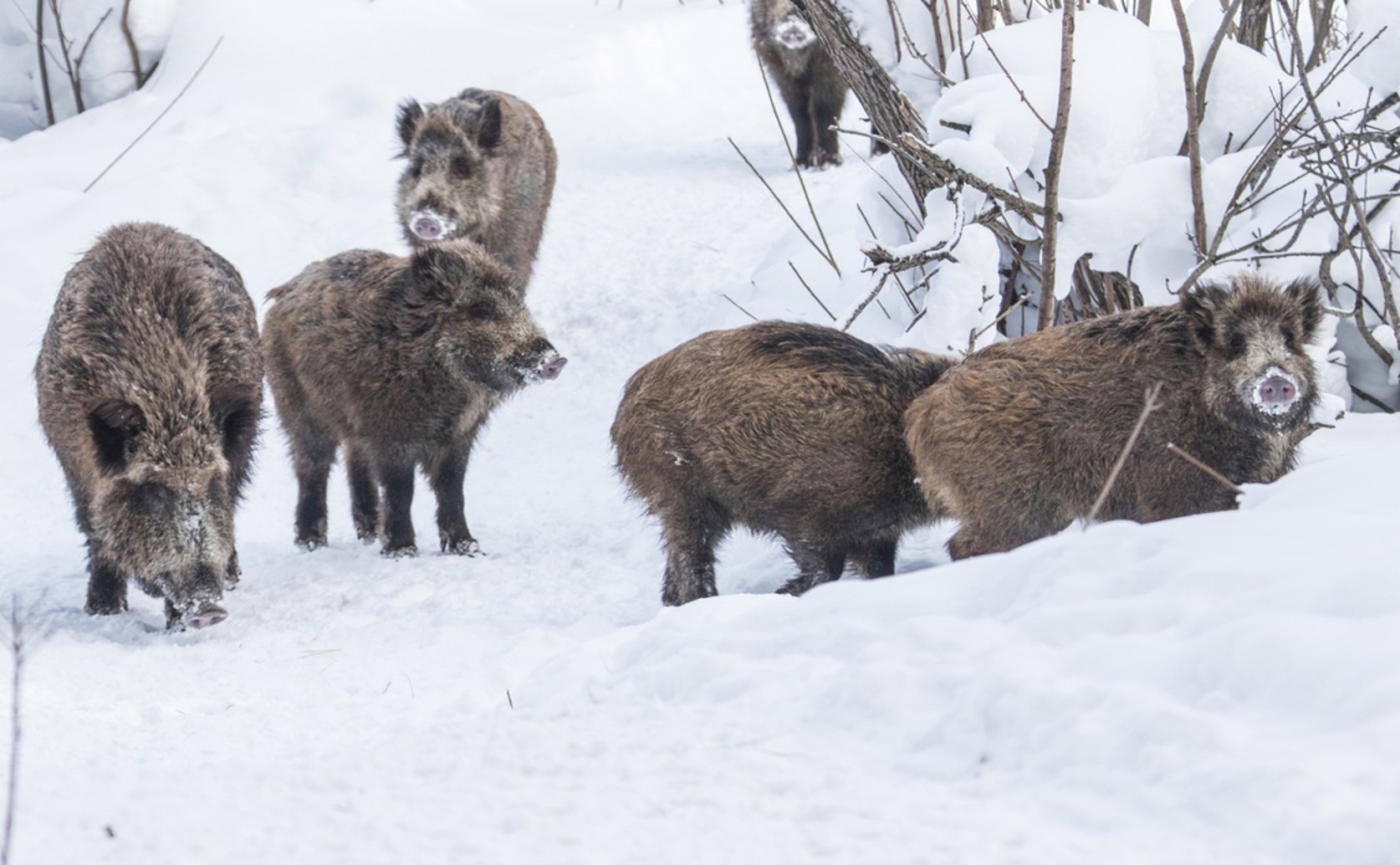
Wild Boar (Sus scrofa)

Photo adapted from: Нурхайдарова Татьяна / CC BY (Source)

Key Findings

  • In Alberta, about 15% of wild pigs carry the parasite Toxoplasma gondii and nearly 4% have Trichinella, which can affect humans and animals
  • Solitary wild pigs are more likely to carry these parasites compared to those living in groups
  • The rates of these infections vary across different counties, indicating the need for focused management efforts
Invasive wild pigs, known scientifically as Sus scrofa, have been rapidly expanding their range across Canada, posing significant threats to both the environment and public health. A recent study conducted by researchers at The King’s University[1] highlights the role of these animals as reservoirs for two dangerous parasites: Trichinella spp., which cause trichinosis, and Toxoplasma gondii, responsible for toxoplasmosis. Understanding the prevalence of these diseases in wild pig populations is crucial for developing effective management and control strategies. Wild pigs are considered one of the most invasive mammals globally, causing extensive damage to agricultural crops, native ecosystems, and livestock[2]. Their ability to thrive in diverse environments has led to their presence in large areas, particularly in the Prairie Provinces of Canada. This widespread distribution makes them a significant concern for both economic and ecological systems. The study by The King’s University involved collecting diaphragm samples from wild pigs across four counties in Alberta between 2018 and 2024. These samples were analyzed for antibodies against Trichinella spp. and T. gondii using commercial ELISA kits, a common laboratory technique used to detect the presence of specific antibodies in blood samples. The presence of these antibodies indicates that the pigs have been exposed to the parasites, making them potential carriers capable of transmitting diseases to other animals and humans. The findings revealed that approximately 15.3% of the wild pigs tested positive for T. gondii, while 3.8% were positive for Trichinella spp. Notably, the prevalence of these antibodies varied between different counties, and solitary wild pigs were more likely to carry these parasites compared to those in groups. This suggests that the social behavior of wild pigs plays a role in their risk of infection, possibly due to differences in exposure and interaction with other animals. These results are significant as they confirm that wild pigs in Alberta are indeed reservoirs for both T. gondii and Trichinella spp. This aligns with previous research indicating that wild boars can harbor various infectious agents transmissible to domestic animals and humans[3]. For instance, wild boars have been identified as reservoirs for diseases such as hepatitis E, tuberculosis, and brucellosis, which pose serious risks to livestock and public health[3][4]. The increasing overlap between wild pig populations and agricultural areas exacerbates the risk of disease transmission, as highlighted by the growing co-occurrence of wild pigs with farms and livestock[4]. The study also builds on earlier research that has mapped the spread of wild pigs and evaluated methods for monitoring invasive species[2]. By providing baseline data on the prevalence of specific pathogens in Alberta’s wild pig population, the study offers valuable insights for future monitoring and management efforts. Effective management of invasive species like wild pigs often requires a combination of strategies, including population control and disease surveillance, to mitigate their impact on ecosystems and human activities. Furthermore, the genetic analysis of invasive feral swine in other regions, such as the contiguous United States, has shown that most feral pigs are of mixed ancestry, combining traits from domestic pigs and European wild boars[5]. This genetic diversity may contribute to their adaptability and invasive potential, making it even more challenging to control their spread and the diseases they carry. Understanding the genetic makeup of wild pig populations can help in predicting their behavior and resilience, thereby informing more targeted and effective control measures. The findings from The King’s University emphasize the necessity of a One Health approach, which recognizes the interconnectedness of human, animal, and environmental health. By addressing the health risks posed by wild pigs, including their role in disease transmission, stakeholders can develop comprehensive strategies that protect both public health and the environment. This approach is particularly important given the extensive range and adaptability of wild pigs, which make them a persistent and growing threat. In conclusion, the study provides critical evidence that wild pigs in Alberta are significant reservoirs for T. gondii and Trichinella spp., highlighting the need for integrated management strategies. Building on previous research on the spread and impact of invasive wild pigs, this study underscores the importance of continuous monitoring and collaborative efforts to control the population and mitigate the associated health risks. As wild pigs continue to expand their range, proactive measures will be essential to safeguard agricultural interests, native ecosystems, and public health.

WildlifeHealthAnimal Science

References

Main Study

1) Social context influences Toxoplasma gondii and Trichinella spp. infection in Alberta free-roaming wild pigs (Sus scrofa)

Published 23rd May, 2025

https://doi.org/10.1371/journal.pone.0324617


Related Studies

2) Evaluating Cost-Effective Methods for Rapid and Repeatable National Scale Detection and Mapping of Invasive Species Spread.

https://doi.org/10.1038/s41598-019-43729-y


3) Wild boars as sources for infectious diseases in livestock and humans.

https://doi.org/10.1098/rstb.2009.0086


4) Cross-species transmission potential between wild pigs, livestock, poultry, wildlife, and humans: implications for disease risk management in North America.

https://doi.org/10.1038/s41598-017-07336-z


5) Mixed ancestry from wild and domestic lineages contributes to the rapid expansion of invasive feral swine.

https://doi.org/10.1111/mec.15392


Related Articles

An unhandled error has occurred. Reload 🗙