
Dance Behaviour In Cockatoos: What It Tells Us About Thinking and Well-Being
Jenn Hoskins
8th August, 2025


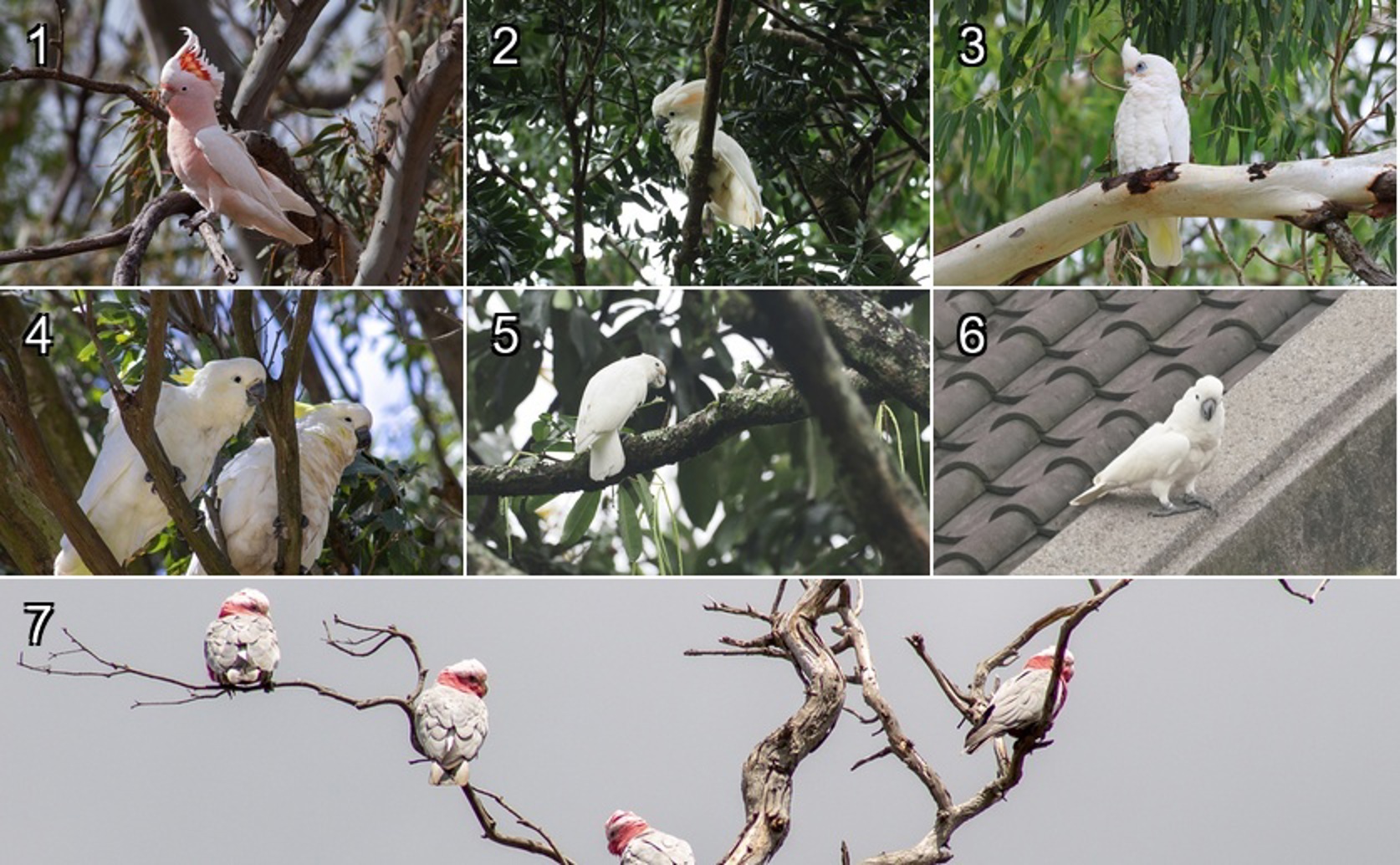
Analyses of White cockatoo Cacatua alba (6), Goffin’s cockatoo Cacatua goffiniana (5), Sulphur-crested cockatoo Cacatua galerita (4), Little corella Cacatua sanguinea (3), Moluccan cockatoo Cacatua moluccensis (2), Major Mitchell cockatoo Lophochroa leadbeateri (1), and Galah Eolophus roseicapilla (7) reveal that dance behavior is a widespread trait with diverse movements that do not strictly align with phylogenetic relationships.
Composite: Natural Science News / CC BY. [Sources]
- Jeremy James (CC BY)
- Ron Knight (CC BY)
- Damien Wallace (CC BY)
- Damien O'Donnell (CC BY)
- Jeremy James (CC BY)
- Nils (CC BY)
- Tim (CC BY)
Key Findings
- A study, partly conducted at Wagga Wagga Zoo, found cockatoos exhibit a wide range of complex dance moves, identifying 30 common and 17 rare new ones
- Surprisingly, in a zoo setting, music alone did not specifically trigger dancing in cockatoos, as they danced equally with or without music
- This suggests other factors influence cockatoo dancing, which may indicate positive welfare and could be explored for enrichment
References
Main Study
1) Dance behaviour in cockatoos: Implications for cognitive processes and welfare
Published 6th August, 2025
https://doi.org/10.1371/journal.pone.0328487
Related Studies
2) Spontaneity and diversity of movement to music are not uniquely human.
3) Spontaneous motor entrainment to music in multiple vocal mimicking species.
4) Experimental evidence for synchronization to a musical beat in a nonhuman animal.
Related Articles
 19th June, 2024 | Jenn Hoskins