Silverleaf Nightshade Compounds Show Promise Against Cancer Through Gene Effects

Jenn Hoskins
23rd August, 2025

Silverleaf Nightshade Compounds Show Promise Against Cancer Through Gene Effects

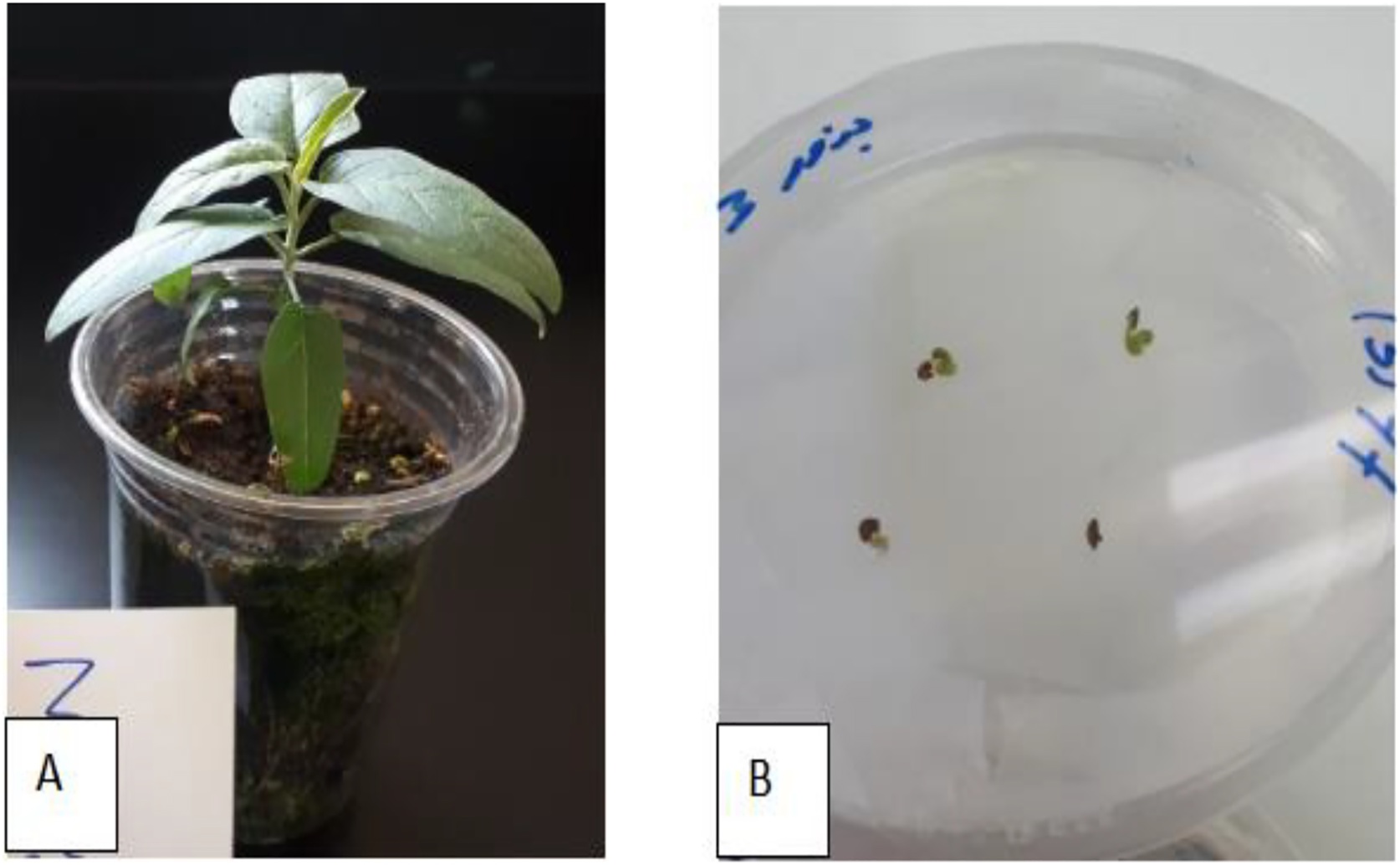
Laboratory cultivation of Solanum elaeagnifolium (A) and successful in vitro seed germination (B) established the necessary source material for subsequent callus induction and comparative alkaloid analysis.

Image adapted from: Dakah et al. / CC BY (Source)

Key Findings

  • Researchers in Jordan successfully grew Solanum elaeagnifolium plant cells in the lab to produce compounds with potential anti-cancer properties
  • A specific combination of plant growth regulators (BAP and 2,4-D at a 1:1 ratio) resulted in the highest production of a key alkaloid called β-Solamargine, making up 78.7% of the total alkaloids
  • Extracts from these optimized cells effectively killed breast cancer cells in the lab, reducing cell growth and triggering programmed cell death by altering key gene expressions
Cancer remains a leading cause of death globally, driving research into new treatment options. Certain plant-derived alkaloids – naturally occurring compounds with medicinal properties – have shown promise in combating the disease. Recent research from scientists at the University of Kalamoon, the National Agricultural Research Center, Philadelphia University, and Canakkale Onsekiz Mart University[1] focused on Solanum elaeagnifolium, a plant belonging to the Solanaceae family, to investigate its potential as a source of anti-cancer agents. The challenge with utilizing plant-based compounds for drug development is often consistent production. Obtaining sufficient quantities of these compounds directly from plants can be unreliable due to environmental factors and slow growth rates. To address this, researchers are turning to plant cell culture – growing plant tissues in a controlled laboratory environment. This allows for a more consistent and scalable production of desired compounds[2]. The study aimed to optimize the growth of Solanum elaeagnifolium cells in culture and determine if the resulting cells produced alkaloids with anti-cancer activity. The research team established callus cultures – essentially an unorganized mass of plant cells – from Solanum elaeagnifolium. They tested different combinations of plant growth regulators, specifically BAP and 2,4-D, to find the conditions that promoted the best growth and alkaloid production. They discovered that a ratio of 1.0:1.0 mg/L of BAP and 2,4-D yielded the most favourable results. Using a technique called LC-MS/MS (Liquid Chromatography-Tandem Mass Spectrometry), the researchers identified five key alkaloids present in the callus extracts: β-Solamargine, tomatidenol, Solasonine, solanidine, and solasodine. Notably, β-Solamargine was the most abundant, making up 78.7% of the total alkaloids produced. This is important, as it suggests that β-Solamargine may be the primary contributor to any observed anti-cancer effects. To assess the anti-cancer potential, the callus extracts were tested on MCF7 cells – a common human breast cancer cell line – using an MTT assay. This assay measures cell viability; a lower viability indicates a stronger anti-cancer effect. Extracts from the optimized culture medium (BAP and 2,4-D ratio) showed the most promising results, achieving an IC50 of 6.25 µl/ml. The IC50 value represents the concentration of the extract needed to inhibit 50% of cell growth. Extracts grown with NaCl or yeast extract were less effective, with IC50 values of 25 and 50 µl/ml respectively. Further investigation into the mechanism of action revealed changes in gene expression within the treated cancer cells. Specifically, the ratio of Bax to Bcl-2 increased. Bax and Bcl-2 are proteins involved in programmed cell death (apoptosis). An increase in the Bax/Bcl-2 ratio indicates that the extracts were promoting apoptosis in the cancer cells. Additionally, the expression of the CDK1 gene was down-regulated compared to untreated cells. CDK1 is a protein essential for cell cycle progression; reducing its expression can halt cell division. These findings suggest that the alkaloids are inducing cell death and preventing cancer cell proliferation. The Amaryllidaceae family, known for alkaloids like galanthamine, faces similar production challenges as other medicinal plants[3]. Plant cell culture offers a potential solution, as highlighted in several studies focusing on enhancing the production of bioactive compounds[2][3]. While the study focused on Solanum elaeagnifolium, the methods used – optimizing culture conditions and analysing alkaloid profiles – are broadly applicable to other plants. The findings build upon the existing knowledge of plant secondary metabolite production and demonstrate the viability of using callus cultures as a source of anti-cancer compounds. The research suggests that alkaloids derived from S. elaeagnifolium hold promise for cancer therapy, but further investigation, particularly in vivo studies (testing in living organisms), is needed to confirm these results and evaluate their safety and efficacy.

MedicineGeneticsPlant Science

References

Main Study

1) Alkaloid production of Solanum elaeagnifolium Cav from callus for anticancer potential using gene expression of cancer-related genes

Published 22nd August, 2025

https://doi.org/10.1371/journal.pone.0329977


Related Studies

2) In vitro strategies for the enhancement of secondary metabolite production in plants: a review.

https://doi.org/10.1186/s42269-022-00717-z


3) Biotechnological Approaches to Optimize the Production of Amaryllidaceae Alkaloids.

https://doi.org/10.3390/biom12070893


Related Articles

An unhandled error has occurred. Reload 🗙