How Targeting Gene Defense Hubs Affects Jumping Gene Attacks

Jim Crocker
18th August, 2025

How Targeting Gene Defense Hubs Affects Jumping Gene Attacks

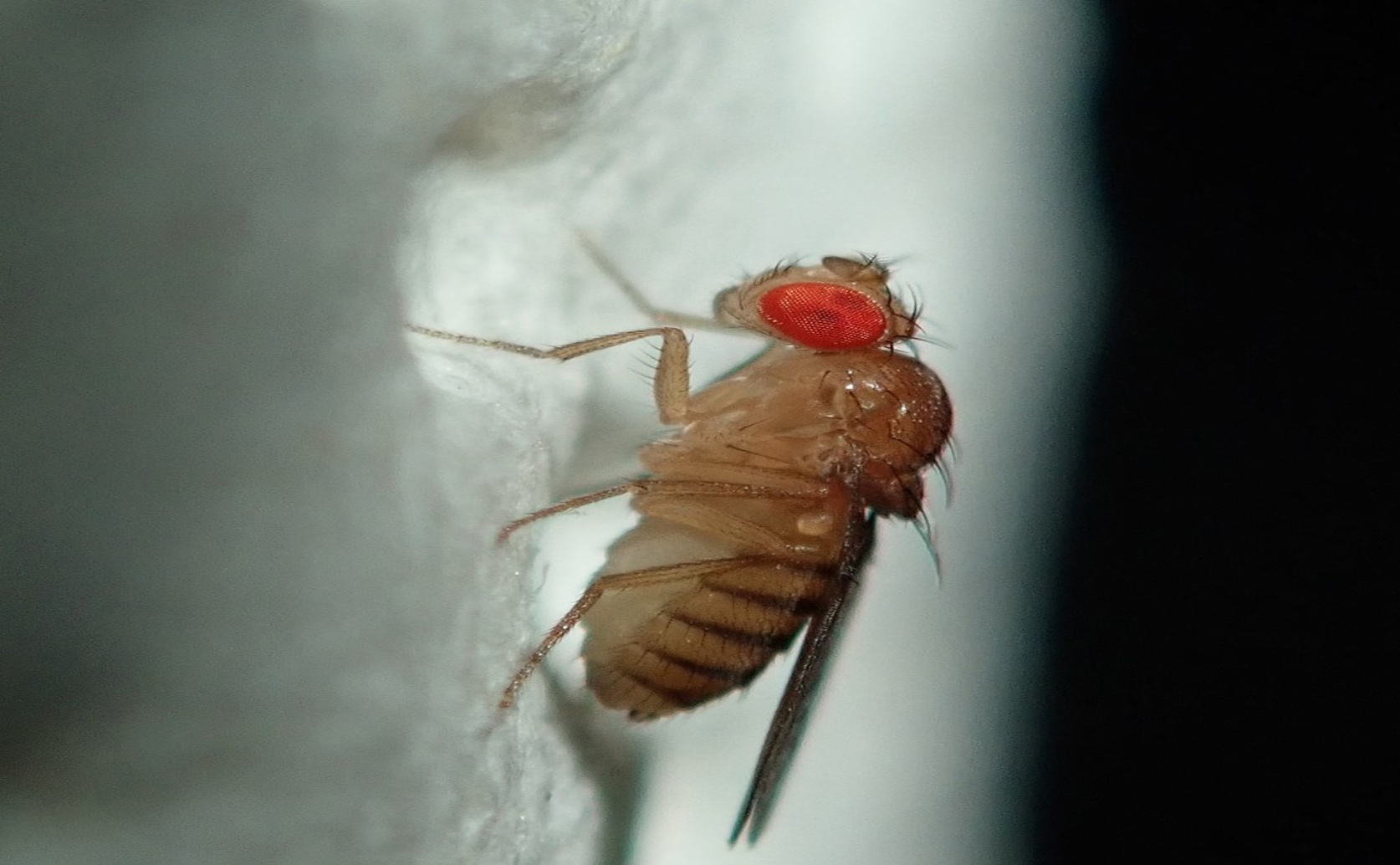
Common Fruit Fly (Drosophila melanogaster)

Photo adapted from: Alexis Tinker-Tsavalas / CC BY (Source)

Key Findings

  • A study from North Dakota State University found that while "jumping genes" inserting into silencing "trap" regions reduces harm to the host, this strategy generally hinders the gene's own spread
  • This seemingly self-defeating insertion bias only benefits the "jumping gene" when it's very harmful to the host and there's no genetic mixing
  • Conversely, "jumping genes" that strongly avoid these "trap" regions can cause so much harm that they risk wiping out their host population
Life forms, from bacteria to humans, carry segments of DNA known as transposable elements, or TEs. Often called "jumping genes," these DNA sequences have the ability to move or copy themselves to different locations within an organism's genome. While some TEs play roles in evolution, many are considered parasitic, as their uncontrolled movement can disrupt vital genes, leading to disease or reduced fitness in the host. To counter this, organisms have evolved sophisticated defense mechanisms. One such crucial defense, particularly well-studied in organisms like the fruit fly Drosophila melanogaster, is the piRNA pathway. The piRNA pathway relies on small RNA molecules called Piwi-interacting RNAs (piRNAs) to identify and silence TEs. A key aspect of this system involves specific regions of the genome called piRNA clusters. These clusters act as "traps" or "reservoirs" for TE sequences. When a TE inserts into or near a piRNA cluster, the cluster begins producing piRNAs that specifically target that TE, effectively shutting down its ability to jump further and multiply. Logically, one might expect that TEs would evolve to avoid these piRNA clusters, as insertion into them leads to their silencing. However, observations have shown that some TEs, such as the well-known P-element in Drosophila, actually show a preference for inserting into these very clusters. This raises a puzzling question: why would a TE, whose survival depends on its ability to proliferate, choose a location that leads to its own repression? Could this seemingly self-defeating strategy somehow offer an advantage, perhaps by minimizing the harm it inflicts on its host, thereby allowing the TE to spread more successfully through a population? Researchers at North Dakota State University[1] recently investigated this paradox. Their study aimed to determine if there are scenarios where a TE's bias towards inserting into piRNA clusters could actually be beneficial for its propagation. To explore this, they employed extensive forward simulations. This involved creating sophisticated computer models that mimic the process of TE invasions over many generations, allowing them to test how different insertion biases—whether TEs preferred or avoided piRNA clusters—affected their spread and survival within a population. The simulations revealed that the preference for where a TE inserts significantly alters how it invades a population. One of the primary ways this happens is by changing the number of TE copies an individual carries before the silencing mechanisms kick in. The study confirmed that when a TE inserts into a piRNA cluster, it generally reduces the harmful effects to the host population. This makes intuitive sense: if the host can quickly silence the TE, the damage from its "jumping" is limited. However, despite this reduction in harm to the host, the researchers found that TEs that avoided piRNA clusters generally out-competed those that had a bias towards inserting into them. This suggests that, in most situations, the benefit of avoiding silencing outweighs the benefit of being less harmful to the host. The strategy of inserting into a piRNA cluster was only found to be beneficial for the TE's spread under very specific and limited conditions: when there was strong negative selection against TEs (meaning TEs were very harmful to the host) and a lack of recombination (the process by which genetic material is exchanged between chromosomes). This finding builds upon real-world observations of TE invasions. For instance, the fruit fly Drosophila melanogaster has experienced multiple invasions by transposable elements over the last few centuries. The P-element, mentioned in the main study, is one such example, having invaded between 1950 and 1980. More recently, a novel TE named Spoink was discovered[2]. Spoink, a type of LTR retrotransposon (a TE that copies itself through an RNA intermediate), invaded worldwide D. melanogaster populations between 1983 and 1993, shortly after the P-element. Like the P-element, Spoink is believed to have originated from a horizontal transfer (movement of genetic material between different species) from another species, the D. willistoni group. Significantly, Spoink is thought to be silenced by the piRNA pathway in natural populations, and about one-third of the examined strains show Spoink insertions directly into canonical piRNA clusters, such as 42AB[2]. This empirical evidence from Spoink and the P-element underscores the phenomenon that TEs do insert into these silencing regions, providing a real-world context for the simulations performed by North Dakota State University. Further understanding of how the piRNA pathway silences these TEs comes from studies on key proteins involved in the process. The Piwi protein subfamily, for example, is essential for piRNA production and transposon silencing. For a long time, it was believed that Piwi proteins silenced TEs by "slicing" or cutting their genetic material, a function known as endonuclease activity. However, recent research on the Piwi protein in Drosophila has challenged this view for nuclear Piwi proteins[3]. Among the three Piwi proteins in Drosophila (Piwi, Aubergine, and Argonaute 3), Piwi is unique because it resides in the nucleus and is crucial for piRNA biogenesis and fertility. A study demonstrated that the "slicer" activity of Piwi is not actually required for its known functions in living flies[3]. Even when the Piwi protein's catalytic triad, a specific group of amino acids essential for its cutting ability, was mutated, piRNA production remained normal, transposons remained repressed, and the flies maintained normal fertility. This suggests that Piwi's role in silencing TEs is not about destroying them through cutting. Instead, it appears to function by guiding other epigenetic factors—molecules that modify DNA and influence gene activity without changing the underlying genetic code—to the chromatin, the tightly packed DNA structure within the nucleus[3]. This means the piRNA pathway silences TEs not necessarily by destroying them, but by marking them for repression, effectively "turning them off" without physical removal. This more nuanced understanding of silencing helps explain why inserting into a piRNA cluster might reduce harm to the host, as the silencing mechanism is more about controlled regulation than destructive cutting. The findings from North Dakota State University highlight a complex evolutionary dynamic. While TEs inserting into piRNA clusters might seem like a self-defeating strategy for the TE, and indeed is generally disadvantageous for its spread, it does reduce the harm inflicted on the host. The study shows that this bias is an attribute of the TE itself, as different TEs exhibit different insertion preferences. The limited scenarios in which this bias proves beneficial for TE propagation open up interesting avenues for future research into how these complex insertion dynamics evolve during TE invasions, tying together observations from real-world invasions like Spoink[2] with the intricate molecular mechanisms of silencing involving proteins like Piwi[3].

GeneticsBiochem

References

Main Study

1) The impact of insertion bias into piRNA clusters on the invasion of transposable elements

Published 15th August, 2025

Journal: BMC Biology

Issue: Vol 23, Issue 5, 8 2025


Related Studies

2) Spoink, a LTR retrotransposon, invaded D. melanogaster populations in the 1990s.

https://doi.org/10.1371/journal.pgen.1011201


3) Function of Piwi, a nuclear Piwi/Argonaute protein, is independent of its slicer activity.

https://doi.org/10.1073/pnas.1213283110


Related Articles

An unhandled error has occurred. Reload 🗙