Ending Rabies In Dogs: A Shared Path To Lasting Health

Jim Crocker
12th August, 2025

Ending Rabies In Dogs: A Shared Path To Lasting Health

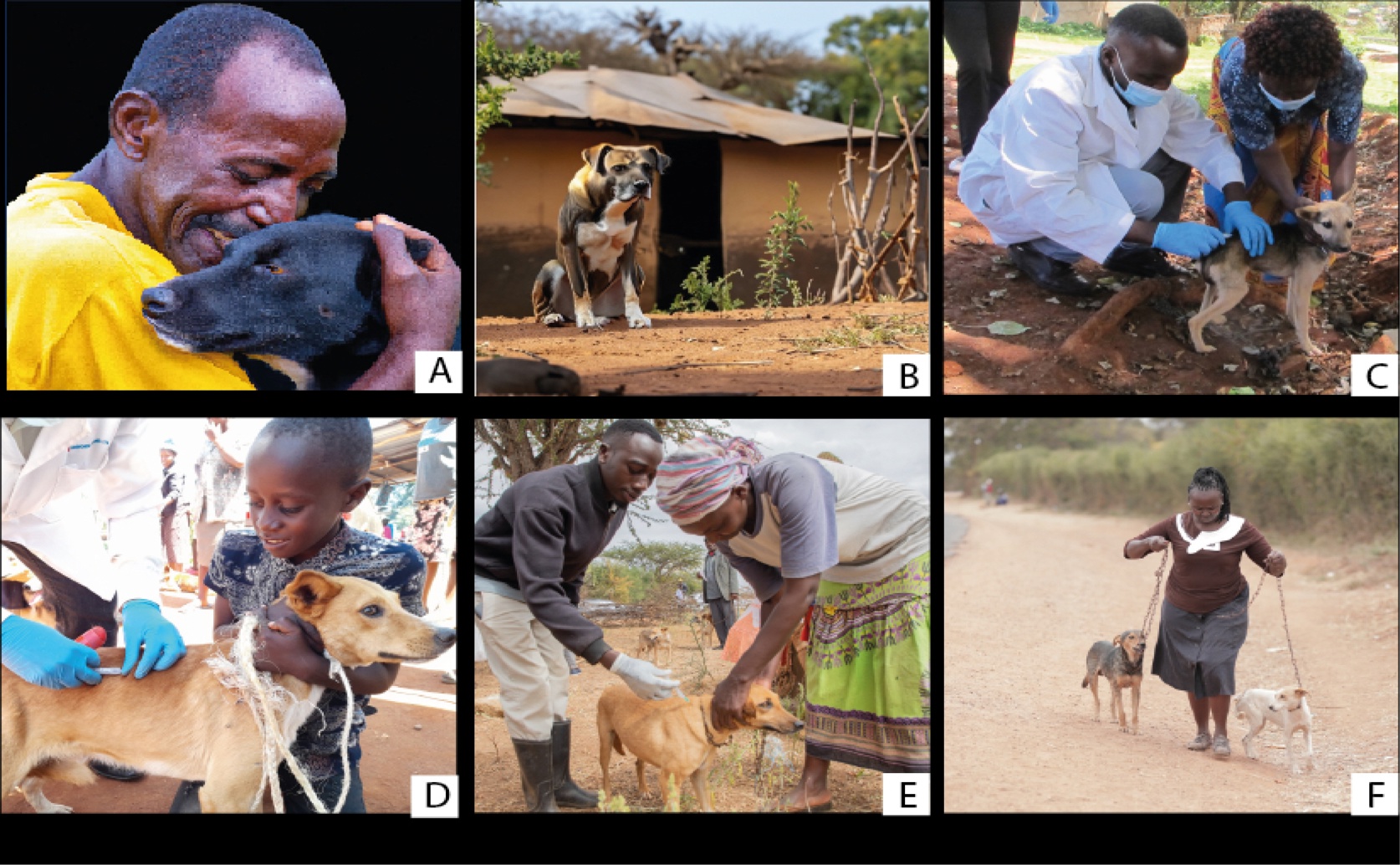
Demonstrating the value of co-creation in ensuring contextual relevance, participants selected images showing proper safety protocols and active community engagement (C, F) for rabies sensitization materials, while rejecting those displaying non-native breeds, poor composition, or unsafe practices (A, B, D, E).

Image adapted from: Bor et al. / CC BY (Source)

Key Findings

  • In Machakos County, Kenya, involving local communities in creating rabies awareness materials significantly boosted dog vaccination by emphasizing dogs' roles as friends and protectors
  • This collaborative approach deepened owners' understanding of rabies, motivating them to vaccinate their dogs as a way to protect their beloved companions
  • The study recommends that involving communities in health programs, rather than just top-down messaging, builds trust and boosts participation for lasting disease control
Rabies is a devastating disease, almost always fatal once symptoms appear, yet entirely preventable. It is a zoonotic disease, meaning it can transmit from animals to humans, primarily through the bite of an infected dog. This disease continues to cause tens of thousands of human deaths annually, with Africa disproportionately affected[2][3]. Globally, canine rabies is estimated to cause approximately 59,000 human deaths each year, leading to significant disability and economic losses totaling around 8.6 billion USD annually[3]. Despite the availability of effective vaccines for both dogs and humans, rabies remains a major public health crisis, often overlooked compared to other diseases[4]. Victims frequently die due to a lack of awareness about life-saving treatments or an inability to access them[4]. Effective control of rabies requires vaccinating at least 70% of the dog population at risk. However, achieving this threshold has been a persistent challenge in many regions, including Kenya, largely due to low vaccination coverage and insufficient awareness among dog owners. In response to a high rabies burden, Machakos County in Kenya was selected as a pilot area for a national rabies elimination strategy launched in 2014. From 2021 to 2024, a collaborative effort by the International Livestock Research Institute, University of Edinburgh, Vétérinaires Sans Frontières Germany, University of Liverpool, and Colorado State University implemented a series of free mass dog rabies vaccination campaigns in the region[1]. To enhance vaccine uptake, the research team employed an innovative approach: co-creation of rabies sensitization materials and vaccination announcements with the community itself. This involved a series of key informant interviews, focus group discussions, and workshops with community members who brought their dogs for vaccination. Through these interactions, the researchers gained a deeper understanding of the community's relationship with their dogs. Community members revealed that dogs serve both practical and emotional roles in their lives. Tangible benefits included guarding homes, livestock, and crops. Crucially, they highlighted friendship as the most significant intangible role, emphasizing that a bond of friendship was essential for dogs to effectively serve their owners. This co-creation process proved transformative. Participants reported that it deepened their understanding of rabies and fostered a greater appreciation for the value of their dogs. Consequently, they recognized the vital importance of vaccinating their dogs, viewing it as protecting their companions and friends. This directly addresses one of the primary reasons for ineffective rabies control in Africa: a low priority given to disease control due to a lack of awareness of the rabies burden[2]. By empowering communities to understand the disease and their dogs' role in it, the study effectively tackled this barrier. The findings from Machakos County offer a practical solution to the long-standing challenges identified in earlier research. Previous studies have pointed out that operational constraints, such as difficulty accessing dogs for vaccination and insufficient knowledge of dog population sizes, hinder effective campaign planning[2]. While the current study doesn't explicitly detail how it overcame all operational constraints, the co-creation process of building trust and participation is fundamental to improving dog accessibility and community engagement, which are crucial for successful vaccination campaigns. It provides a tangible method to overcome the "neglect and ignorance" that leads to preventable rabies deaths, as highlighted in the comparison with Ebola[4]. The significant economic burden of rabies, largely due to premature human deaths and post-exposure prophylaxis (PEP) costs, with only a small fraction spent on dog vaccination, underscores the need for increased investment in prevention[3]. The Machakos County study demonstrates a cost-effective pathway to increase this vital investment. By fostering community ownership and understanding, it makes the goal of achieving the 70% vaccination coverage, epidemiologically and practically feasible for canine rabies elimination[2], more attainable. This approach leverages community values and relationships with animals, making vaccination not just a public health directive but a personal commitment. The study advocates for wider adoption of co-creation processes, particularly within the 'One Health' approach. One Health recognizes that human, animal, and environmental health are interconnected. This integrated perspective is critical for addressing complex zoonotic threats like rabies. By involving communities in the design and implementation of health solutions, it builds trust and boosts participation, which are essential for the long-term sustainability of control efforts. This collaborative investment by medical and veterinary sectors, as advocated by earlier research[3], is shown to be dramatically more effective when it is rooted in community engagement and understanding. The current study thus ties together the need for greater awareness, improved operational strategies, and increased investment in dog vaccination, offering a community-centric model to achieve rabies elimination in Africa.

HealthSustainabilityAnimal Science

References

Main Study

1) Rabies control via co-creation: A model for sustainable one health interventions

Published 11th August, 2025

https://doi.org/10.1371/journal.pntd.0013350


Related Studies

2) The feasibility of canine rabies elimination in Africa: dispelling doubts with data.

https://doi.org/10.1371/journal.pntd.0000626


3) Estimating the global burden of endemic canine rabies.

https://doi.org/10.1371/journal.pntd.0003709


4) Human rabies deaths in Africa: breaking the cycle of indifference.

https://doi.org/10.1093/inthealth/ihu071


Related Articles

An unhandled error has occurred. Reload 🗙