How a Key Protein Controls Brain Immune Cell Life and Health

Jim Crocker
22nd July, 2025

How a Key Protein Controls Brain Immune Cell Life and Health
Image Source: © Natural Science News. This image is an artistic rendition.

Key Findings

  • Researchers at Shenzhen Peking University - HKUST Medical Center found that brain immune cells (microglia) in zebrafish and mice are maintained through a "cell competition" process
  • This competition eliminates "less fit" microglia that lack sufficient levels of the master gene PU.1/SPI1, a process regulated by the tumor suppressor gene Tp53
  • The study confirms that this dosage-dependent control of microglia survival by PU.1/SPI1 is a fundamental mechanism conserved across species
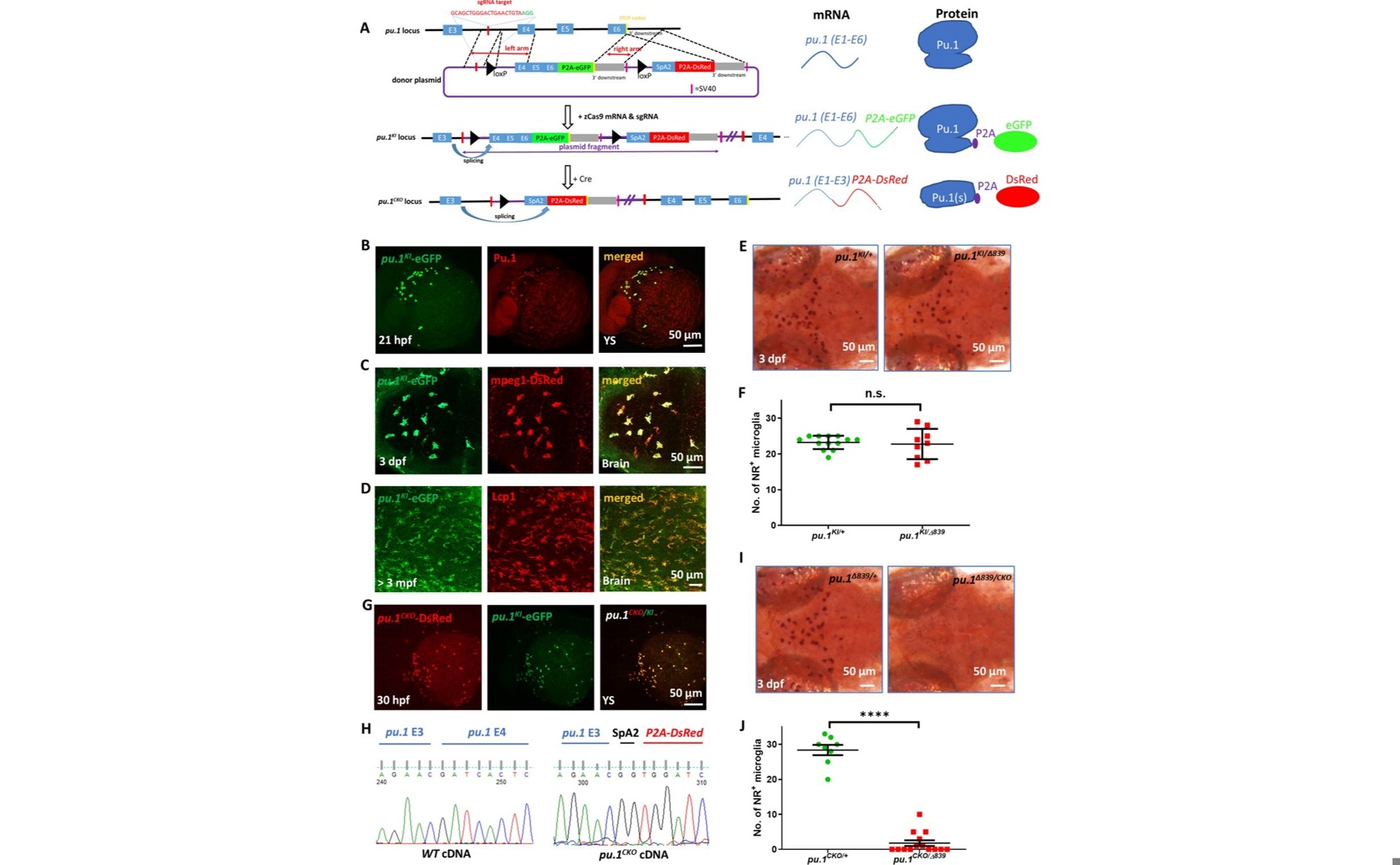
Microglia are specialized immune cells residing in the brain, acting as the central nervous system's primary defenders. They are crucial for brain development, maintaining its healthy state, and ensuring proper function. For a long time, it was thought that the adult population of these cells was very stable and long-lived, maintained primarily by self-renewal. However, research has shown that the reality is more dynamic. Studies in both mice and humans have revealed that microglia actually turn over quite rapidly, meaning the entire population can be replaced multiple times over a lifetime[2]. This constant renewal is achieved through a balanced process of new cell production (proliferation) and programmed cell death (apoptosis), leading to a continuously remodeled microglial population. Despite this understanding of rapid turnover, the precise cellular and molecular mechanisms that govern how this population is maintained and regulated remained largely unknown. Addressing this gap, recent research from the Shenzhen Peking University - HKUST Medical Center has shed light on the fundamental processes controlling microglia maintenance[1]. The scientists focused on the pu.1/spi1b gene, which is a master regulator essential for the development of microglia and other macrophage-type immune cells. Their goal was to understand how the activity of this gene influences the stability and turnover of microglia. To investigate this, the researchers utilized zebrafish as a model organism. Zebrafish are powerful vertebrate models for genetic studies, partly because advanced genome editing tools, such as the CRISPR/Cas9 system, allow for very precise modifications to their DNA[3]. These tools enable scientists to create specific genetic changes, like "knockouts" where a gene's function is removed, or "knock-ins" where new genetic material is inserted. Using these capabilities, the team generated zebrafish with a visible, conditional knockout of the pu.1/spi1b gene in their microglia. A "conditional knockout" means the gene can be switched off at a specific time, in this case, in adult fish, and "visible" means the cells lacking the gene can be easily identified. This allowed them to create a mosaic population, where some microglia had the gene, and others did not. The findings were striking. Initially, microglia that lacked the pu.1 gene (pu.1-deficient microglia) appeared to be viable, meaning they could survive. However, over time, these pu.1-deficient cells were gradually eliminated from the brain. This elimination occurred through a process known as "cell competition." Cell competition is a biological mechanism where "fitter" cells outcompete and eliminate "less fit" or damaged cells in a tissue, ensuring tissue health and integrity. In this study, the elimination of the pu.1-deficient microglia was specifically mediated by the Tp53 gene. Tp53 is a well-known tumor suppressor gene, often referred to as the "guardian of the genome," because of its critical role in preventing cancer by regulating cell growth, DNA repair, and programmed cell death (apoptosis). Mutations in Tp53 are incredibly common in human cancers[4]. Previous studies have also shown that p53 (the protein produced by the Tp53 gene) plays a central role in a form of cell competition in mammals, particularly in hematopoietic stem and progenitor cells (blood-forming cells). In these cells, p53-mediated competition helps select for the least damaged cells, potentially preventing the expansion of cells that could become cancerous[5]. The current study extends this understanding of Tp53-mediated cell competition to microglia, showing its importance in maintaining the healthy population of these brain-resident immune cells. The researchers further explored the role of pu.1 and a related gene, spi-b (which is the zebrafish equivalent, or "orthologue," of the mouse Spi-b gene). They found that when Pu.1 was inactivated in adult zebrafish that already had a non-functional spi-b gene, microglia were rapidly depleted through apoptosis. This indicated that Pu.1 and Spi-b work together in a "dosage-dependent manner" to regulate microglia maintenance. This means the amount of active Pu.1 and Spi-b proteins present determines the survival and health of microglia. Crucially, the team confirmed that this dosage-dependent regulation of microglia maintenance by PU.1/SPI1 (the protein names for the genes) is "evolutionarily conserved." This means the same fundamental mechanisms are at play across different species. They demonstrated this by conducting similar experiments in mice, conditionally inactivating single or both Spi1 alleles (versions of the gene) in mouse microglia, and observing similar outcomes. In essence, this research from Shenzhen Peking University - HKUST Medical Center provides a comprehensive understanding of how microglia populations are maintained in the brain. It ties together earlier findings that microglia are constantly renewed[2] by revealing the specific genetic and cellular pathways involved. The study demonstrates that the master regulator gene pu.1/spi1b, in conjunction with the tumor suppressor Tp53, orchestrates a continuous process of cell competition and selective elimination, ensuring that only the fittest microglia persist. This expands our knowledge of cell competition[5] to a new critical cell type in the brain and highlights the versatile role of Tp53, not just in preventing cancer[4], but also in maintaining the healthy balance of cells in normal tissues. The use of zebrafish as a model system, enabled by advanced genetic tools[3], proved invaluable in uncovering these conserved mechanisms that are vital for brain homeostasis in both fish and mammals.

HealthGeneticsAnimal Science

References

Main Study

1) Pu.1/Spi1 dosage controls the turnover and maintenance of microglia in zebrafish and mammals

Published 17th July, 2025

https://doi.org/10.7554/eLife.105788


Related Studies

2) Coupled Proliferation and Apoptosis Maintain the Rapid Turnover of Microglia in the Adult Brain.

https://doi.org/10.1016/j.celrep.2016.12.041


3) Highly efficient CRISPR/Cas9-mediated knock-in in zebrafish by homology-independent DNA repair.

https://doi.org/10.1101/gr.161638.113


4) tp53 mutant zebrafish develop malignant peripheral nerve sheath tumors.

Journal: Proceedings of the National Academy of Sciences of the United States of America, Issue: Vol 102, Issue 2, Jan 2005


5) p53-mediated hematopoietic stem and progenitor cell competition.

https://doi.org/10.1016/j.stem.2010.03.002


Related Articles

An unhandled error has occurred. Reload 🗙