
How Bio-Cement Strength and Fibers Make Sand Stable
Jenn Hoskins
12th August, 2025


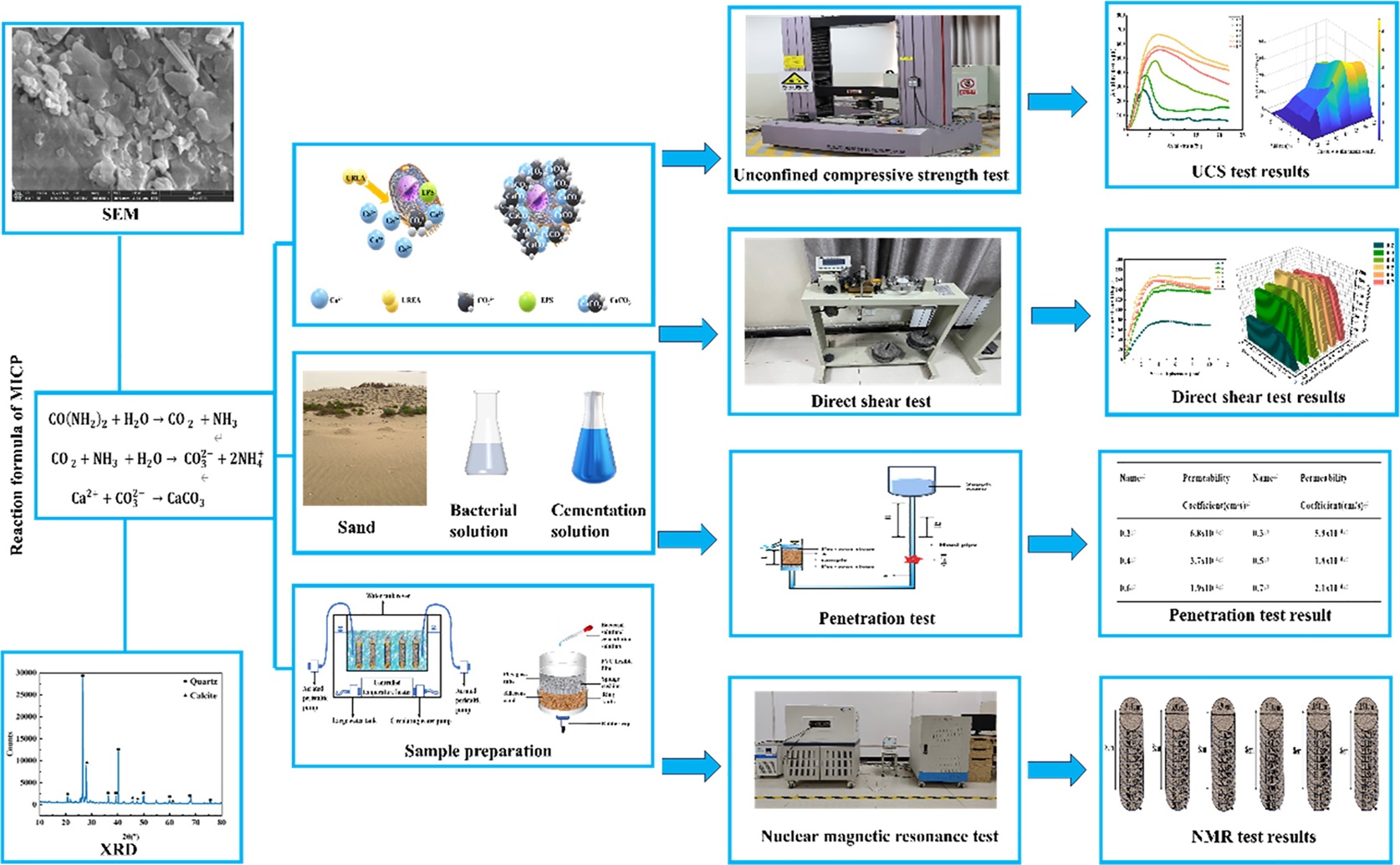
This flowchart depicts the comprehensive experimental methodology employed to evaluate the mechanical and microstructural evolution of sand reinforced with Palm fiber and Sporosarcina pasteurii, which ultimately identified 0.5 mol/L as the optimal cementation solution concentration for effective soil stabilization.
Key Findings
- Researchers in China and Brazil investigated how a bio-cementing technology, enhanced with palm fibers, can stabilize sand from the Kashi area
- They discovered that a 0.5 mol/L concentration of the bio-cementing solution is optimal, producing the strongest sand by maximizing the formation of natural cement
- This ideal concentration ensures enough cementing material is available without harming the helpful microorganisms, resulting in sand that is stronger and less prone to erosion
EnvironmentSustainabilityBiotech
References
Main Study
1) Study on the effect of cementation solution concentration on sand fixation by fiber reinforced MICP
Published 11th August, 2025
https://doi.org/10.1371/journal.pone.0329673
Related Studies
2) Enhancing aeolian sand stability using microbially induced calcite precipitation technology.
3) New non-ureolytic heterotrophic microbial induced carbonate precipitation for suppression of sand dune wind erosion.
4) Strain improvement of Sporosarcina pasteurii for enhanced urease and calcite production.
Related Articles
 10th January, 2025 | Jenn Hoskins