
Cleaning Cyanide Wastewater Using Algae and Bacteria in a Light-Powered Reactor
Jenn Hoskins
10th January, 2025


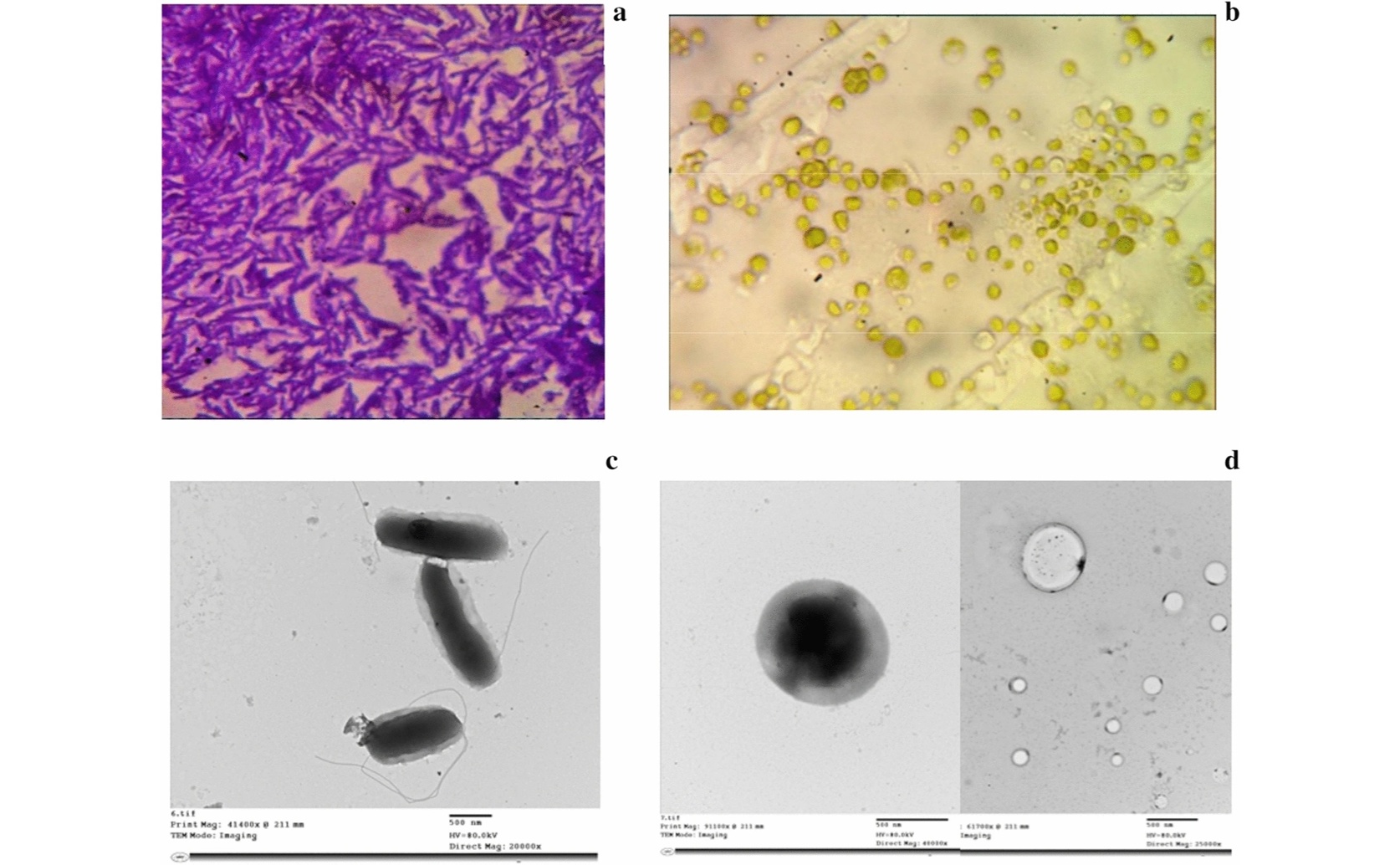
Microscopic analysis identified the two key organisms for the study's bioremediation microcosm as the bacterium Bacillus licheniformis, seen as Gram-positive rods (a, c), and the microalga Chlorella spp., seen as small spherical cells (b, d).
Key Findings
- Researchers at Cairo University studied microorganisms from an Egyptian wastewater treatment station to clean industrial wastewater
- The bacteria Bacillus licheniformis can remove significant amounts of harmful chemicals like potassium cyanide and benzonitrile from wastewater
- The algae Chlorella spp. is sensitive to these pollutants, but when combined with the bacteria in a special reactor, they effectively detoxify the wastewater without harming plant growth
EnvironmentSustainabilityBiotech
References
Main Study
1) Algal-bacterial bioremediation of cyanide-containing wastewater in a continuous stirred photobioreactor.
Published 9th January, 2025
https://doi.org/10.1007/s11274-024-04230-5
Related Studies
2) Biodegradation of Pollutants in Waste Water from Pharmaceutical, Textile and Local Dye Effluent in Lagos, Nigeria.
3) Remediation of the effect of adding cyanides on an algal/bacterial treatment of a mixture of organic pollutants in a continuous photobioreactor.
Related Articles
 16th June, 2024 | Greg Howard