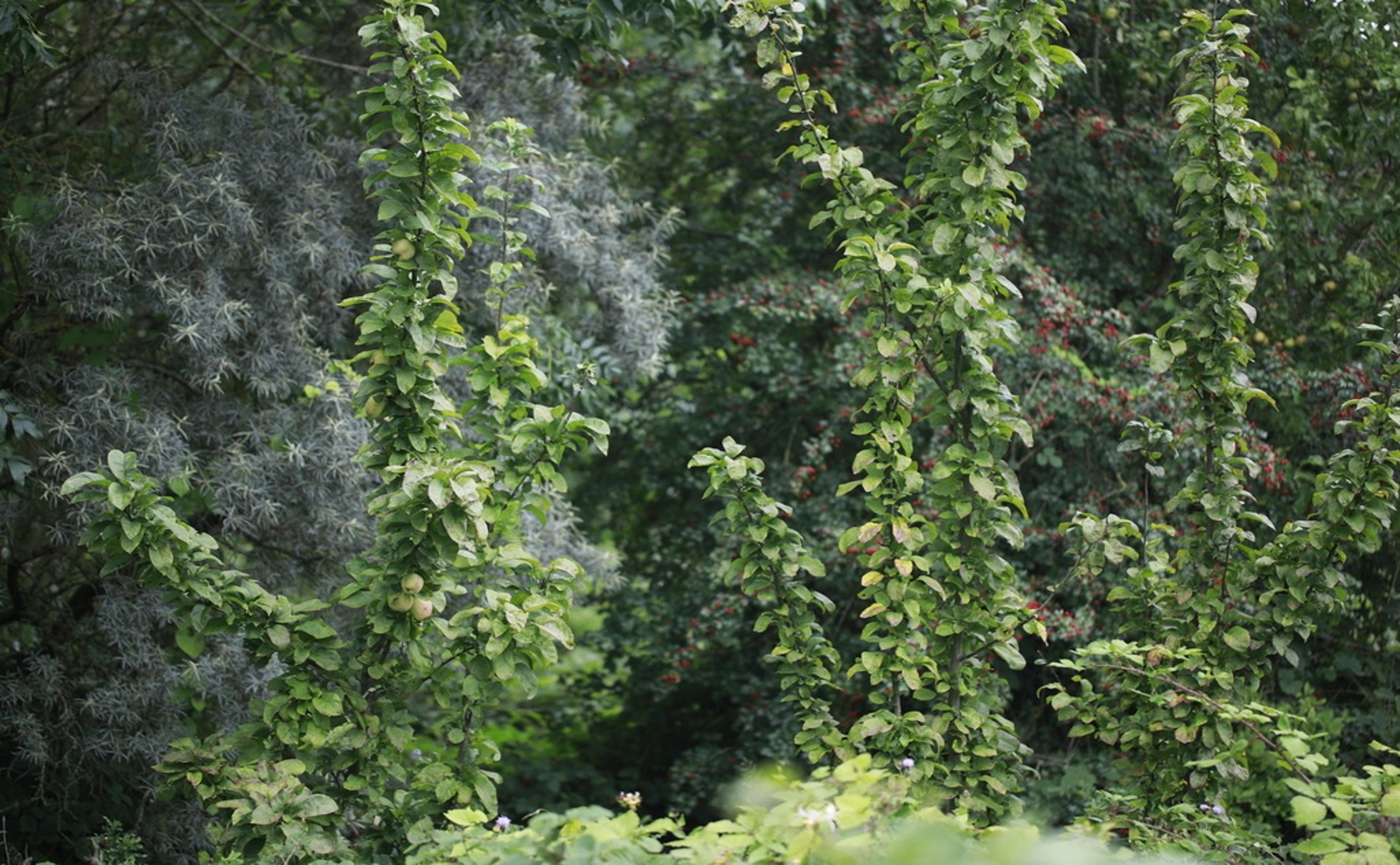
How Ground Care Quickly Affects Young Apple Tree Growth and Soil Health

Greg Howard
8th August, 2025

How Ground Care Quickly Affects Young Apple Tree Growth and Soil Health

Apple (Malus domestica)

Photograppher: Stephen James McWilliam

Key Findings

  • In a Polish apple orchard, two types of living mulches unexpectedly reduced young apple tree growth and potential fruit yield over two seasons
  • The study found these mulches significantly altered the soil's bacterial community, changing how microbes processed nutrients and potentially impacting the trees' ability to absorb them
  • This suggests that while living mulches offer benefits, their specific plant mix can have unexpected negative effects on certain crops by altering soil biology
Modern agriculture faces the challenge of producing food sustainably while maintaining soil health. One promising approach involves using "living mulches" – plants grown between crop rows or around trees – to improve soil fertility, suppress weeds, and support beneficial insects. While often seen as a universally positive practice, recent research highlights the complex and sometimes unexpected impacts these mulches can have, especially in young orchards. A recent study conducted by National Hort. Research and Canakkale University[1] investigated the effects of two different living mulch mixtures on young apple trees. The goal was to understand how these mixtures influenced soil nutrients, the soil's bacterial community, and ultimately, the growth and yield of the apple trees. The first mixture, Mix1, consisted primarily of white clover (Trifolium repens) and sheep fescue (Festuca ovina). The second, Mix2, was a more diverse blend of ten different flowering plant species, designed to act as a "flowering strip." Surprisingly, despite increasing beneficial nitrogen compounds like nitrate and ammonia in the soil, both living mulch mixtures actually limited the growth and yield potential of the apple trees during their first two growing seasons. This finding contrasts with earlier research on olive orchards[2], where similar conservation agriculture practices, including living mulches like sage and lemongrass, did not negatively affect the growth of young olive trees. In fact, those mulches were found to enhance beneficial insect populations without impacting tree development[2]. This difference suggests that the impact of living mulches is not uniform across all crop types and may depend heavily on the specific plant species involved and their interactions. To understand why the apple trees were affected, the researchers delved into the soil's bacterial microbiome – the vast community of microscopic organisms living in the soil. These microbes are crucial for soil health and nutrient cycling, influencing everything from plant nutrient uptake to disease resistance. Agricultural practices are known to significantly affect these microbial communities[3]. The study found that the two living mulch mixtures had different effects on the diversity, activity, and metabolic potential of the soil bacteria compared to a natural cover control. Metabolic potential refers to the community's ability to process and utilize different types of organic compounds, or "food sources," in the soil. Specifically, the study observed that the living mulches, particularly Mix2, altered how the bacterial community metabolized certain carbon sources. This was most pronounced in summer, when the bacterial community under Mix2 exploited all classes of carbon sources significantly more than in other seasons. This shift in the microbial community's "diet" and activity suggests a change in the soil's biochemical environment. While some studies show that general cover crop effects on microbiomes can be less pronounced[3], this research indicates that specific, diverse living mulch mixtures can induce significant functional changes in the microbial community. The implications of these microbial shifts are profound. For instance, the effectiveness of beneficial microbes, such as rhizobia bacteria that fix nitrogen for legumes like white clover (a component of Mix1), is not just about their presence but also their competitiveness and efficiency in forming symbiotic relationships with plants[4]. Earlier research on white clover showed that native, competitive rhizobia strains were far more effective at nitrogen fixation and improved plant performance compared to commercial inoculants[4]. This highlights that the specific functional capacity of the microbial community, not just its overall diversity, is key. In the apple orchard study, the altered metabolic activity of the soil bacteria, potentially driven by the living mulches, could have indirectly impacted the apple trees' physiological status, leading to reduced growth and yield. In conclusion, this research from National Hort. Research and Canakkale University provides crucial insights into the complex relationship between living mulches, soil microbiomes, and crop performance. It demonstrates that while living mulches offer many benefits, their specific composition can have unexpected and even detrimental effects on certain crops, like young apple trees, by altering the functional capacity of the soil bacterial community. These findings underscore the need for careful selection and management of living mulch mixtures to ensure they foster a soil microbiome that truly supports the development and productivity of the target crop.

AgricultureEcologyPlant Science

References

Main Study

1) In-depth insight into the short-term effect of floor management practice on young apple trees development and soil microbial biodiversity and activity

Published 7th August, 2025

https://doi.org/10.1371/journal.pone.0329979


Related Studies

2) Effects of Different Inter-Row Soil Management and Intra-Row Living Mulch on Spontaneous Flora, Beneficial Insects, and Growth of Young Olive Trees in Southern Italy.

https://doi.org/10.3390/plants11040545


3) Agricultural practices influence soil microbiome assembly and interactions at different depths identified by machine learning.

https://doi.org/10.1038/s42003-024-07059-8


4) Selection of Competitive and Efficient Rhizobia Strains for White Clover.

https://doi.org/10.3389/fmicb.2019.00768


Related Articles

An unhandled error has occurred. Reload 🗙