
Helpful Bacteria Promoted Tomato Growth and Shaped Root Soil Bacteria
Jenn Hoskins
15th July, 2025


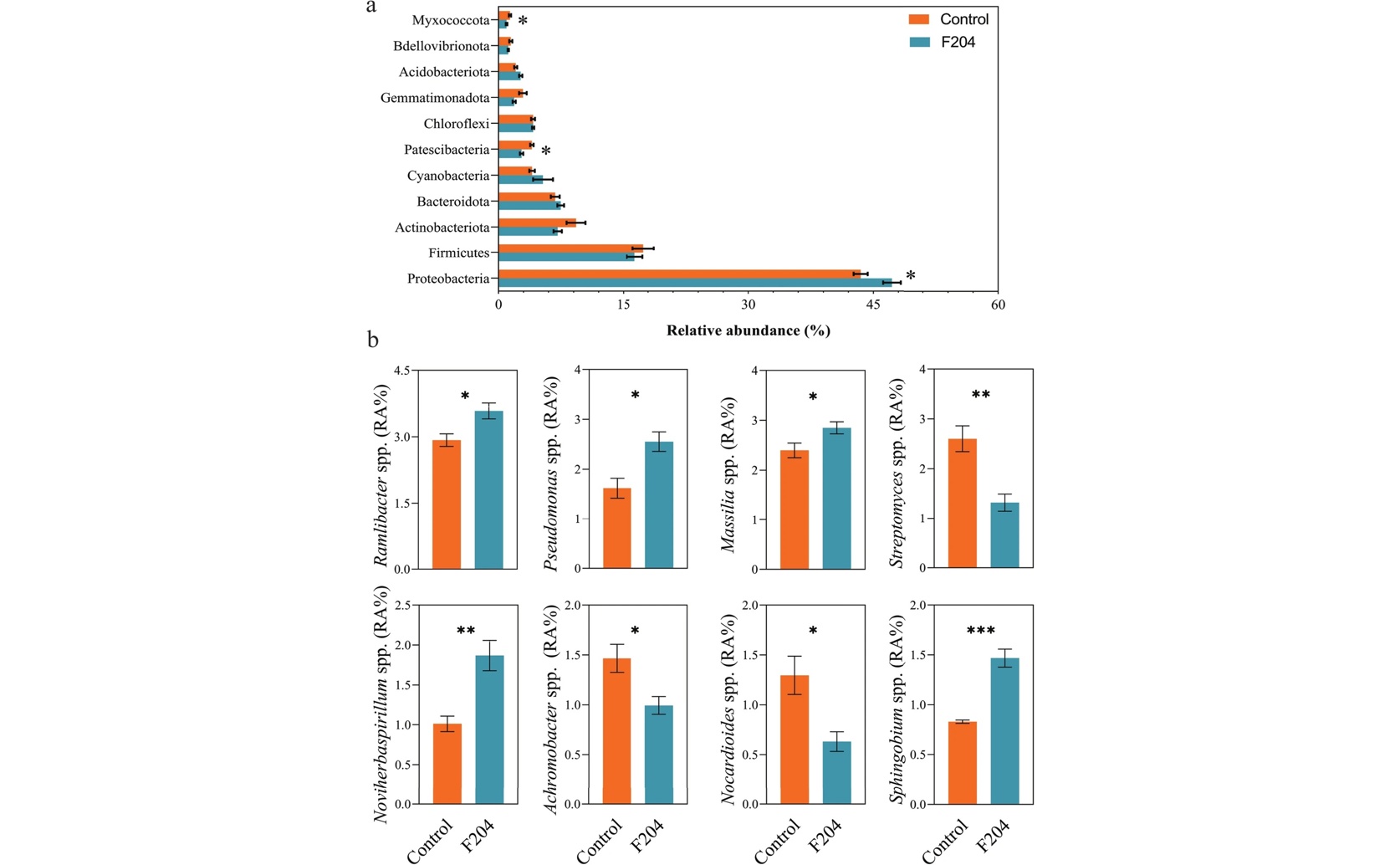
Inoculation with Pseudomonas sp. F204 significantly altered the rhizosphere bacterial community composition of tomato plants, characterized by an increased relative abundance of the phylum Proteobacteria (a) and the enrichment of specific genera including Pseudomonas (b) compared to the control.
Key Findings
- Researchers at Northeast Agricultural University discovered Pseudomonas sp. F204, a soil bacterium that effectively breaks down harmful plant DNA, which causes "soil sickness."
- This beneficial bacterium not only degrades problematic DNA but also significantly promotes tomato plant growth and improves the microbial community around their roots
AgricultureEcologyPlant Science
References
Main Study
1) Pseudomonas sp. F204 Promoted Tomato Growth and Altered Rhizosphere Bacteria Community
Published 12th July, 2025
https://doi.org/10.1007/s00284-025-04278-y
Related Studies
2) The role of extracellular DNA in the establishment, maintenance and perpetuation of bacterial biofilms.
3) The Role of DNA in the Extracellular Environment: A Focus on NETs, RETs and Biofilms.
4) Plant extracellular self-DNA inhibits growth and induces immunity via the jasmonate signaling pathway.
5) Negative plant-soil feedback in Arabidopsis thaliana: Disentangling the effects of soil chemistry, microbiome, and extracellular self-DNA.
Related Articles
 2nd May, 2025 | Jim Crocker