Nutritional Value Of Traditional Foods From The Amazon

Jenn Hoskins
24th July, 2025

Nutritional Value Of Traditional Foods From The Amazon

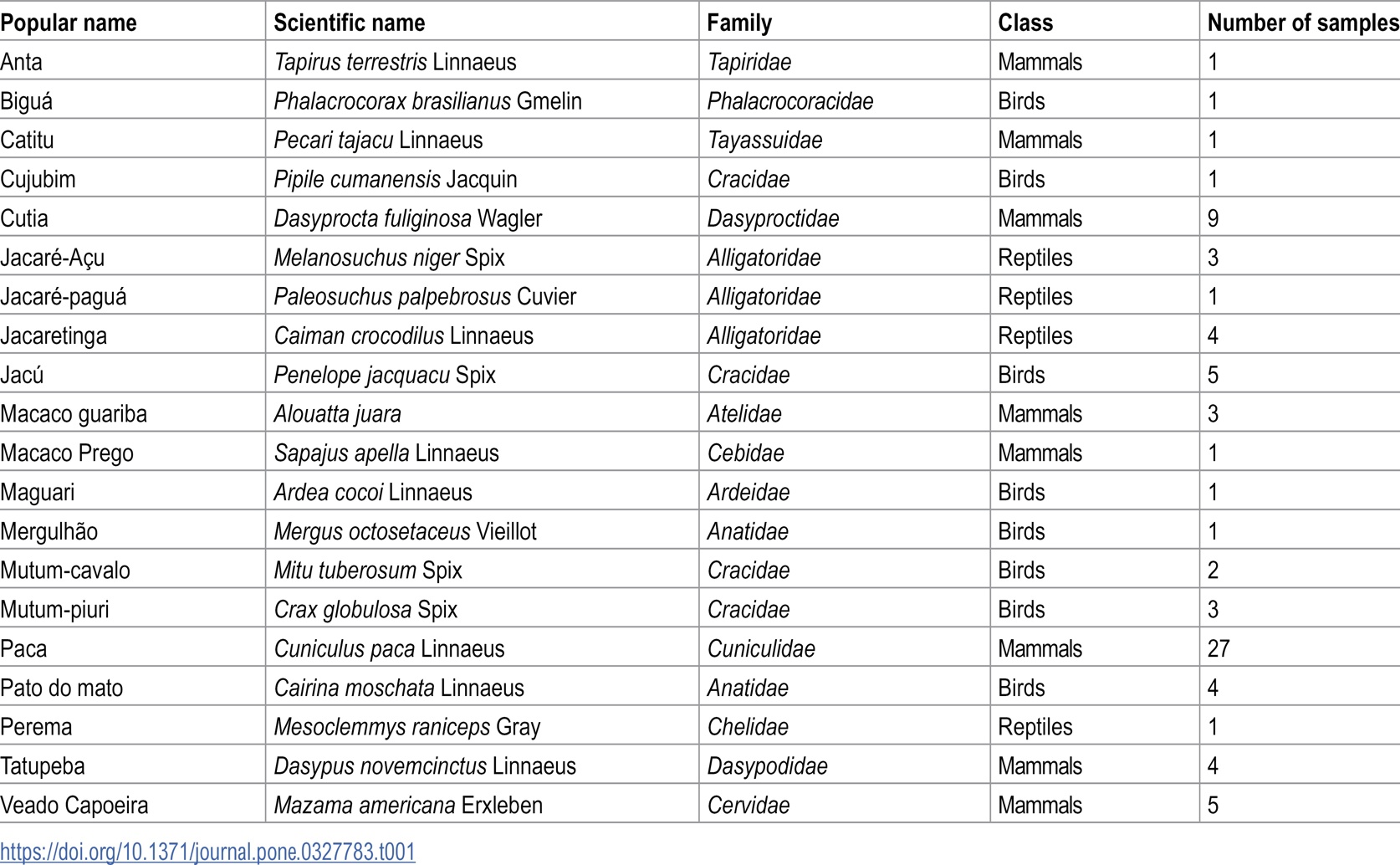
Popular and scientific name of the species present in the sample.

Image adapted from: Silva et al. / CC BY (Source)

Key Findings

  • A study in the Brazilian Amazon found that wild meats like mammals, birds, and reptiles are rich in protein and have moderate fat, similar to common domestic meats
  • Importantly, there were no major nutritional differences between these wild meat types, highlighting their crucial role in providing essential nutrients for local communities
  • This research provides vital data to help improve food security and combat malnutrition, like anemia, among Amazonian populations who rely on these traditional foods
The Amazon region is a vast area of immense biodiversity, home to indigenous and riverside communities whose lives are deeply intertwined with the forest. Their traditional diets, heavily reliant on local resources like fish and wild meat, are fundamental for their food security, providing essential proteins and other nutrients. However, despite its importance, the precise nutritional makeup of these wild meats has remained largely unexamined by science. This lack of detailed information limits the ability of health organizations and policymakers to develop effective nutritional strategies and interventions tailored to these unique populations. Addressing this critical knowledge gap, recent research from the Federal University of Rio Grande do Norte[1] set out to characterize the basic nutritional components, known as proximate composition, of wild mammal, bird, and reptile meats commonly consumed within traditional food systems in the Brazilian Amazon. Proximate composition refers to the fundamental breakdown of a food's major components, including protein, fat (lipids), and minerals (ash), along with moisture and carbohydrates (determined by difference). For this study, researchers collected 78 samples of muscle tissue – 51 from mammals, 18 from birds, and 9 from reptiles – from specific protected areas: the Tefé National Forest, and the Amanã and Mamirauá Sustainable Development Reserves. These samples were then meticulously analyzed using established scientific methods to determine their precise protein, lipid, and ash content. Statistical tests were performed to identify any significant differences in nutrient levels across these different types of wild meat. The findings revealed that wild meats are remarkably rich in protein. The average protein content was found to be approximately 22.27 grams per 100 grams for mammals, 23.47 grams for birds, and 22.31 grams for reptiles. These figures highlight wild meat as an excellent source of this vital macronutrient. Lipid (fat) content averaged around 5.72 g/100g for mammals, 5.40 g/100g for birds, and 4.03 g/100g for reptiles, indicating a moderate fat content. The mineral (ash) content was consistently low, around 1.08 to 1.27 g/100g, across all groups. Importantly, the study found no significant nutritional differences in protein, fat, or ash levels between the different taxonomic classes (mammals, birds, and reptiles). When compared to domesticated meats commonly consumed in modern food systems, these wild meats showed a clear nutritional similarity, underscoring their crucial role as key nutrient sources, especially for protein. This detailed quantification of wild meat's nutritional value provides a foundational understanding that can significantly impact food and nutritional security strategies in the Amazon. For instance, earlier research has already indicated that consuming wildmeat may offer protection against iron-deficiency anemia, a prevalent public health issue globally[2]. A study focusing on children under five years old in central Brazilian Amazonia found that wildmeat consumption was associated with higher hemoglobin concentration – the protein in red blood cells that carries oxygen, indicative of iron levels – particularly among the most economically vulnerable rural children[2]. The data from the Federal University of Rio Grande do Norte now provides the specific nutritional evidence, such as high protein content, that helps explain how wild meat can contribute to these positive health outcomes. This reinforces the argument that ensuring continued access to sustainably managed wildmeat is a meaningful, albeit not singular, step in addressing anemia among these populations[2]. The nutritional landscape in the Amazon is complex and evolving. While traditional diets have historically sustained communities, shifts in lifestyle and economic activities can introduce new challenges. For example, studies on the Ribeirinhos, a large ethnic group in the Amazon, have shown a high prevalence of stunting – a low height for age indicating chronic undernutrition – particularly among younger age groups[3]. Simultaneously, signs of a "nutrition transition" are emerging, with increasing rates of overweight and obesity, especially among adult males engaged in wage labor, due to changes in their diet and activity patterns[3]. The detailed nutritional profiles of wild meats provided by the new research are vital for developing interventions that can combat both undernutrition, like stunting, and the rising rates of overweight/obesity. By understanding the specific contributions of traditional foods, strategies can be designed to preserve the benefits of these diets while addressing the challenges posed by changing livelihoods. Furthermore, the nutritional richness of the Amazonian diet extends beyond wild meats. Other components, such as locally consumed fruits, also contribute significantly to daily nutrient intake. For example, fruits like Biribá, Pupunha, and Tucumã have been shown to be rich in various nutrients, energy, and beneficial plant compounds known as phytochemicals, which possess properties like antioxidant and antimicrobial activities[4]. This broader understanding of the diverse and nutrient-dense traditional food system, encompassing both wild meats and fruits, underscores the importance of local biodiversity for the health and well-being of Amazonian communities. The novel quantification of the proximate composition of wild meats by the Federal University of Rio Grande do Norte is a crucial step forward. This data will serve as a foundational basis for future research and for developing targeted strategies aimed at promoting food and nutritional security, ultimately contributing to the reduction of maternal and child malnutrition in Amazonian communities. It underscores the profound role of wild meat as a strategic resource for promoting health in these populations.

WildlifeNutritionAnimal Science

References

Main Study

1) Proximate composition of wild meats present in traditional food systems of the Brazilian Amazon

Published 21st July, 2025

https://doi.org/10.1371/journal.pone.0327783


Related Studies

2) Wildmeat consumption and child health in Amazonia.

https://doi.org/10.1038/s41598-022-09260-3


3) Nutritional status of Ribeirinhos in Brazil and the nutrition transition.

Journal: American journal of physical anthropology, Issue: Vol 133, Issue 2, Jun 2007


4) Functional and nutritional properties of selected Amazon fruits: A review.

https://doi.org/10.1016/j.foodres.2021.110520


Related Articles

An unhandled error has occurred. Reload 🗙