Invasive Black Cherry Extract Protects Stored Food

Jenn Hoskins
19th July, 2025

Invasive Black Cherry Extract Protects Stored Food

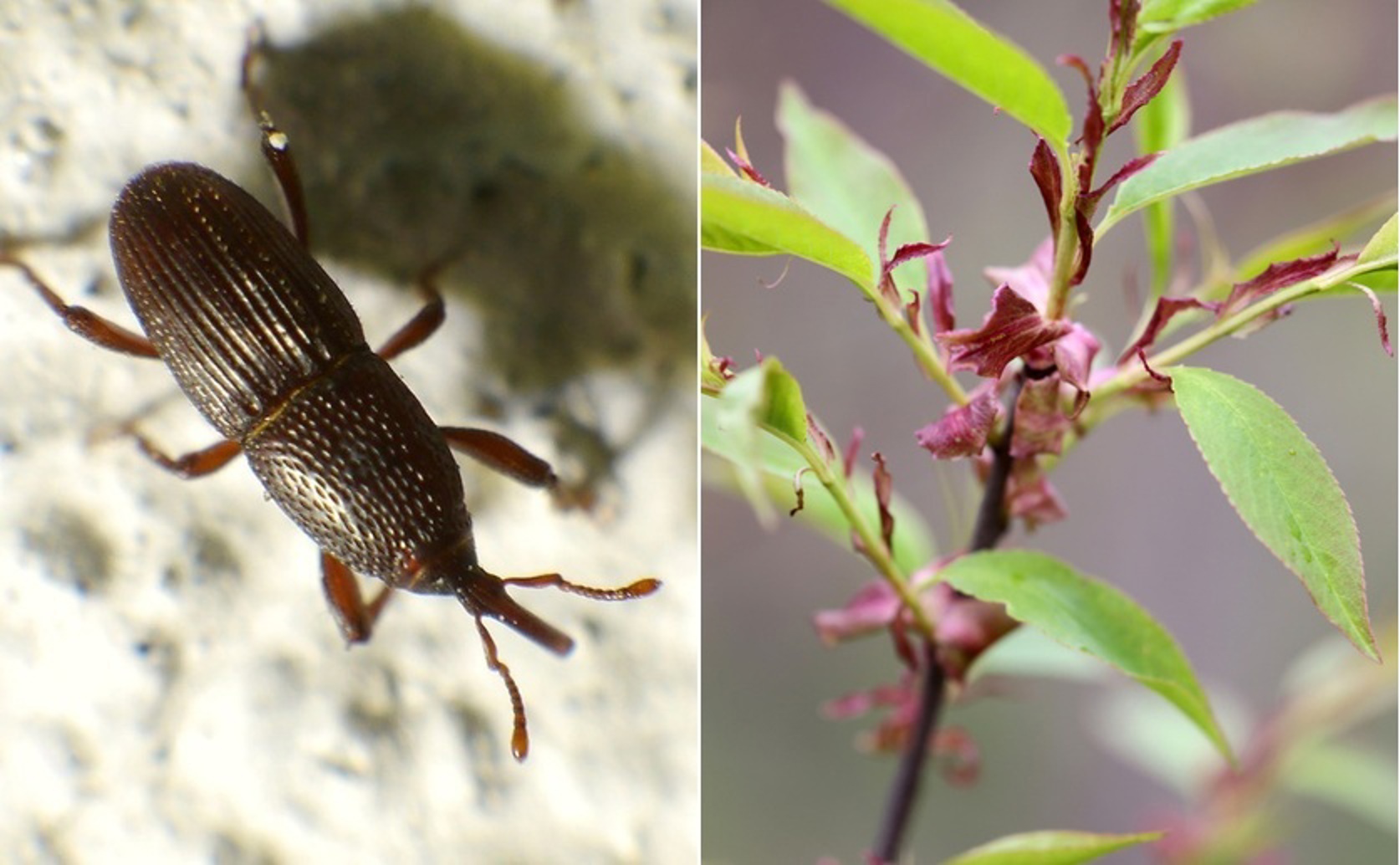
Black Cherry (Prunus serotina, right) and Wheat Weevil (Sitophilus granarius, left)

Composite: Natural Science News / CC BY. [Sources]
Adapted from photos by:

Key Findings

  • Scientists in Poland found that black cherry leaf extracts can deter granary weevils, a common pest of stored grains
  • These natural extracts, rich in compounds like phenolic acids, significantly reduced weevil feeding, with higher concentrations being more effective, especially for females
  • This suggests black cherry extracts are a promising, eco-friendly alternative to synthetic pesticides for protecting stored grains
The increasing reliance on synthetic pesticides in agriculture has raised significant concerns regarding their impact on the environment and human health. These chemicals can contaminate soil, water bodies, and ultimately, our food supply. This widespread presence means that even organically produced food, which by definition prohibits synthetic pesticide use, can still contain traces of these substances due to environmental drift, historical contamination, or distant applications. This poses a considerable challenge for organic certifiers, who face high costs investigating such residues, as a 'zero-tolerance' approach is currently unachievable[2]. Beyond environmental contamination, synthetic pesticides contribute to a decline in biodiversity and can lead to pests developing resistance, necessitating ever-stronger chemical interventions. This situation underscores an urgent need for safer, more sustainable alternatives that can protect crops without these detrimental side effects. One particularly destructive pest of stored grains is the granary weevil, Sitophilus granarius (L.). This insect can cause significant post-harvest losses, impacting food security and economic stability. While methods exist to detect the presence of these pests through the volatile chemical compounds they release, which can be used for monitoring and management[3], effective and environmentally friendly control methods are still highly sought after. Recent research conducted by scientists at Wroclaw University of Environmental Life Sciences has explored a promising natural solution to this problem[1]. Their study investigated the potential of extracts from the invasive black cherry tree, Prunus serotina Erhr., as a natural deterrent against the granary weevil. The aim was to evaluate the antifeedant activity of these extracts, meaning their ability to discourage pests from feeding. To conduct their research, the scientists prepared methanolic extracts from the leaves of Prunus serotina. Methanolic extraction is a common laboratory technique that uses methanol as a solvent to pull out various chemical compounds from plant material. Once the extracts were obtained, they underwent a detailed chemical analysis using advanced techniques such as liquid chromatography-mass spectrometry (LC-MS/MS). This process allows researchers to separate and identify the individual chemical compounds present in the complex plant extract. The analysis revealed a rich composition of beneficial plant compounds, primarily phenolic compounds. These included ursolic acid, p-coumaric acid, o-coumaric acid, and caffeic acid, all present in significant concentrations. Further LC-MS/MS analysis specifically identified luteolin-7-O-glucoside, caffeic acid, and chlorogenic acid as being among the most abundant compounds. The effectiveness of these extracts was then tested using a "wheat wafer method." This involved offering granary weevils wheat wafers that had been treated with different concentrations of the Prunus serotina extract. The researchers observed how much the weevils fed on the treated wafers compared to untreated ones. The results showed that the Prunus serotina leaf extract exhibited a medium level of antifeedant activity across all tested concentrations (3.5, 5.0, and 12.0 mg/mL). Importantly, both male and female weevils consumed significantly less of the extract-treated wafers. The inhibition of feeding was even stronger in female weevils at the highest concentration tested. This indicates that the extracts effectively discourage S. granarius from feeding, and their potency increases with higher concentrations. The study suggests that the antifeedant properties of Prunus serotina extracts stem from a complex interplay of various natural compounds, including flavonoids, phenolic acids, and cyanogenic glycosides. This multi-component action is a significant advantage, as it makes it harder for pests to develop resistance, a common issue with single-compound synthetic pesticides. The presence of phenolic acids like chlorogenic acid and flavonoids in plant extracts has been previously linked to insecticidal activity against other major agricultural pests. For instance, studies have shown that plant extracts containing quercetin, a type of flavonoid, and chlorogenic acid can be effective against pests like Spodoptera frugiperda, a primary pest of maize[4]. Quercetin has been demonstrated to disrupt insect physiology by interacting with crucial enzymes like acetylcholinesterase, which is vital for nerve function in insects[4]. Furthermore, the identification of cyanogenic glycosides in Prunus serotina extracts aligns with existing knowledge about the Prunus genus. Prunus serotina is known to contain these compounds, similar to those found in bitter almonds, such as amygdalin and its precursor prunasin[5]. These compounds can release hydrogen cyanide upon degradation, which is known for its deterrent or toxic effects on various organisms, including insects. The presence of such diverse active compounds in black cherry extracts suggests a robust and multifaceted defense mechanism against pests. This research from Wroclaw University of Environmental Life Sciences highlights the considerable potential of Prunus serotina as a source for developing new, natural botanical pesticides. By offering a safer, plant-based alternative, these extracts could help reduce environmental pollution, support biodiversity, and mitigate the problem of pesticide resistance, thereby contributing to more sustainable agricultural practices. Future research will focus on isolating the specific key active compounds responsible for the antifeedant effects and further evaluating their efficacy, paving the way for their practical application in pest management.

AgricultureBiochemAnimal Science

References

Main Study

1) Antifeedant activity of invasive Prunus serotina leaves methanolic extract against Sitophilus granarius, a pest of stored products

Published 15th July, 2025

https://doi.org/10.1038/s41598-025-10326-1


Related Studies

2) Presence of pesticides in the environment, transition into organic food, and implications for quality assurance along the European organic food chain - A review.

https://doi.org/10.1016/j.envpol.2022.120116


3) The Correlation between Volatile Compounds Emitted from Sitophilus granarius (L.) and Its Electrophysiological and Behavioral Responses.

https://doi.org/10.3390/insects13050478


4) Insecticidal Activity of Organic Extracts of Solidago graminifolia and Its Main Metabolites (Quercetin and Chlorogenic Acid) against Spodoptera frugiperda: An In Vitro and In Silico Approach.

https://doi.org/10.3390/molecules27103325


5) Prunasin hydrolases during fruit development in sweet and bitter almonds.

https://doi.org/10.1104/pp.111.192021


Related Articles

An unhandled error has occurred. Reload 🗙