How Plant Smells Affect Behavior and Brain Activity In Lady Beetles

Jenn Hoskins
1st July, 2025

How Plant Smells Affect Behavior and Brain Activity In Lady Beetles

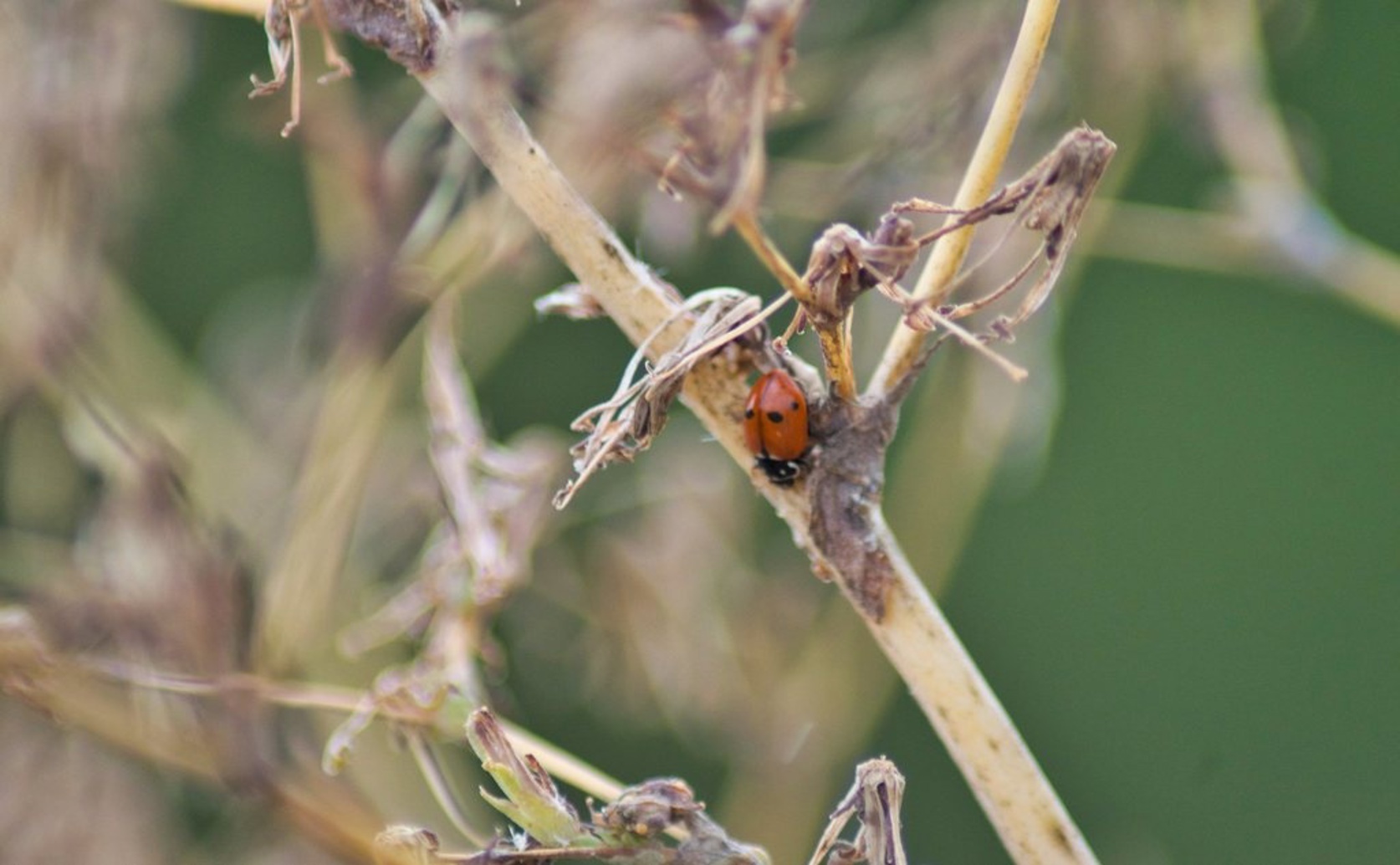
Variegated Lady Beetle (Hippodamia variegata)

Photo adapted from: Christian Oudot / CC BY (Source)

Key Findings

  • Scientists at Hebei Agricultural University in China identified four plant-emitted odors that strongly attract the beneficial lady beetle Hippodamia variegata, a natural predator of crop pests
  • These specific odors, including ethyl benzoate and methyl jasmonate, were confirmed to be detected by the lady beetles' antennae and increased their feeding on pests in lab tests
  • This research provides a foundation for eco-friendly pest control, allowing farmers to lure these lady beetles to crops and reduce reliance on harmful chemical pesticides
The global challenge of feeding a growing population often clashes with the need for sustainable agriculture. Traditional pest control, heavily reliant on chemical pesticides, can harm the environment, beneficial insects, and human health. This has driven a search for more eco-friendly methods, particularly those that harness natural biological processes. One promising avenue is integrated pest management, which seeks to control pests using their natural enemies, like predatory insects. The key to making this work is understanding how these natural predators find their prey, often through chemical signals or odors. Recent research by scientists at Hebei Agricultural University, Chinese Academy of Agricultural Sciences, Hebei Academy of Agriculture and Forestry Sciences, and Zhejiang University[1] has made strides in this area. Their study focused on the lady beetle Hippodamia variegata, a significant predator of pests like the cotton aphid. The core idea is to use specific plant-emitted odors to attract these beneficial lady beetles, thereby enhancing their ability to control pest populations without resorting to harmful chemicals. The study aimed to identify specific volatile compounds – chemicals that easily evaporate into the air – which are attractive to H. variegata. They tested 28 different substances, finding that four compounds in particular were significantly attractive: ethyl benzoate, octyl formate, methyl jasmonate, and methyl dihydrojasmonate. The lady beetles showed strong behavioral responses to these compounds, especially at higher and medium concentrations. Furthermore, laboratory tests indicated that the presence of these plant volatiles increased the feeding activity of H. variegata on pests. To arrive at these findings, the researchers employed several methods. They first conducted behavioral assays, observing how H. variegata reacted to the presence of these compounds in controlled environments. This is crucial because, as previous work has shown, insects like ladybirds are known to use chemical communication to locate their prey. For instance, the ladybird Hippodamia variegata itself has been shown to prefer aphid-infested plants, responding to a range of volatile compounds emitted by these plants, such as α-pinene and methyl salicylate[2]. This earlier work highlighted the potential of plant volatiles as attractants and laid a foundation for further exploration of specific compounds. Beyond observing behavior, the new study also used electroantennography (EAG) tests. Electroantennography is a technique that measures the electrical response of an insect's antenna to odors. The antennae are primary olfactory organs, equipped with specialized structures called sensilla, which are essentially microscopic hairs or pegs that detect chemical molecules in the air. For example, studies on Medetera flies, which are natural enemies of bark beetles, have detailed different types of these olfactory sensilla, such as sensilla trichodea and sensilla basiconica, on their antennae and maxillary palps[3]. These sensilla contain nerve cells that generate electrical signals when they bind to specific odor molecules. The EAG test essentially records the sum of these electrical signals, providing a direct measure of how an insect's olfactory system perceives a particular smell. In the H. variegata study, the EAG responses to the four identified compounds increased with concentration, confirming that the lady beetles' antennae were indeed detecting and responding strongly to these specific chemicals. The identification of these highly attractive compounds for H. variegata provides a practical foundation for developing new pest management strategies. The concept involves using these identified attractants to lure lady beetles to specific areas where pests are a problem. This could be part of an "attract-and-kill" strategy, where the attractant is combined with a targeted, low-impact insecticide, or a "lure-and-release" approach, where beneficial insects are drawn to crops to naturally control pests. This approach aligns with the broader understanding that volatile phytochemicals play a significant role in how insects orient themselves and find hosts or prey[4]. For example, even degraded compounds like formic and acetic acids have been shown to play a role in host selection by the Asian citrus psyllid, highlighting the diverse chemical cues insects utilize[4]. The current study expands this knowledge by pinpointing specific, readily available compounds that effectively attract an important predator. By understanding the precise chemical signals that draw natural enemies to pests, agricultural practices can move away from broad-spectrum chemical sprays and towards more targeted, environmentally friendly solutions. This research from Hebei Agricultural University and its collaborators represents a step forward in harnessing the power of natural chemical communication for sustainable pest control, offering a theoretical basis for future field applications to manipulate predator behavior and protect crops.

EcologyPlant ScienceAnimal Science

References

Main Study

1) Behavioral and electrophysiological responses of Hippodamia variegata to plant volatiles

Published 30th June, 2025

https://doi.org/10.1371/journal.pone.0327160


Related Studies

2) Volatiles from cotton aphid (Aphis gossypii) infested plants attract the natural enemy Hippodamia variegata.

https://doi.org/10.3389/fpls.2023.1326630


3) Antennal and maxillary palp morphology, and sensillar equipment, of the spruce bark beetle predators, Medetera signaticornis and Medetera infumata (Diptera: Dolichopodidae).

https://doi.org/10.1016/j.asd.2022.101229


4) Formic and Acetic Acids in Degradation Products of Plant Volatiles Elicit Olfactory and Behavioral Responses from an Insect Vector.

https://doi.org/10.1093/chemse/bjw005


Related Articles

An unhandled error has occurred. Reload 🗙