On The Road To Sustainability: Testing Ideas To Save Energy In Travel

Jim Crocker
6th June, 2025

On The Road To Sustainability: Testing Ideas To Save Energy In Travel

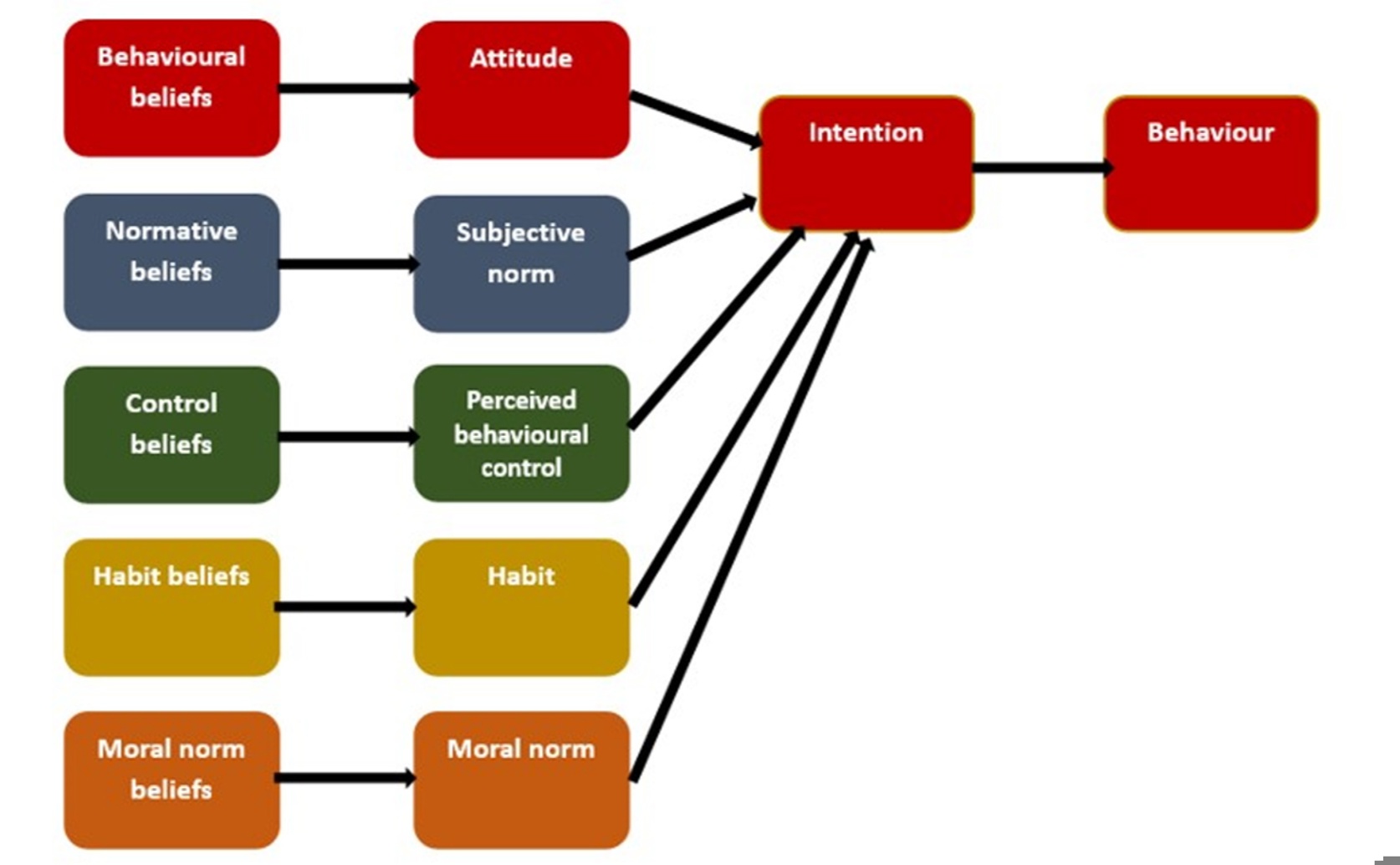
The extended Theory of Planned Behaviour model illustrates the significant role of habit and moral norms, alongside standard predictors, in determining intentions and subsequent engagement in sustainable transportation practices.

Image adapted from: Ciocîrlan et al. / CC BY (Source)

Key Findings

  • In the UK study, researchers found that regular habits and a strong sense of personal responsibility play a major role in choosing eco-friendly transportation
  • An expanded model that includes these routines and ethics predicts actual sustainable travel choices better than traditional models focused only on intentions
[1] Researchers from the University of Sheffield and East China Normal University recently conducted a study that advances our understanding of sustainable transportation practices through an extended model of the Theory of Planned Behaviour (TPB). Climate change requires rapid action to reduce CO2 emissions, and changes in individual transportation habits represent a critical step in that direction. This study aimed to uncover the beliefs that drive various transportation behaviours, including generally sustainable travel, public transport use, walking and cycling, reducing car use, and cutting back on flights. By identifying the underlying factors, the researchers hoped to inform interventions that can guide people toward more environmentally friendly choices. The study built on the well-known Theory of Planned Behaviour, which suggests that a person’s behaviour is primarily determined by their intention to perform that behaviour. Intention itself is influenced by attitudes (personal evaluations of the behaviour), subjective norms (perceptions of how others view the behaviour), and perceived behavioural control (the ease or difficulty of performing the behaviour). In this extended model, the researchers also included measures of habit and moral norms. Habit refers to the routine and often unconscious aspects of behaviour, while moral norms pertain to personal feelings of responsibility to act in an ethically correct manner. A key strength of this study was its three-step approach. Initially, the research team conducted qualitative interviews to gather a wide range of beliefs from individuals regarding sustainable transportation. These initial findings were then used to design a comprehensive questionnaire that measured a host of variables, including attitudes, subjective norms, perceived behavioural control, habits, and moral norms. Finally, the study included a one-week follow-up period in which participants reported their actual transportation behaviours. In this way, the study not only explored the psychological factors behind intentions but also examined how these intentions translated into real-world actions. The results revealed some notable findings. First, behavioural beliefs were found to strongly predict attitudes toward sustainable transportation, reaffirming the idea that how people think about an action influences their willingness to perform it. More importantly, the study found that habit-related beliefs and moral norms were the strongest predictors of sustainable transportation behaviours. In this extended TPB model, habits demonstrated a robust influence on behaviour, supporting earlier work that found habitual factors can moderate the strength of the relationship between intentions and actual behaviour[2]. For example, previous research on bicycle use showed that when a behaviour becomes habitual, changes in intention have a diminished effect on whether the behaviour is performed. This finding emphasizes that once an action is routinized, intentions play a smaller role. Moreover, although intention did predict behaviour, it explained only a small proportion of the overall variance. This modest predictive power aligns with earlier experimental research[3] which found that even when individuals’ intentions are strengthened, the resulting behavioural changes are only modest. This reinforces the idea that other factors like habit and moral considerations might have a more substantial impact on everyday decisions like transportation choices. The inclusion of moral norms in the study offers an important perspective. Moral norms reflect the personal commitment to act in ways that are considered right or ethical. In the context of mitigating climate change, individuals who believe they have a moral responsibility to protect the environment are more likely to engage in sustainable transportation, regardless of their immediate attitudes or intentions. This suggests that strong personal values might sometimes override more calculated or intentional decision-making processes, a finding that helps explain why some behaviours persist even when individuals face obstacles or temptations to revert to less sustainable actions. By integrating these additional elements into the TPB model, the study provides a more comprehensive framework for understanding the complexities of human decision-making regarding sustainable transportation. It suggests that interventions designed to foster sustainable travel should not only focus on changing individual intentions through information and persuasion but also on reshaping habits and reinforcing moral norms. For instance, policies could encourage the development of new routines—such as regular use of public transportation or cycling—for individuals previously reliant on personal vehicles. Simultaneously, campaigns that appeal to a shared moral responsibility towards the environment might further strengthen these efforts. In summary, the extended TPB model from provides critical insights into how sustainable transportation behaviours are formed and maintained. By combining measures of attitudes, subjective norms, perceived control, habit, and moral norms, the study deepens our understanding of the interplay between different factors that drive behaviour. It also confirms and extends earlier findings, such as those indicating the dominant role of habit in behaviour prediction[2] and the complex relationship between intentions and actions[3]. The implications for policy and intervention are clear: change efforts must target both the automaticity of habits and the ethical dimensions of decision-making if they are to successfully promote more sustainable choices in transportation.

EnvironmentSustainability

References

Main Study

1) On the road to sustainability: Applying an extended Theory of Planned Behaviour model to energy-saving transportation practices

Published 3rd June, 2025

https://doi.org/10.1371/journal.pone.0325196


Related Studies

2) Adult active transportation: adding habit strength to the theory of planned behavior.

https://doi.org/10.1016/j.amepre.2008.10.019


3) Does changing behavioral intentions engender behavior change? A meta-analysis of the experimental evidence.

Journal: Psychological bulletin, Issue: Vol 132, Issue 2, Mar 2006


Related Articles

An unhandled error has occurred. Reload 🗙