What Influences Gen Z’s Green Fashion Choices? The Role of Greenwashing

Greg Howard
2nd June, 2025

What Influences Gen Z’s Green Fashion Choices? The Role of Greenwashing

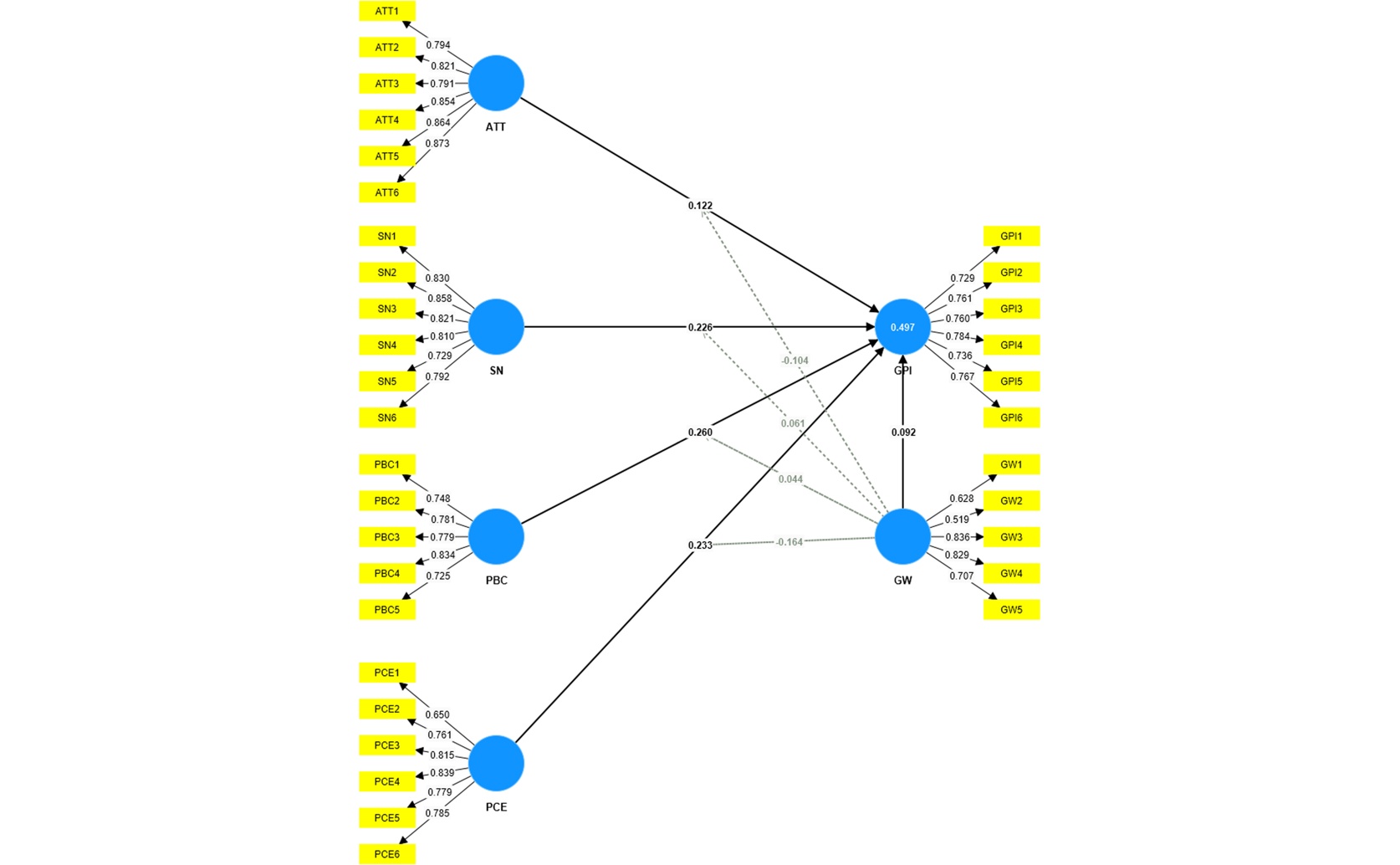
The initial assessment of outer loadings revealed that three indicators related to greenwashing and perceived consumer effectiveness fell below the reliability threshold of 0.70, necessitating their exclusion to ensure the statistical validity of the structural model used to predict Gen Z's green purchase intention.

Image adapted from: Do et al. / CC BY (Source)

Key Findings

  • In Vietnam’s emerging green fashion market, Gen Z consumers with positive views, supportive social circles, easy access, and belief in personal impact are more inclined to buy eco-friendly fashion
  • However, when young consumers suspect brands of greenwashing, their trust and belief in making a difference weaken, reducing their likelihood of choosing green fashion
[1] A recent study by researchers from National Economics University and HUTECH University investigates the factors driving green purchasing decisions for fashion items among Vietnam’s Gen Z. This study is particularly significant given that the concept of green fashion is still emerging in Vietnam, and many brands have been accused of “greenwashing” – a deceptive practice where companies exaggerate or mislead consumers about their environmental efforts. The study sets out to examine how key factors such as attitude, subjective norms (social pressure or expectations), perceived behavioral control (the ease or difficulty of engaging in the behavior), and perceived consumer effectiveness (the belief that one’s individual actions can make a difference) shape the intention to purchase eco-friendly fashion. Data were gathered from 467 Vietnamese Gen Z consumers, and a statistical method known as structural equation modeling with bootstrapping was used to analyze the relationships between these factors and green purchase intention. Bootstrapping is a method that helps to test the reliability of the statistical findings by repeatedly sampling from the data. The results show that all the examined factors—attitude, subjective norms, perceived behavioral control, and perceived consumer effectiveness—have a significant positive influence on the intention to buy green fashion. This means that if young consumers have a favorable view of sustainable products, feel social pressure to adopt green practices, believe they are capable of making sustainable choices, and are convinced that their actions contribute to positive environmental change, they are more likely to choose green fashion items. An important and novel aspect of this study is the role of greenwash perception as a moderating factor. In other words, the extent to which consumers suspect that a brand is exaggerating or misleading about its environmental claims significantly changes the strength of the relationship between the key factors and the intention to purchase green fashion items. When greenwash perception is high, it tends to diminish consumer trust, thereby increasing consumers’ reliance on accurate cues from companies regarding their sustainable practices. The study recommends that businesses avoid greenwashing by being more transparent, clearly communicating their sustainability initiatives, obtaining third-party certifications, and running educational campaigns aimed at informing consumers. This research builds on and sometimes challenges earlier findings in the realm of green purchasing. For example, previous research[2] explored how factors such as individual and social benefits, willingness-to-pay, environmental literacy, and word-of-mouth marketing can drive consumers’ intentions to adopt green behaviors. That study emphasized the importance of voluntary participation over mandatory social pressure, noting that consumers respond more strongly to clear communication about the benefits of green practices rather than just societal expectations. The current study echoes the significance of transparency and clear communication but emphasizes that in the context of Vietnam’s emerging green fashion market, greenwashing can critically undermine these relationships. The finding that subjective norms have a significant impact among Gen Z aligns with earlier work[2], though it highlights that for environmentally aware young consumers, the risk of deceptive practices like greenwashing can erode even the positive influence of social pressure when consumers perceive inauthenticity. Another study[3] integrated theories such as signaling theory and the theory of planned behavior to assess green purchasing in the U.S. market, showing that green marketing efforts (like advertising and product presentation) and the perceived value of green products positively influence purchase intentions. While that study focused on broader dimensions of green customer value and the marketing mix in a developed market, the current research zooms in on a developing country context and addresses a pressing issue—greenwashing—that had not been the central focus previously. Both studies ultimately advise companies to adopt genuine and well-communicated sustainability practices, but the newer study adds an extra layer by examining how perceptions of misleading environmental claims can counteract the drivers of green purchase intention. The importance of these findings is twofold. For businesses operating in the fashion industry in Vietnam, it signals that investing in real, verifiable sustainability practices is crucial. Companies that engage in greenwashing may risk not only consumer backlash but also the erosion of the positive influence that traditionally drives green purchasing behavior. For policymakers and educators, the study underscores the need for regulations and educational campaigns that help consumers discern genuine sustainability efforts from marketing ploys. In effect, increasing consumer environmental literacy can further strengthen the positive impact of attitudes and perceived behavioral control on green purchasing. Overall, the study provides both theoretical and practical contributions. Theoretically, it enriches the existing framework of green consumer behavior by incorporating greenwash perception as a moderating factor. Practically, it offers actionable recommendations for fashion brands seeking to build trust with their target audience. Transparency, third-party verifications, and clear communication about sustainability efforts are presented as key strategies for capturing and maintaining the attention of environmentally conscious young consumers. By linking findings from previous research[2][3] with its own unique context, this study demonstrates that while many factors support green purchasing intentions, the authenticity of a brand’s environmental claims is just as critical. As the green fashion movement continues to evolve in Vietnam, researchers and practitioners alike can benefit from understanding these relationships to foster a market that is both environmentally sustainable and economically viable.

EnvironmentSustainability

References

Main Study

1) Antecedents of Gen Z’s green purchase intention in Vietnam’s fashion industry with the moderating role of greenwash perception

Published 30th May, 2025

https://doi.org/10.1371/journal.pone.0324923


Related Studies

2) Elucidating the Effect of Antecedents on Consumers' Green Purchase Intention: An Extension of the Theory of Planned Behavior.

https://doi.org/10.3389/fpsyg.2020.01433


3) Effect of green marketing mix, green customer value, and attitude on green purchase intention: evidence from the USA.

https://doi.org/10.1007/s11356-022-22944-7


Related Articles

An unhandled error has occurred. Reload 🗙