Measuring Sustainability Along the Silk Road with Fair Weighting Methods

Jim Crocker
21st May, 2025

Measuring Sustainability Along the Silk Road with Fair Weighting Methods

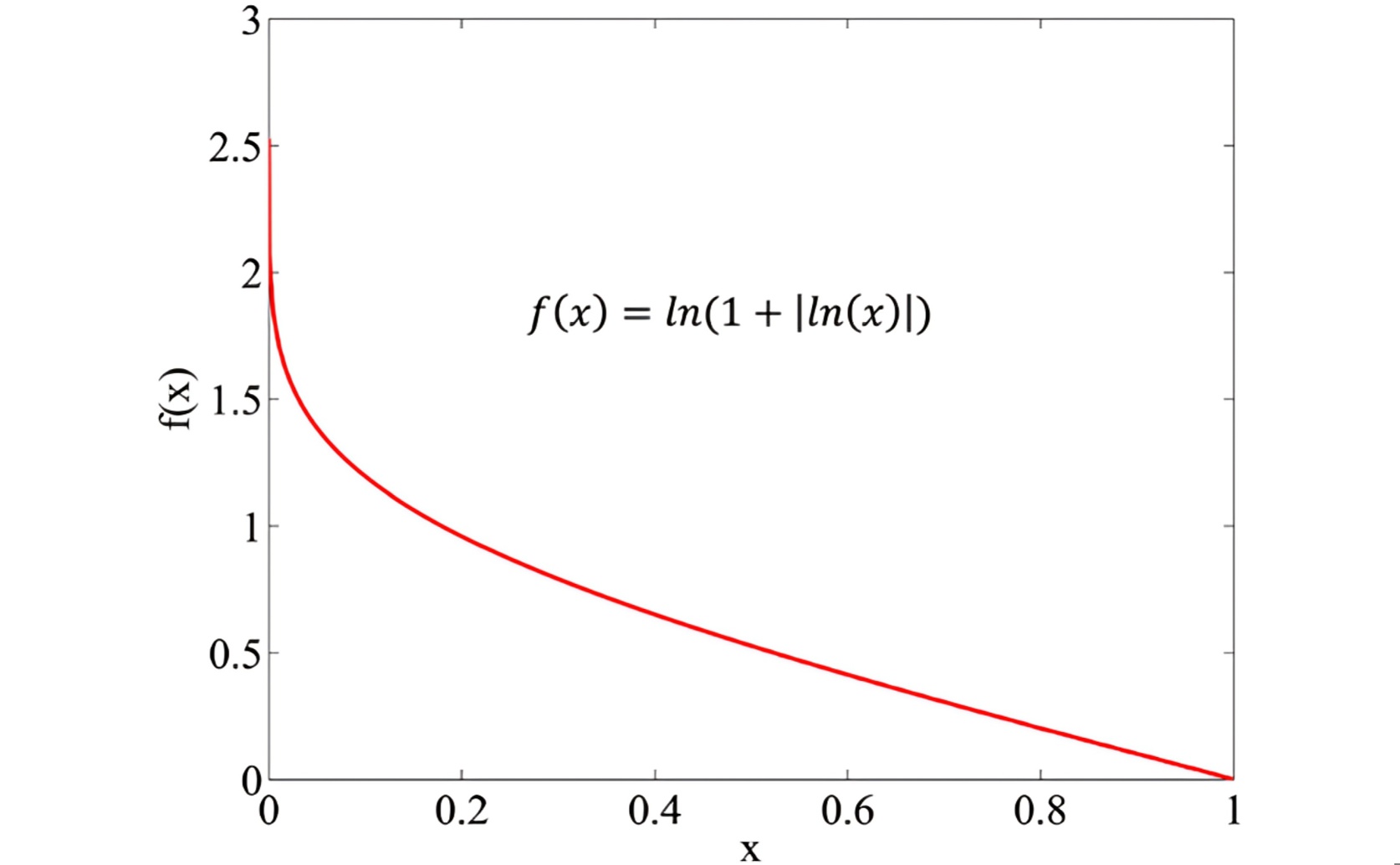
This figure illustrates the logarithmic aggregation function utilized in the MEREC-OCRA framework to calculate initial performance scores, forming the methodological basis for determining objective criteria weights in the comparative sustainability analysis of the Silk Road Economic Belt.

Image adapted from: Wang et al. / CC BY (Source)

Key Findings

  • In the Silk Road Economic Belt, Israel was ranked the most sustainable among 16 countries, while India was the least sustainable
  • Emissions, economic stability, and workforce size were key factors affecting each country's sustainability score
  • The study recommends targeted policies and investments to help lower-ranked nations enhance their sustainability practices
Sustainable development is a critical goal for regions undergoing significant economic and infrastructural growth. The Silk Road Economic Belt (SREB), a major initiative aiming to reconnect Asia, Europe, and Africa through enhanced trade and cultural exchanges, encompasses diverse countries facing various environmental and socio-economic challenges. A recent study conducted by researchers at the National Kaohsiung University of Science and Technology[1] evaluates the sustainability performance of sixteen countries within South Asia, West Asia, and Africa central to the SREB. The study employs a novel hybrid multi-criteria decision-making approach, combining the Method based on the Removal Effects of Criteria (MEREC) and Operational Competitiveness Ratings Analysis (OCRA). The MEREC method objectively determines the weights of different sustainability indicators by assessing the impact of excluding each criterion. This ensures that each indicator's significance is accurately reflected in the overall assessment. Following this, the OCRA method ranks the countries based on both positive (beneficial) and negative (non-beneficial) indicators, providing a comprehensive overview of their sustainability standings. Findings from the study reveal considerable disparities in sustainability performance among the surveyed countries. Israel emerged as the top performer, demonstrating high levels of sustainability, followed by Sri Lanka and Nepal. On the other end of the spectrum, India showed the lowest sustainability performance among the group. These rankings highlight the varying capacities of countries to implement and maintain sustainable practices within the SREB framework. Incorporating insights from prior research, the study builds on the understanding that socio-economic factors significantly influence environmental outcomes. For instance, a study by the University of Economics Ho Chi Minh City[2] underscored the relationship between pollutants and socio-economic predictors, emphasizing the role of factors like energy consumption and human capital in affecting CO2 emissions. The current study extends this by not only considering these predictors but also integrating them into a multi-criteria decision-making framework to assess overall sustainability. Additionally, research conducted by Al Muthanna University, Iraq[3], focused on the dynamics between carbon emissions and ecological resilience in the Silk Road Economic Belt. It highlighted the importance of balancing economic growth with environmental sustainability, revealing regional variations and the need for tailored environmental management strategies. The present study complements these findings by providing a broader assessment of sustainability across multiple countries, offering valuable benchmarks and strategic insights for policymakers. The use of the MEREC-OCRA hybrid approach allows for a more nuanced evaluation of sustainability, accounting for the complex interplay of various indicators. By assigning appropriate weights to each criterion and considering both beneficial and non-beneficial factors, the study ensures a balanced and accurate ranking of the countries. This methodology provides a robust framework that can be utilized in future assessments of sustainable development within large and diverse regions. The results of the study have significant implications for regional policy planning and sustainable development efforts within the SREB. The disparities in sustainability performance indicate the need for targeted strategies that address specific challenges faced by each country. For example, countries like India may require more comprehensive policies and resources to enhance their sustainability practices, while top performers like Israel can serve as models for best practices in the region. Moreover, the study emphasizes the importance of allocating resources to uplift educational and health standards, aligning with the findings of prior research[2]. Enhancing human capital can lead to better environmental management and improved sustainability outcomes. Similarly, addressing factors such as energy consumption and population density is crucial for reducing carbon emissions and achieving long-term sustainability goals. The research institution behind this study, National Kaohsiung University of Science and Technology, has provided valuable insights into the sustainability landscape of the SREB. By leveraging advanced decision-making techniques and integrating prior research findings, the study offers a comprehensive evaluation that can guide effective policy interventions and sustainable development initiatives. In conclusion, the assessment conducted by National Kaohsiung University of Science and Technology provides a detailed understanding of the sustainability performance across key countries within the Silk Road Economic Belt. By utilizing a sophisticated hybrid approach and building on existing research, the study not only identifies current standings but also offers strategic directions for enhancing sustainability in a region pivotal to global economic and cultural exchanges.

AgricultureEnvironmentSustainability

References

Main Study

1) Assessing sustainability on the modern Silk Road: An objective weighting methodological approach

Published 20th May, 2025

https://doi.org/10.1371/journal.pone.0324538


Related Studies

2) An environmental perspective of energy consumption, overpopulation, and human capital barriers in South Asia.

https://doi.org/10.1038/s41598-024-53950-z


3) Integrating carbon reduction and ecological resilience strategies in the silk road economic corridor.

https://doi.org/10.1016/j.heliyon.2024.e39582


Related Articles

An unhandled error has occurred. Reload 🗙