Reducing CO2 in Digital Business by Managing the Entire Supply Chain

Greg Howard
21st May, 2025

Reducing CO2 in Digital Business by Managing the Entire Supply Chain

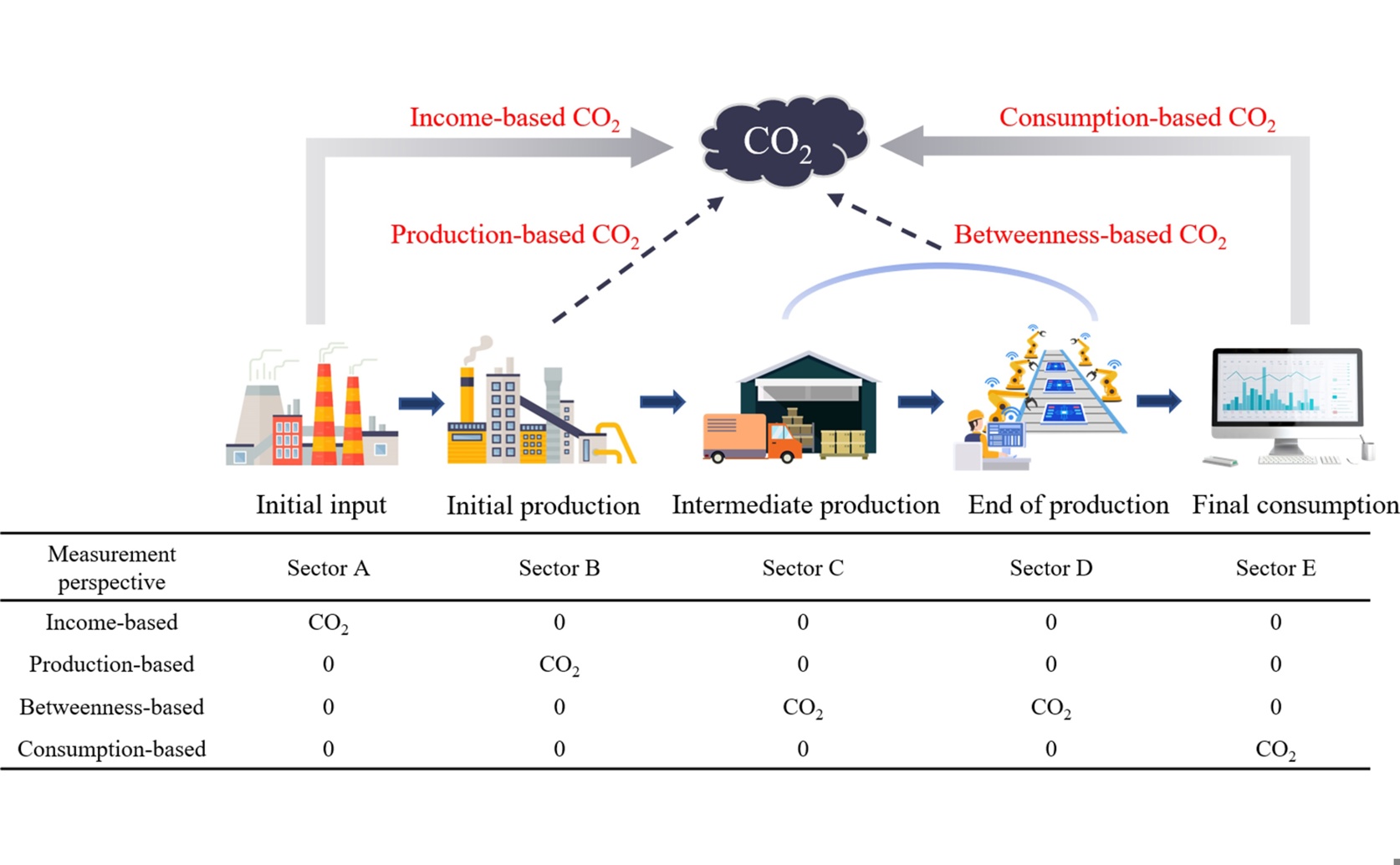
This diagram establishes the whole supply chain management framework used to quantify the digital economy's environmental impact by tracking CO2 emissions through income-, production-, betweenness-, and consumption-based accounting perspectives.

Image adapted from: Wang et al. / CC BY (Source)

Key Findings

  • In Zhejiang, China’s digital economy sectors are major sources of CO₂ emissions across their supply chains
  • Emissions are primarily driven by inter-provincial trade and high labor costs within these digital sectors
  • Key areas for reducing emissions include the energy production and industrial digitalization sectors
China's rapidly expanding digital economy has become a cornerstone of its economic growth, but it also brings significant challenges in managing carbon dioxide (CO2) emissions. As the demand for coal-based electricity rises to support digital sectors, understanding the mechanisms driving these emissions within supply chains is crucial for effective carbon management. A recent study conducted by Zhejiang University of Technology[1] addresses this issue by providing a comprehensive analysis of CO2 emissions across the entire supply chain of China's digital economy. The study explores CO2 emissions from multiple perspectives, including income-based, production-based, betweenness-based, and consumption-based approaches. By utilizing Leontief and Ghosh input-output (IO) frameworks along with structural path analysis, the researchers were able to trace the flow of emissions through various supply chain paths. This multifaceted approach builds on previous research that highlights the importance of considering supply chain emissions for accurate carbon footprinting[2] and the role of the digital economy in both reducing and generating emissions[3]. One of the key findings of the study is that the core industry sector of the digital economy (CIDE) is the highest contributor to CO2 emissions from a consumption-based perspective. Additionally, the industrial digitalization sector (IDS) leads in emissions from both consumption- and betweenness-based perspectives. This aligns with earlier research that identifies critical transmission sectors in the supply chain, emphasizing the need to target these sectors for effective emission reductions[4]. The betweenness-based method used in this study provides a nuanced understanding of how certain sectors act as hubs in the supply chain, influencing overall emission levels across the economy. The analysis revealed that inter-provincial flows are the primary source of supply chain embodied CO2 emissions in the digital economy sectors from a consumption-based standpoint. This highlights the interconnectedness of different regions in China and the importance of regional collaboration in emission reduction efforts. Furthermore, the study found that labor compensation is the main driver of enabled CO2 emissions from an income-based perspective. This insight supports the findings of previous research that income-based accounting methods can uncover additional sources of emissions that are often overlooked in production- or consumption-based analyses[5]. Another significant result of the study is the identification of high-carbon upstream and downstream supply chain paths that are relatively short but heavily influenced by the power and heat production and supply sector, as well as the IDS. These sectors play crucial roles in the emission pathways, suggesting that targeted interventions in these areas could yield substantial reductions in overall CO2 emissions. The research conducted by Zhejiang University of Technology not only deepens the understanding of the digital economy's impact on carbon emissions but also integrates insights from earlier studies to provide a more comprehensive picture. For instance, the study reinforces the notion that optimizing supply chain structures is essential for reducing emissions, a concept supported by previous work emphasizing the importance of comprehensive environmental assessments[2]. Additionally, by highlighting the role of specific sectors like CIDE and IDS, the study offers valuable guidance for policymakers aiming to implement sector-specific strategies for carbon management. Building on these findings, the study presents several policy recommendations. These include optimizing supply chain structures to minimize emissions, promoting green consumption practices, and integrating carbon management into sector-specific strategies. Such measures are critical for achieving low-carbon growth and aligning with China's carbon peak and neutrality goals. The emphasis on supply chain emissions echoes the suggestions from earlier research that firms need to account for both direct and indirect emissions to pursue effective carbon mitigation strategies[2]. Moreover, the study highlights regional disparities in the effectiveness of digital economy initiatives to reduce carbon emissions, with mid-western China showing better performance compared to the eastern regions[3]. This regional variation underscores the need for tailored policies that consider the unique economic and environmental contexts of different areas within China. In conclusion, the comprehensive analysis provided by Zhejiang University of Technology offers significant advancements in understanding the complex relationship between China's digital economy and CO2 emissions. By incorporating various accounting methods and leveraging insights from earlier studies, the research provides a robust framework for developing targeted and effective carbon management strategies. These findings are instrumental for policymakers and industry leaders striving to balance economic growth with environmental sustainability, ultimately contributing to global efforts in mitigating climate change.

EnvironmentSustainability

References

Main Study

1) Mitigating CO2 emissions associated with digital economy sectors through whole supply chain management

Published 20th May, 2025

https://doi.org/10.1371/journal.pone.0323350


Related Studies

2) The importance of carbon footprint estimation boundaries.

Journal: Environmental science & technology, Issue: Vol 42, Issue 16, Aug 2008


3) How can the digital economy reduce carbon emissions? Empirical evidence from China.

https://doi.org/10.1371/journal.pone.0303582


4) Betweenness-Based Method to Identify Critical Transmission Sectors for Supply Chain Environmental Pressure Mitigation.

https://doi.org/10.1021/acs.est.5b04855


5) Income-Based Greenhouse Gas Emissions of Nations.

https://doi.org/10.1021/acs.est.6b02510


Related Articles

An unhandled error has occurred. Reload 🗙