
New Heterochromatin Formation and Maintenance in the Malaria Parasite
Jenn Hoskins
4th June, 2025


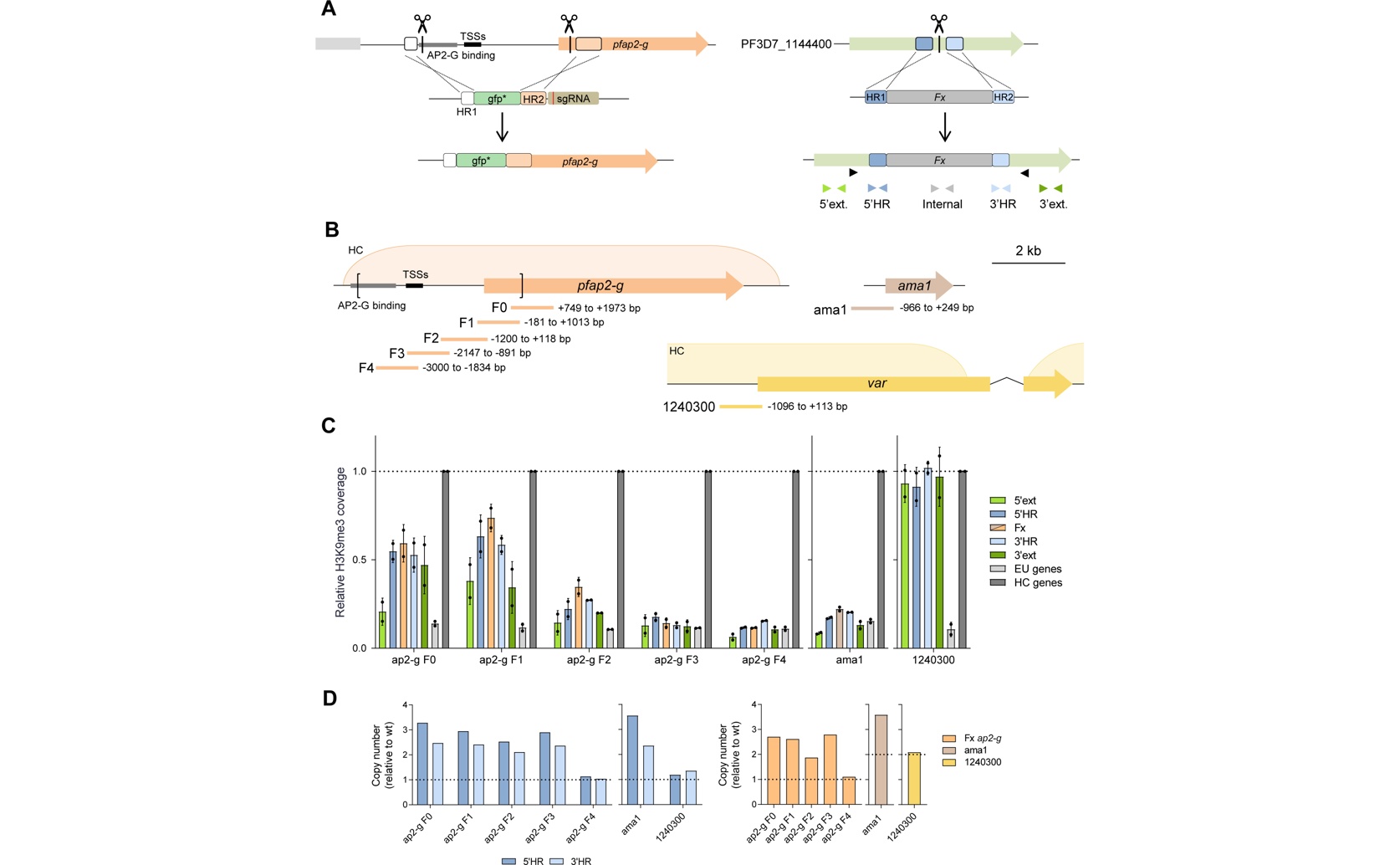
This analysis of transgenic malaria parasites (Plasmodium falciparum) (a, b) demonstrates that specific DNA fragments from the var gene and proximal pfap2-g locus, unlike distal pfap2-g or ama1 sequences, have the intrinsic capacity to nucleate de novo heterochromatin (c, d), establishing primary DNA sequence as a key determinant of epigenetic silencing.
Key Findings
- In Plasmodium falciparum, researchers showed that specific DNA sequences signal where to build heterochromatin—a compact structure that turns genes off
- They found that var gene upstream regions efficiently trigger silencing, while pfap2‐g sequences require longer or repeated segments for similar effects
- The study also revealed that different DNA parts are needed to maintain this silenced state across cell generations
References
Main Study
1) Heterochromatin de novo formation and maintenance in Plasmodium falciparum
Published 2nd June, 2025
https://doi.org/10.1371/journal.ppat.1013137
Related Studies
2) The molecular basis of heterochromatin assembly and epigenetic inheritance.
3) RNAi-independent heterochromatin nucleation by the stress-activated ATF/CREB family proteins.
Journal: Science (New York, N.Y.), Issue: Vol 304, Issue 5679, Jun 2004
4) Regulation of the heterochromatin spreading reaction by trans-acting factors.
Related Articles
 19th May, 2025 | Jenn Hoskins