Alpinetin Protects Joints from Iron Overload via Cell Defense Pathway

Jim Crocker
4th June, 2025

Alpinetin Protects Joints from Iron Overload via Cell Defense Pathway

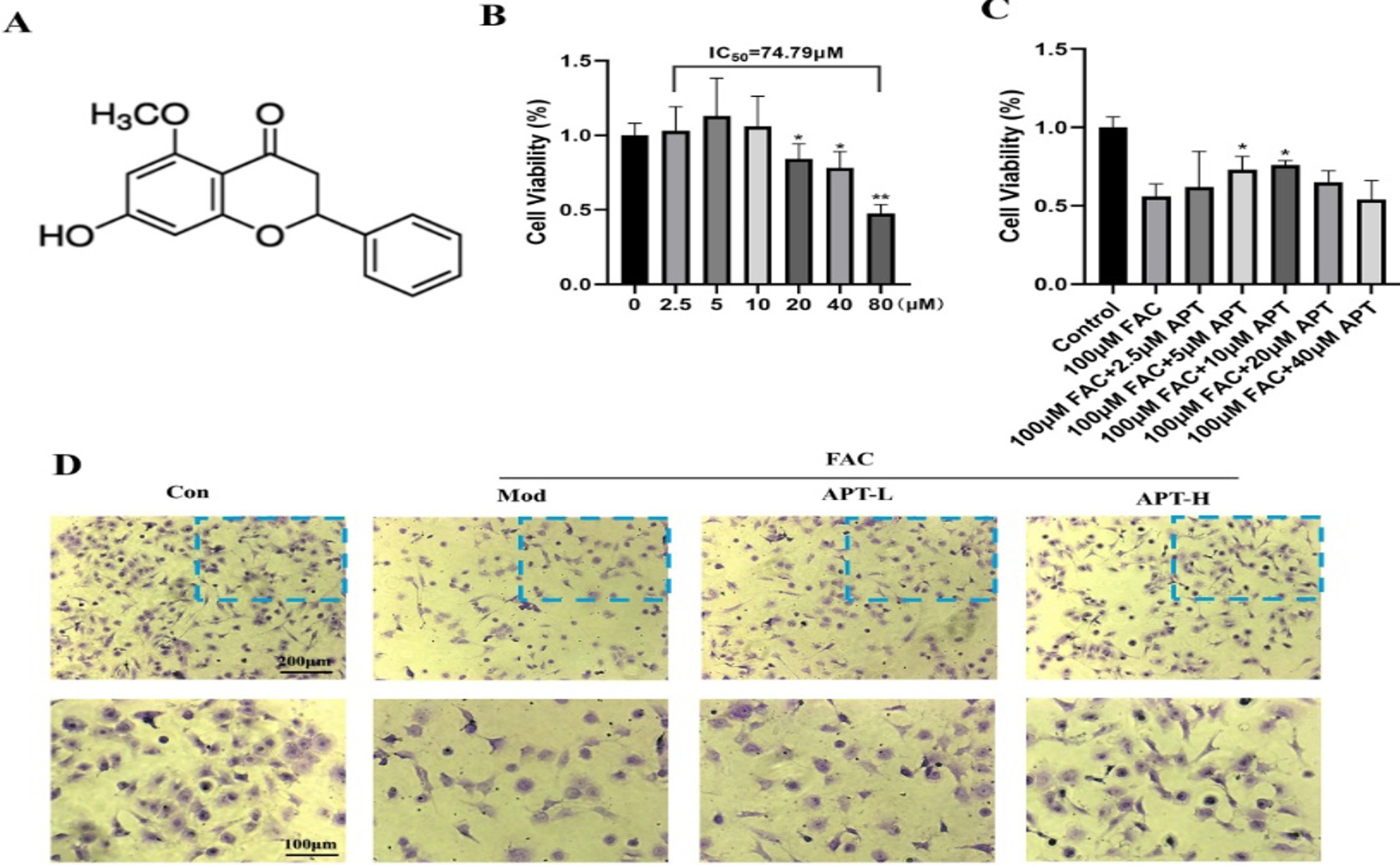
Alpinetin (A) effectively mitigated the detrimental effects of iron overload by significantly improving chondrocyte viability (B, C) and restoring type II collagen synthesis capabilities (D), thereby reducing the cellular damage associated with osteoarthritis.

Image adapted from: Cai et al. / CC BY (Source)

Key Findings

  • At Panyu Hospital in Guangzhou, China, researchers discovered that alpinetin protects cartilage cells from iron overload by boosting cell survival and reducing harmful cell death
  • Alpinetin also lowers damaging reactive oxygen species by activating antioxidant genes (NRF2/HO-1), which helps lessen joint and bone damage in osteoarthritis models
[1] Recent research from Panyu Hospital of Chinese Medicine, Guangzhou University of Chinese Medicine, and Nanjing Medical University has explored the potential of alpinetin (APT), a natural compound known for its anti-inflammatory and antioxidant properties, to counteract osteoarthritis triggered by iron overload. Osteoarthritis is a joint condition in which cartilage—the tissue that cushions bones—gradually deteriorates, causing pain and stiffness. Increasing evidence suggests that excess iron can worsen this process by promoting oxidative stress and cellular damage. This study addressed a growing concern: how iron overload, a state in which too much iron accumulates in the body, can accelerate joint damage. Iron overload has been implicated in various bone and joint disorders. Past studies have shown that under conditions such as inflammation and iron excess, cartilage cells (chondrocytes) experience a type of cell death known as ferroptosis, which is distinct from other forms of cell death. For example, earlier work demonstrated that exposing chondrocytes to inflammatory signals and iron overload triggers the buildup of harmful reactive oxygen species (ROS) and leads to cellular death, contributing to cartilage degradation[2]. Other investigations using mouse models of hereditary hemochromatosis—an iron overload disorder—found that excess iron in joints correlates with increased expressions of proteins that break down cartilage and bone structure[3]. Additionally, chronic iron accumulation has been linked to osteoporotic changes due to imbalances in bone remodeling—the process by which bone is continuously broken down and rebuilt[4]. In the current study, researchers used a well-known model for osteoarthritis in mice in which the destabilized medial meniscus (DMM) surgery simulates joint instability. They combined this surgery with the administration of an iron overload treatment to mimic the challenging conditions seen in affected patients. The mice were then divided into several groups: a control group, a group with DMM-induced osteoarthritis, a group with DMM and iron overload, and two groups that received either a lower or higher dose of APT alongside DMM and iron overload. In a parallel set of experiments, chondrocytes were cultured in the laboratory and exposed to ferric ammonium citrate (FAC) to induce iron overload. This in vitro approach allowed the researchers to closely monitor cellular responses and the protective effects of APT. The study found that APT improved the overall health of chondrocytes exposed to excess iron. Under iron overload conditions, chondrocytes typically show reduced viability. In this case, treatment with APT led to better cell survival and a decrease in apoptosis – a term for programmed cell death, which is a normal process that becomes harmful when overactivated. Furthermore, the researchers observed that iron overload caused the accumulation of reactive oxygen species (ROS). ROS are chemically reactive molecules that can damage various cellular components, and their excessive presence is linked to inflammation and cell death. Importantly, treatment with APT reduced the level of ROS within the chondrocytes. A deeper analysis showed that APT achieved these beneficial effects by activating specific antioxidant genes, notably NRF2 and HO-1. NRF2 is a transcription factor that plays a key role in protecting cells from oxidative stress by turning on genes involved in the antioxidant response. HO-1, or heme oxygenase-1, is one of the protective genes regulated by NRF2 that helps to break down pro-oxidant molecules. An increase in expression of both NRF2 and HO-1 was noted in chondrocytes treated with APT, suggesting that the compound works through the NRF2/HO-1 pathway to enhance the cell’s defense mechanisms against oxidative stress. This mechanistic insight aligns with previous observations in osteoarthritis research, where inhibition of harmful cell death pathways was shown to preserve cartilage integrity[2]. In live animal experiments, the protective effects of APT were further confirmed. Mice treated with APT showed less cartilage damage compared with those that did not receive the compound. Cartilage degradation was assessed using standardized scoring methods, and a lower score indicates milder damage. In addition, the study utilized micro-computed tomography (micro-CT) to examine bone structure. The imaging results revealed that APT treatment was associated with a reduction in subchondral bone proliferation, which often occurs as a maladaptive response in osteoarthritis. Such findings suggest that APT not only helps preserve cartilage but may also contribute to keeping the underlying bone structure healthier. These outcomes add a valuable dimension to our understanding of osteoarthritis, especially concerning the role of iron overload in promoting joint damage. While earlier studies have confirmed that iron overload can intensify cartilage degradation and that chondrocytes can undergo destructive forms of cell death like ferroptosis[2], the current study establishes that alpinetin may counteract these harmful effects. In models of iron-induced osteoarthritis, alpinetin effectively reduced both the biochemical markers of cell stress and the physical manifestations of joint damage. This positions APT as a promising candidate for developing new treatments aimed at slowing or preventing the progression of osteoarthritis, particularly in patients with systemic iron overload conditions. The integration of these findings with the broader body of research points to an evolving understanding of joint degeneration. The demonstration that a naturally derived compound can modulate a key antioxidant pathway provides hope for innovative therapeutic approaches. Previous research on the role of iron overload in joint health[3][4] had already raised concerns about how systemic conditions could exacerbate osteoarthritis. By identifying a compound that not only protects cartilage cells under stress but also helps maintain bone structure, the recent study bridges a critical gap between basic research and potential clinical application. In summary, the study underscores the importance of targeting oxidative stress and inflammatory responses in osteoarthritis. It also highlights that compounds such as alpinetin may play a dual role in protecting both cartilage and bone from the damaging effects of iron overload. This work contributes to a growing field of research that aims to develop better strategies for managing osteoarthritis and related conditions by intervening in the molecular pathways that drive joint degeneration.

MedicineBiochem

References

Main Study

1) Alpinetin protects against iron overload related osteoarthritis via NRF2/HO-1 pathway

Published 2nd June, 2025

https://doi.org/10.1371/journal.pone.0317930


Related Studies

2) Chondrocyte ferroptosis contribute to the progression of osteoarthritis.

https://doi.org/10.1016/j.jot.2020.09.006


3) Iron overload in a murine model of hereditary hemochromatosis is associated with accelerated progression of osteoarthritis under mechanical stress.

https://doi.org/10.1016/j.joca.2015.09.007


4) Clinical Impact and Cellular Mechanisms of Iron Overload-Associated Bone Loss.

https://doi.org/10.3389/fphar.2017.00077


Related Articles

An unhandled error has occurred. Reload 🗙