Iron-Starved TB Bacteria Secrete Disease Factors in Little Packages

Jim Crocker
2nd June, 2025

Iron-Starved TB Bacteria Secrete Disease Factors in Little Packages

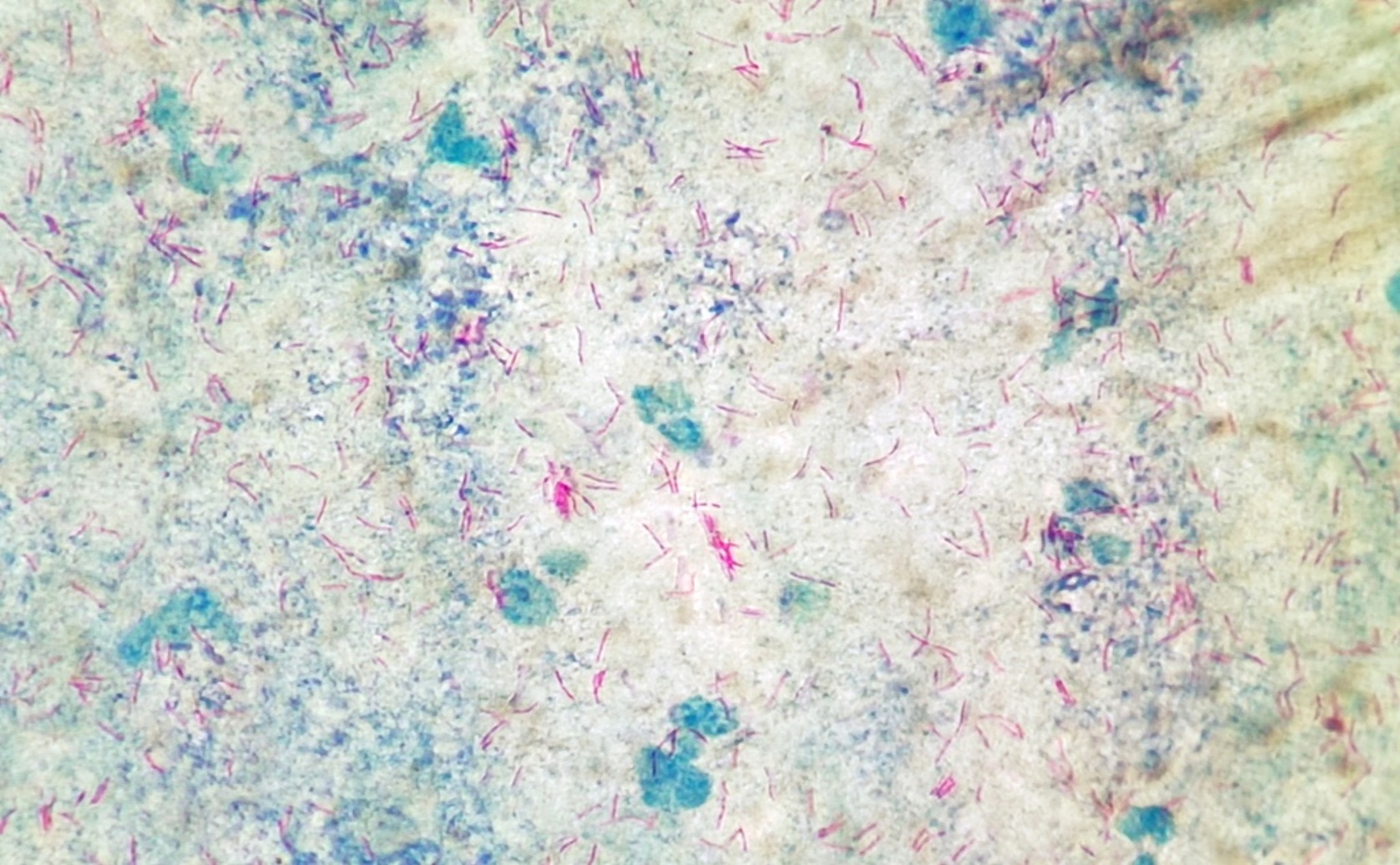
Tubercle Bacterium (Mycobacterium tuberculosis)

Photo adapted from: Nikita Gerasin / CC BY (Source)

Key Findings

  • At Rutgers and Bennett University, scientists found that under low-iron conditions, TB bacteria release extra tiny vesicles to cope with stress
  • These vesicles carry proteins that help the bacteria survive and evade the immune system
  • The vesicle proteins show promise as markers for developing faster, culture-free TB diagnosis
Recent research from Rutgers University and Bennett University[1] has provided new insights into tuberculosis, a disease caused by Mycobacterium tuberculosis (Mtb). The study focuses on how Mtb responds to low iron levels—a common stress encountered during infection—by increasing its production of tiny, membrane-bound particles called extracellular vesicles (EVs). EVs play an important role in bacterial communication and host-pathogen interactions by transporting proteins, lipids, and other molecules from the bacterium to other cells in the host. The study was driven by the need to better understand the methods used by Mtb to survive in hostile environments within the human body. One of the challenges during an infection is that the host actively limits the availability of iron, a critical nutrient for many bacterial processes. The researchers discovered that under these iron-limited conditions, Mtb ramps up the production of EVs. They used chromatography—a method that separates mixtures—together with mass spectrometry, which identifies proteins by their mass and charge, to analyze the protein content of these vesicles. The analysis revealed that the EVs produced under iron limitation contain several key pathogenicity factors. These include proteins known to help Mtb survive in the host by evading the immune system and triggering inflammation. This finding is significant because it connects the dots between environmental stress (in this case, iron limitation) and the bacterium’s ability to manipulate its surroundings through EVs. Understanding this process could be important for the development of new diagnostic tools and treatments. For instance, the study points out that the proteins carried by these EVs might serve as biomarkers—biological indicators—of infection. This opens the possibility for creating diagnostic platforms that do not require culturing the slow-growing bacteria, thus potentially speeding up and simplifying the tuberculosis diagnosis process. Earlier studies have shown that many bacteria use extracellular vesicles or outer membrane vesicles (OMVs) to manage interactions with their host environments and other bacteria[2]. These earlier observations underline that vesicle production is not random; it is a controlled process influenced by environmental conditions. The Mtb study builds on these findings by providing detailed insights into the specific proteins loaded into the EVs under iron-delimited circumstances. This links prior research into vesicle-mediated transport and the controlled secretion of bacterial factors to a practical example involving a major human pathogen. Further, prior research has suggested that the content and production of vesicles can vary based on changes in a bacterium’s environment[3]. The recent study from the research teams at Rutgers and Bennett University extends this concept to Mtb by showing that iron scarcity, a common condition in the battle between pathogen and host, directly affects the composition of the vesicles. By incorporating proteins that help the bacterium avoid immune detection and promote inflammation, these vesicles not only aid in bacterial survival but may also contribute to the disease process. The techniques employed in the study were instrumental in revealing these connections. Chromatography allowed the researchers to separate the various components of the vesicles, while mass spectrometry provided detailed information about the proteins present. Together, these methods form a powerful toolset for characterizing difficult-to-study components like EVs, which can be present in small quantities and have a complex composition. Identifying the specific proteins within the vesicles has practical implications. Not only does the study enhance our basic understanding of how Mtb adapts to iron limitation, but it also highlights potential targets for future research. The proteins found in these vesicles could be used as new biomarkers to develop culture-independent diagnostic tools for tuberculosis. This is particularly promising because traditional culture methods are time-consuming, and faster diagnostic techniques are urgently needed in the fight against TB. In summary, the study from Rutgers University and Bennett University demonstrates that under iron-limited conditions, Mtb increases the production of EVs loaded with proteins that promote bacterial survival and immune evasion. These findings extend the knowledge of vesicle-mediated interactions that were previously noted in a broader range of bacteria[2][3] and present new avenues for diagnostic and therapeutic developments in tuberculosis management.

MedicineBiochem

References

Main Study

1) Iron-restricted Mycobacterium tuberculosis exports pathogenicity factors packed in extracellular vesicles

Published 30th May, 2025

https://doi.org/10.1371/journal.pone.0324919


Related Studies

2) Extracellular vesicles in the context of Mycobacterium tuberculosis infection.

https://doi.org/10.1016/j.molimm.2021.02.010


3) Environmentally controlled bacterial vesicle-mediated export.

https://doi.org/10.1111/cmi.12676


Related Articles

An unhandled error has occurred. Reload 🗙