
Anesthesia Isn’t Sleep: Brain Activity Under Isoflurane Differs From Sleep
Greg Howard
1st June, 2025


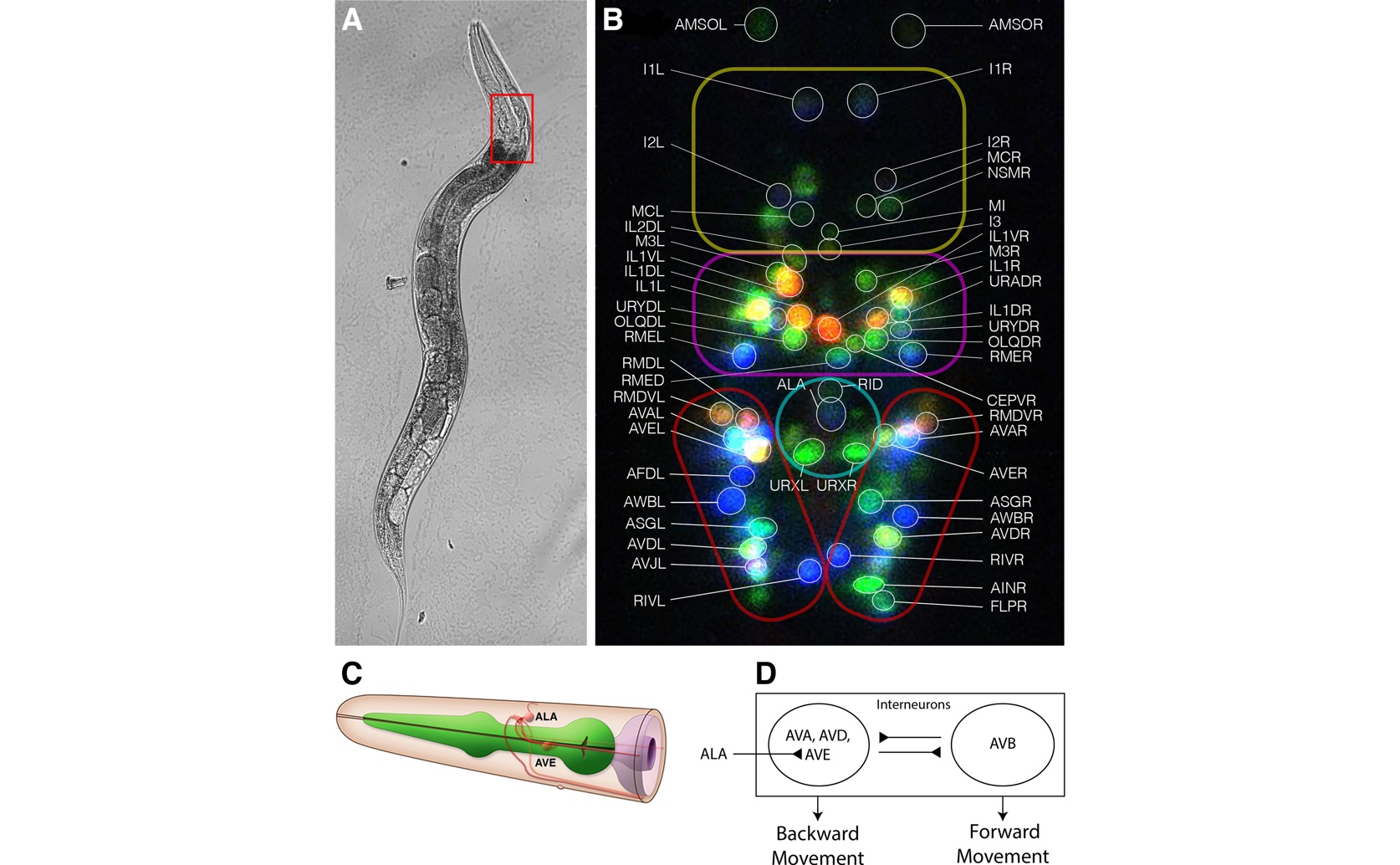
To establish the anatomical and functional baseline for testing whether anesthesia mimics sleep, this figure details the gross anatomy (A) and NeuroPAL-identified neurons (B) of Caenorhabditis elegans, highlighting the physiological circuit (C, D) where the ALA neuron inhibits the AVE interneuron to produce sleep-associated immobility—a mechanism the study ultimately demonstrates is distinct from that of isoflurane anesthesia.
Key Findings
- In C. elegans worms studied at Boston and Nebraska, natural sleep turns on neurons ALA and RIS and turns off the movement neuron (AVE) to keep the worm still
- Under isoflurane anesthesia, this normal sleep pattern reverses—ALA and AVE activities become aligned, showing a different mechanism from natural sleep
References
Main Study
1) Anesthesia isn’t sleep: The neuronal dynamics of immobility in isoflurane-anesthetized C. elegans differ from the activity patterns of previously established sleep-like quiescent states
Published 30th May, 2025
https://doi.org/10.1371/journal.pone.0324323
Related Studies
2) Multilevel modulation of a sensory motor circuit during C. elegans sleep and arousal.
3) Lethargus is a Caenorhabditis elegans sleep-like state.
4) An AP2 transcription factor is required for a sleep-active neuron to induce sleep-like quiescence in C. elegans.
Related Articles
 10th April, 2025 | Jim Crocker