Effects of Artificial Feeding on Growth Stages of Two Kissing Bugs

Jim Crocker
14th May, 2025

Effects of Artificial Feeding on Growth Stages of Two Kissing Bugs

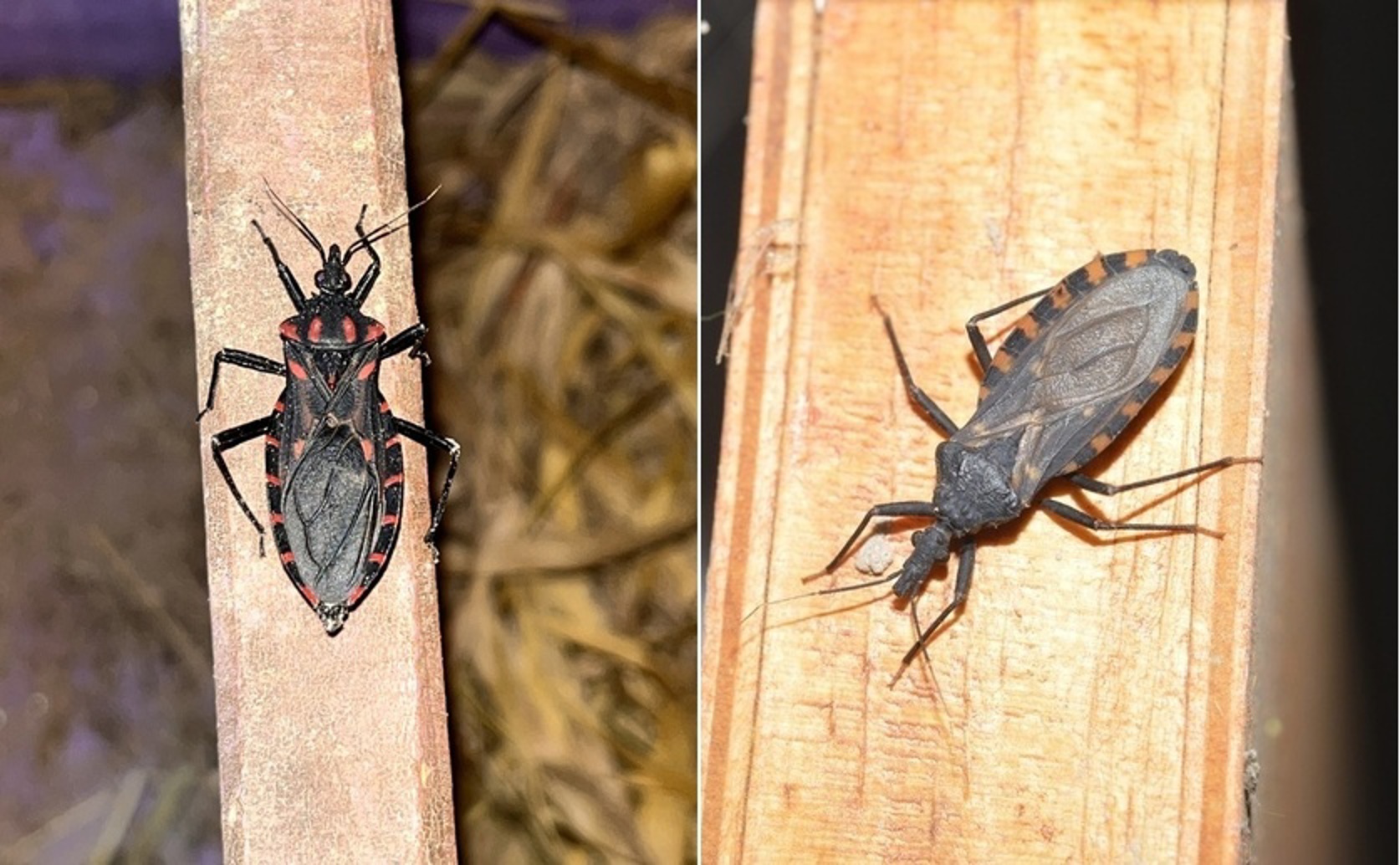
Compared to feeding on live hosts, the use of an artificial blood supply significantly extended the developmental time for both Triatoma infestans (right) and Panstrongylus megistus (left), while also leading to reduced weight gain in Panstrongylus megistus.

Composite: Natural Science News / CC BY. [Sources]
Adapted from photos by:

Key Findings

  • In Brazil, scientists discovered that kissing bugs fed on live animals developed faster than those using artificial feeding systems
  • Bugs fed artificially, especially Panstrongylus megistus, took longer to grow and gained less weight
  • Using artificial feeders did not increase bug mortality, but it did slow their growth and development
Triatomines, commonly known as kissing bugs, are insects that play a significant role in the transmission of Chagas disease, a serious illness affecting millions in Latin America. Traditionally, these insects are reared in laboratories using live animals as their primary food source. However, the use of live animals raises ethical concerns and practical challenges, prompting researchers to explore artificial feeding methods as an alternative. A recent study conducted by researchers at Fiocruz Minas and the Federal University of Rio de Janeiro (UFRJ), Brazil[1], investigated whether artificial feeding systems could effectively sustain colonies of two triatomine species: Triatoma infestans and Panstrongylus megistus. The study aimed to determine if artificial feeding would impact various physiological and biological aspects of these insects during their development. The researchers set up three experimental groups for each species. Group A was fed using an artificial system with rabbit blood, Group B relied on a live animal host, and Group C alternated between the artificial system and live feeding each week. All groups were maintained under identical environmental conditions and monitored daily. The study evaluated several parameters, including the time required for insects to develop through their life stages, mortality rates, weight gain, and the number of feedings needed for the insects to molt, which is the process of shedding their exoskeleton to grow. Findings revealed that the method of blood supply significantly influenced the development of the insects. Those fed on live animal hosts completed their biological cycles faster than those fed alternately, with artificial feeding alone resulting in the longest development times. Specifically, Panstrongylus megistus individuals fed using the artificial system required more feedings to molt and exhibited less weight gain compared to those fed on live hosts. Interestingly, the mortality rates of the insects were not affected by the feeding method, indicating that artificial feeding did not increase the likelihood of death but did impact growth and development. These results build on earlier research that compared the feeding behaviors of different triatomine species on pigeons and mice[2]. That study found that Triatoma infestans fed more rapidly on both pigeons and mice compared to other species, and that feeding on mice was more challenging, with longer probing times and more interruptions. The current study extends these findings by demonstrating that not only does the type of host affect feeding efficiency, but the method of feeding—whether artificial or live—also plays a crucial role in the insects' development. The implications of this research are significant for laboratory practices. While artificial feeding systems offer a humane and potentially more manageable way to rear triatomines, the observed delays in development and reduced weight gain suggest that these systems may not yet fully replicate the benefits of live feeding. For Panstrongylus megistus, in particular, artificial feeding proved less effective, indicating that species-specific responses must be considered when developing artificial rearing methods. Overall, the study conducted by Fiocruz Minas and UFRJ highlights the complexities involved in shifting from live animal feeding to artificial systems for triatomine colonies. Although artificial feeding does not increase mortality, the impact on developmental time and growth metrics raises questions about its viability as a standalone method in laboratory settings. Future research may focus on optimizing artificial feeding techniques to better support the physiological needs of different triatomine species, potentially enhancing the sustainability of laboratory colonies without the ethical and practical concerns associated with using live animals.

HealthEcologyAnimal Science

References

Main Study

1) Impact of artificial feeding on the developmental cycle of two triatomine species

Published 12th May, 2025

https://doi.org/10.1371/journal.pone.0323090


Related Studies

2) Comparison of feeding behaviour of Triatoma infestans, Triatoma brasiliensis and Triatoma pseudomaculata in different hosts by electronic monitoring of the cibarial pump.

Journal: Journal of insect physiology, Issue: Vol 46, Issue 7, Jul 2000


Related Articles

An unhandled error has occurred. Reload 🗙