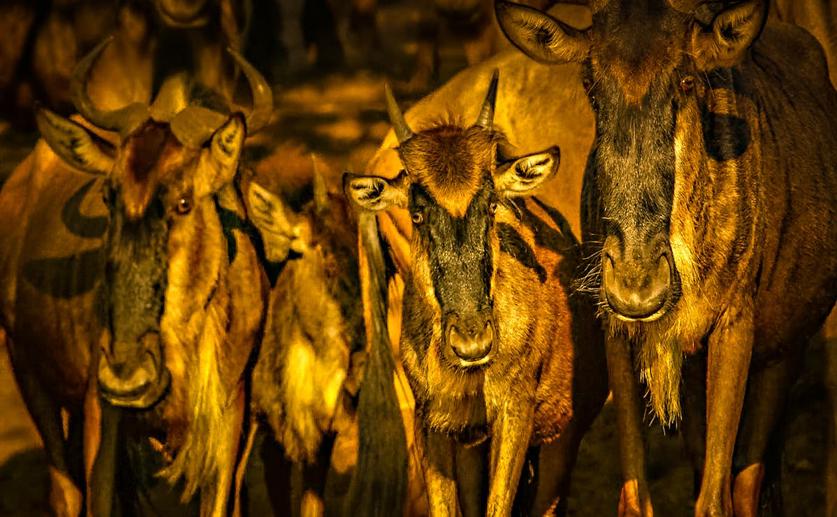
Genetic Diversity and History of the Largest Migratory Wildebeest Population

Jenn Hoskins
27th April, 2025

Genetic Diversity and History of the Largest Migratory Wildebeest Population
Image Source: Ray Bilcliff (photographer)

Key Findings

  • In Zambia's Greater Liuwa Ecosystem, brindled wildebeest have a healthy level of genetic diversity and minimal inbreeding
  • The entire wildebeest population is genetically similar, thanks to their widespread migration
  • Historically, the wildebeest population grew and later decreased, providing important information for their conservation
Understanding the genetic health of wildlife populations is crucial for their conservation. The blue wildebeest, a key species in Africa's savannah ecosystems, plays a significant role in maintaining grassland dynamics and serves as prey for large predators. While much attention has been given to the behavioral aspects of wildebeest migration[2][3], the genetic diversity and population structure of these animals remain less explored. A recent study by researchers at Northern Michigan University[1] sheds light on the genetic landscape of the brindled wildebeest in the Greater Liuwa Ecosystem (GLE) of western Zambia. The study aimed to assess the genetic diversity, population structure, and historical demographics of the brindled wildebeest, a crucial but understudied population. Understanding these genetic factors is essential for developing effective conservation strategies, especially as wildebeest face threats like habitat loss and poaching. To achieve this, the researchers employed a technique called restriction-site associated DNA sequencing (RAD-seq). This method allows scientists to examine thousands of genetic markers across the genome, providing a comprehensive view of genetic variation. In this study, data from 1,730 single nucleotide polymorphisms (SNPs) were analyzed from 75 individual wildebeests. SNPs are variations at a single position in the DNA sequence among individuals, and they serve as indicators of genetic diversity. The findings revealed that the GLE brindled wildebeest possess a moderate level of genetic diversity (He = 0.210). Genetic diversity is important as it enables populations to adapt to changing environments and resist diseases. Additionally, the study found very low levels of inbreeding (FIS = 0.033), suggesting that mating among closely related individuals is minimal. This low inbreeding is beneficial, as high inbreeding can lead to increased vulnerability to genetic disorders and reduced fitness. Interestingly, the effective population size, which estimates the number of breeding individuals contributing to the gene pool, was about one-tenth of the actual population size. This discrepancy indicates that not all individuals are equally contributing to the genetic makeup of future generations, a factor that conservation programs need to consider. Furthermore, the study found no significant genetic population structure within the GLE. This means that wildebeest across different areas of the ecosystem are genetically similar, likely due to their migratory behavior. Migration plays a vital role in gene flow, allowing genes to spread across populations and maintaining genetic diversity[2]. Previous research has shown that migration in large herbivores is primarily driven by the need to access high-quality food resources and to evade predators[3]. The genetic connectivity observed in the GLE wildebeest aligns with these findings, as movement across large distances facilitates genetic mixing. The demographic history analysis revealed that the wildebeest population expanded during the Middle Pleistocene, a period characterized by climatic fluctuations that influenced habitat and resource availability. This expansion was followed by a population decline in the Late Pleistocene and early Holocene, a pattern consistent with other African ungulates. Understanding these historical population dynamics provides context for the current genetic diversity and helps predict how populations might respond to future environmental changes. Incorporating insights from earlier studies, this genetic analysis complements behavioral research on wildebeest migration. For instance, study[3] emphasized the importance of tracking resource abundance over large scales, which not only supports migration patterns but also facilitates genetic exchange across populations. Additionally, the regulatory differences between migrant and resident herbivores highlighted in study[2] are reflected in the genetic homogeneity observed in the GLE wildebeest, suggesting that migration supports genetic resilience by preventing localized inbreeding. The research also indirectly relates to antipredator behaviors discussed in study[4]. While the current study did not directly address predator-prey interactions, maintaining genetic diversity can enhance the overall health and adaptability of wildebeest populations, potentially influencing their ability to respond to predation pressures. The implications of this study are significant for conservation efforts. By providing a detailed understanding of the genetic health and population structure of brindled wildebeest, conservationists can make informed decisions to preserve this keystone species. Strategies may include protecting migratory corridors to ensure continuous gene flow and mitigating threats like poaching that can disproportionately affect certain segments of the population. In conclusion, the genetic assessment of brindled wildebeest in the Greater Liuwa Ecosystem offers valuable insights into the species' resilience and adaptability. By integrating genetic data with behavioral and ecological studies[2][3][4], researchers and conservationists can develop comprehensive strategies to safeguard wildebeest populations amid growing environmental challenges.

GeneticsEcologyAnimal Science

References

Main Study

1) Genetic diversity and demographic history of the largest remaining migratory population of brindled wildebeest (Connochaetes taurinus taurinus) in southern Africa

Published 24th April, 2025

https://doi.org/10.1371/journal.pone.0310580


Related Studies

2) Causes and consequences of migration by large herbivores.

https://doi.org/10.1016/0169-5347(88)90166-8


3) Opposing rainfall and plant nutritional gradients best explain the wildebeest migration in the Serengeti.

https://doi.org/10.1086/597229


4) The relationship between direct predation and antipredator responses: a test with multiple predators and multiple prey.

https://doi.org/10.1002/ecy.1885


Related Articles

An unhandled error has occurred. Reload 🗙