
Multi-Generation Responses to Bacteria in Worms Are Unreliable
Jenn Hoskins
29th March, 2025


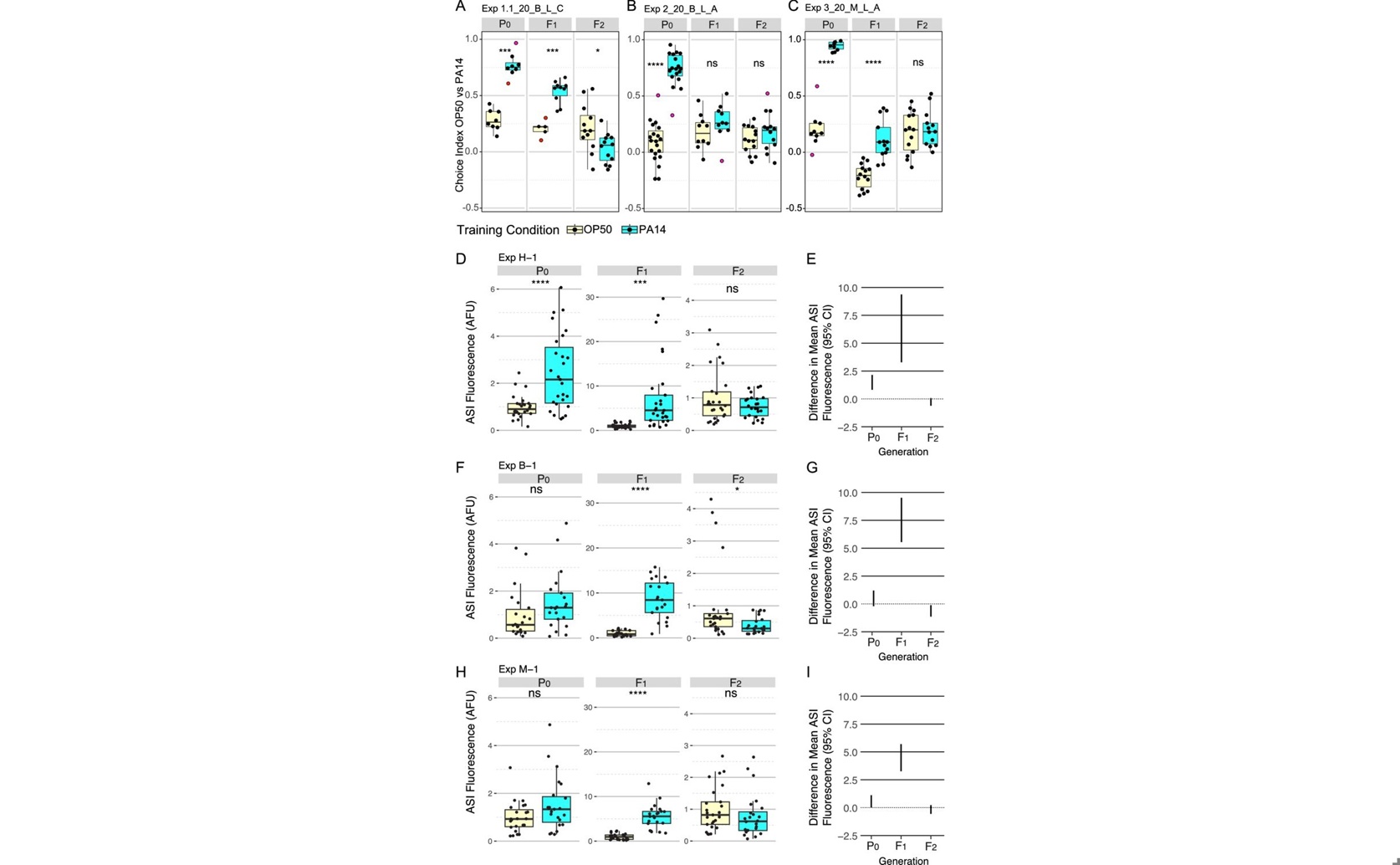
Although parent Caenorhabditis elegans worms (P0) exposed to the pathogen Pseudomonas aeruginosa and their immediate offspring (F1) exhibit learned pathogen avoidance (a–c) and elevated daf-7p::gfp gene expression (d–i), these responses are not inherited by the second generation (F2), questioning the robustness of previously reported transgenerational effects.
Key Findings
- Harvard researchers found that the first generation of nematodes exposed to a specific pathogen learned to avoid it
- This inherited avoidance in the first generation relied on special proteins that help transfer genetic information between cells
- Unlike earlier studies, the avoidance behavior did not pass down to further generations, highlighting challenges in studying inherited traits
References
Main Study
1) Reported transgenerational responses to Pseudomonas aeruginosa in Caenorhabditis elegans are not robust
Published 26th March, 2025
https://doi.org/10.7554/eLife.100254
Related Studies
2) Small RNAs in the Transgenerational Inheritance of Epigenetic Information.
3) Multiple small RNA pathways regulate the silencing of repeated and foreign genes in C. elegans.
Related Articles
 14th May, 2024 | Jim Crocker