Finding RNA Switches in Human Gene Messages Using AI Techniques

Jim Crocker
27th April, 2025

Finding RNA Switches in Human Gene Messages Using AI Techniques

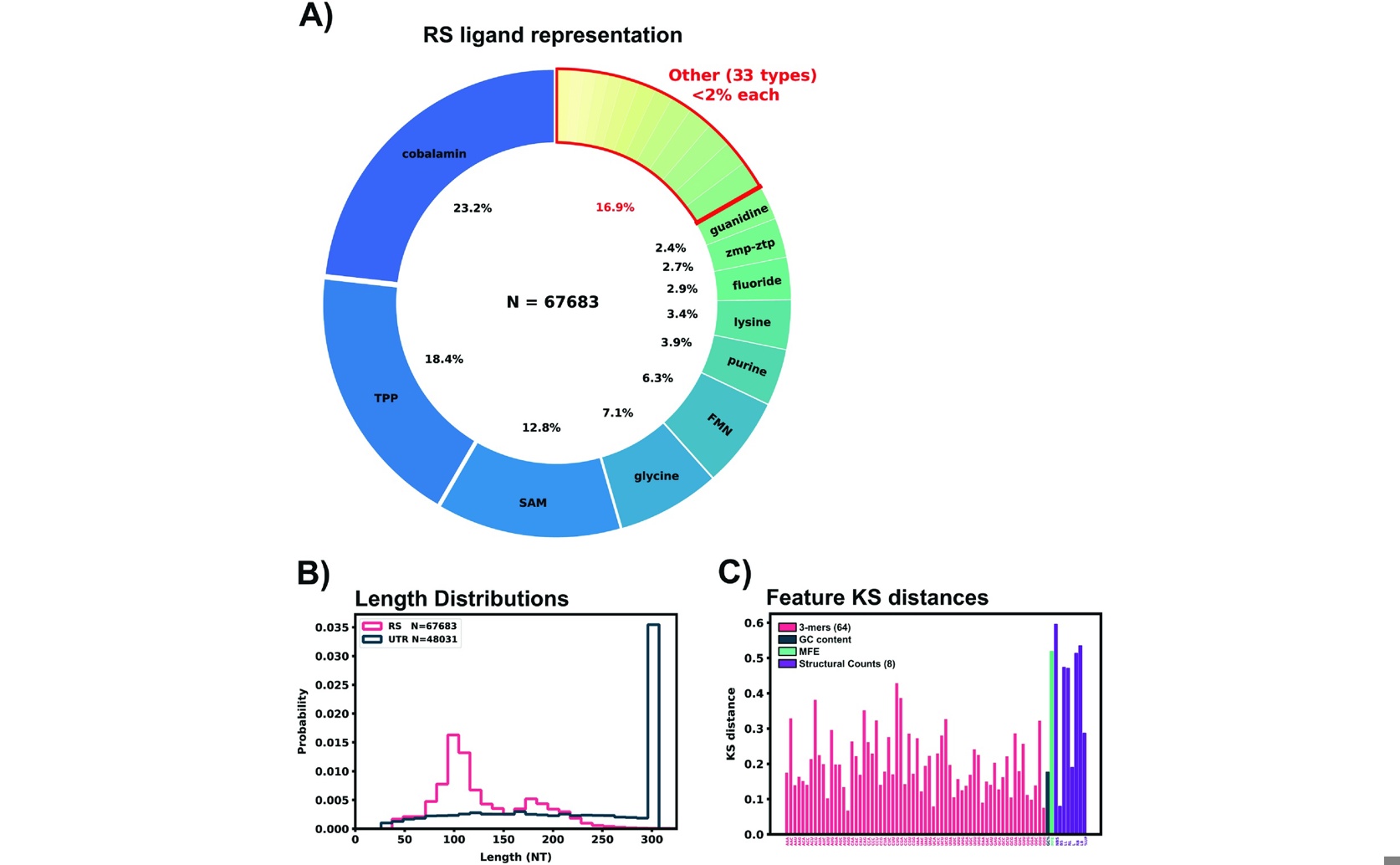
Analysis of the input data reveals that the known riboswitch (RS) and target human (Homo sapiens) 5'UTR datasets differ significantly in ligand diversity (a), sequence length (b), and other extracted features (c), establishing the distinct properties the machine learning model must learn from to identify potential human riboswitches.

Image adapted from: Raymond et al. / CC BY (Source)

Key Findings

  • Researchers at Colorado State University discovered possible riboswitch-like elements in human genes using advanced AI tools
  • They analyzed over 48,000 human gene sequences and identified 436 strong candidates that may help control gene activity
  • This breakthrough could lead to new insights into gene regulation and the development of targeted medical therapies
Riboswitches are specialized RNA structures that play a crucial role in regulating gene expression by responding to specific molecules within a cell. While extensively studied in bacteria and other simple organisms, riboswitches have not been identified in humans. This gap raises important questions about whether similar mechanisms exist in our complex cellular systems and how they might influence human biology. A recent study conducted by researchers at Colorado State University[1] aimed to explore the possibility of riboswitch-like elements in human cells. Building on the foundation of earlier research, such as the comprehensive review of riboswitch functions in bacteria[2], the need to find orthogonal regulatory systems in more complex organisms became apparent. Previous studies have highlighted the versatility of riboswitches in controlling gene expression in response to various ligands, including small metabolites and ions[2][3]. These findings suggested that similar regulatory mechanisms could potentially exist in humans, offering new avenues for understanding gene regulation and developing therapeutic strategies. The main challenge addressed by the Colorado State University study was the identification of potential riboswitch elements within the vast array of human mRNA sequences. To tackle this, the researchers utilized advanced machine learning techniques to analyze thousands of human mRNA 5’ untranslated region (UTR) sequences. Riboswitches typically reside in the 5’ UTRs of bacterial mRNAs, where they can influence the translation of downstream genes by changing their structure upon ligand binding[2]. By training classifiers on known riboswitch sequences obtained from RNAcentral, the team aimed to detect similar patterns in human mRNA sequences. The methodology involved compiling a large dataset of riboswitch sequences and categorizing them based on the type of ligand they interact with. These positive examples were then used to train 20 positive-unlabeled machine learning classifiers, which were designed to recognize both sequence and secondary structure features of riboswitches. The classifiers were tested through cross-validation, where subsets of ligand classes were withheld to ensure the models could accurately predict unseen data. Impressively, the classifiers achieved validation accuracies ranging from 75% to 99%, demonstrating their effectiveness in identifying potential riboswitch elements. Upon applying these classifiers to 48,031 human 5’UTR sequences from the UTRdb database, the researchers identified 1,533 sequences flagged by at least one classifier as potential riboswitches. Further analysis revealed that 436 of these sequences were consistently identified by all 20 classifiers, strengthening the likelihood that they may function as riboswitches in humans. These promising candidates were then mapped to the most similar known riboswitches from the positive dataset, providing valuable insights into their possible regulatory roles. This study not only highlights the potential existence of riboswitch-like mechanisms in humans but also provides a valuable resource for future research. The creation of an online database cataloging the identified 5’UTR sequences, their features, and their closest riboswitch matches serves as a foundation for experimental validation. Such efforts could lead to the discovery of new regulatory elements that influence human gene expression in response to various cellular and environmental signals. The implications of finding riboswitch-like elements in humans are significant. In synthetic biology and gene therapy, as discussed in previous research[3], the ability to harness RNA-based regulatory devices offers precise control over gene expression without the need for protein intermediaries. If similar mechanisms exist in humans, they could be targeted for therapeutic interventions, enabling more refined and responsive treatments for various diseases. Moreover, the study builds on the evolutionary perspective of riboswitches outlined in earlier work[4]. The discovery of riboswitch-like elements in humans could provide insights into the evolutionary conservation of RNA-based regulation, suggesting that such mechanisms are more widespread and fundamental than previously thought. This aligns with theories that some riboswitches may be remnants of ancient RNA-based regulatory systems that existed before proteins became the primary regulators of cellular processes[4]. In conclusion, the Colorado State University study represents a significant step towards uncovering potential riboswitch-like mechanisms in humans. By leveraging machine learning and extensive sequence analysis, the researchers have identified promising candidates that warrant further experimental investigation. This work not only bridges the gap between bacterial riboswitch research and human gene regulation but also opens up new possibilities for understanding and manipulating gene expression in more complex organisms.

BiotechGeneticsBiochem

References

Main Study

1) Identification of potential riboswitch elements in Homo sapiens mRNA 5’UTR sequences using positive-unlabeled machine learning

Published 24th April, 2025

https://doi.org/10.1371/journal.pone.0320282


Related Studies

2) Transcriptional Riboswitches Integrate Timescales for Bacterial Gene Expression Control.

https://doi.org/10.3389/fmolb.2020.607158


3) Synthetic Riboswitches: From Plug and Pray toward Plug and Play.

https://doi.org/10.1021/acs.biochem.6b01218


4) Discovering riboswitches: the past and the future.

https://doi.org/10.1016/j.tibs.2022.08.009


Related Articles

An unhandled error has occurred. Reload 🗙