Predicting Urban Monthly Sales of Electric Vehicles Using Advanced Models

Jim Crocker
24th April, 2025

Predicting Urban Monthly Sales of Electric Vehicles Using Advanced Models

The proposed predictive model's framework integrates the Whale Optimization Algorithm (WOA) to optimize the parameters of a Bidirectional Gated Recurrent Unit (BiGRU) network, thereby improving the accuracy of monthly new energy vehicle sales forecasts.

Image adapted from: Xiangtu Li / CC BY (Source)

Key Findings

  • In China, new energy vehicle sales are booming, reversing the overall decline in car sales
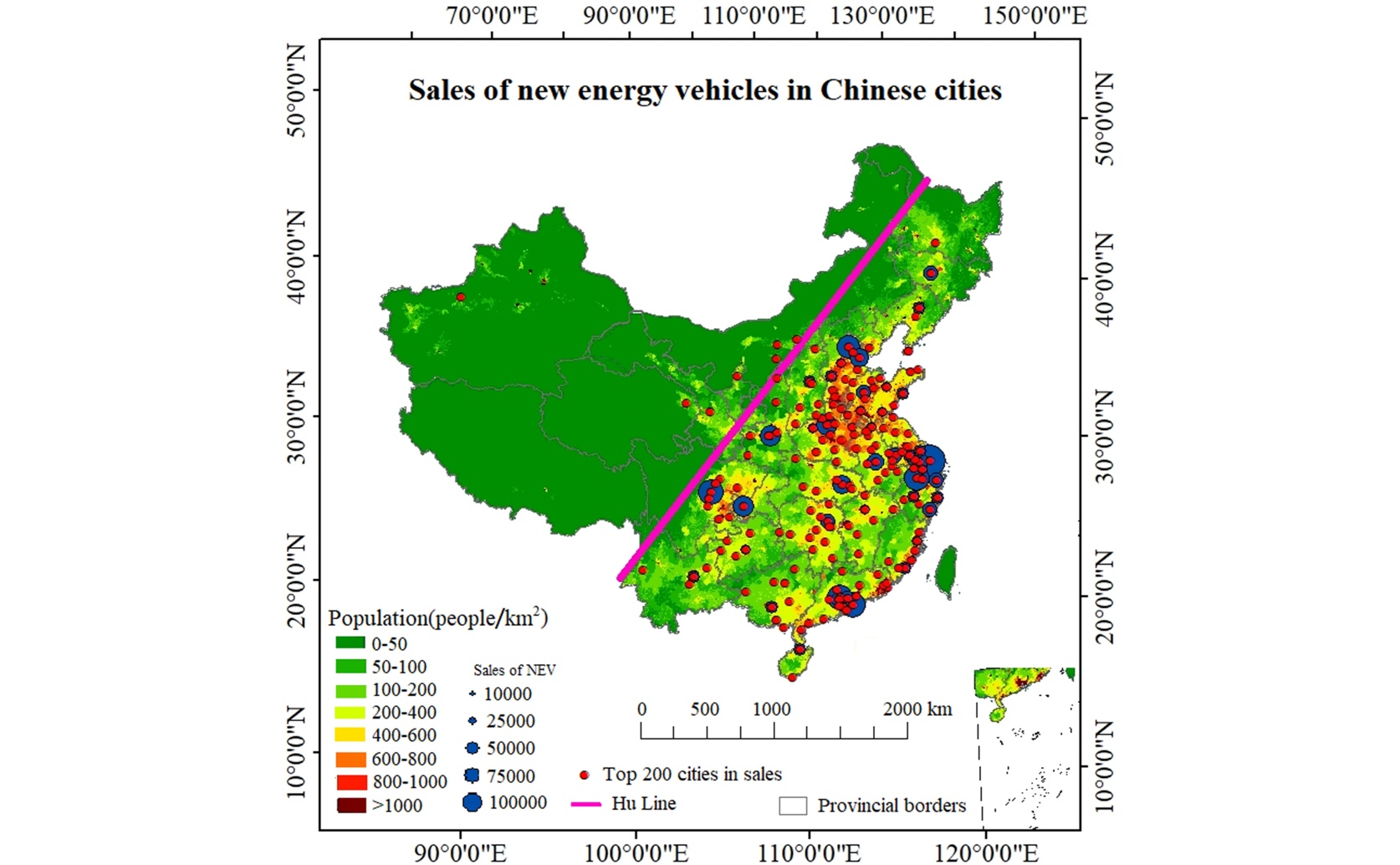
  • Most NEV sales are concentrated in four key regions: Pearl River Delta, Yangtze River Delta, Beijing-Tianjin-Hebei, and Chengdu-Chongqing
  • A new prediction model using the Whale Optimization Algorithm and BiGRU accurately forecasts NEV sales, aiding infrastructure planning
The rapid growth of new energy vehicles (NEVs) in China is transforming the automotive landscape and contributing to significant reductions in transportation emissions. Accurately predicting NEV sales in urban areas is crucial for effective infrastructure planning, such as the deployment of charging stations and ensuring a stable power grid. A recent study from Southeast University, China[1] addresses this need by developing an advanced prediction model for monthly NEV sales in Chinese cities. The study utilizes a spatiotemporal analysis of NEV sales data across various urban regions. It introduces the Whale Optimization Algorithm (WOA) to fine-tune the parameters of a Bidirectional Gated Recurrent Unit (BiGRU) model, creating a WOA-BiGRU-based model specifically tailored for forecasting NEV sales. This model was compared with another optimization technique, the Particle Swarm Optimization (PSO) algorithm, to evaluate its effectiveness. One of the key findings is that NEV sales are reversing the overall decline in automobile sales in China, highlighting a significant shift towards greener transportation options. The research identifies that cities with higher NEV sales are mainly located in four major economic regions: the Pearl River Delta, Yangtze River Delta, Beijing-Tianjin-Hebei region, and Chengdu-Chongqing. This concentration aligns with previous studies[2] that emphasized the importance of economic factors and regional development in the distribution of charging infrastructure. The study demonstrates that optimization algorithms like WOA can significantly enhance the accuracy of GRU models in predicting NEV sales at the city level. The WOA-BiGRU model achieved a Mean Absolute Error (MAE) of 3051.89, outperforming both the standalone BiGRU model and the PSO model by reducing the MAE by 526.18 and 104.72 respectively. This improvement is crucial for stakeholders who rely on precise sales forecasts to make informed decisions about infrastructure investments and policy-making. Incorporating earlier findings, the study builds on the understanding that economic growth has a substantial impact on the deployment of charging stations[2]. Additionally, it aligns with research indicating that population dynamics and regional characteristics influence NEV sales and infrastructure needs[2]. By integrating these factors into the prediction model, the study provides a more comprehensive approach to forecasting NEV sales. Furthermore, the use of advanced optimization techniques like WOA represents a significant methodological advancement. Prior research[3] has shown that optimized grey models can enhance the prediction accuracy for NEV production and sales. The current study extends this by applying similar principles to a GRU-based model, demonstrating that such algorithms are versatile and effective in different modeling frameworks. The results of this study have important implications for the NEV industry in China. Accurate sales predictions enable better planning for the construction and expansion of charging infrastructure, ensuring that the growth of NEVs is supported by adequate facilities. This, in turn, helps maintain a stable power grid load and contributes to the broader goal of reducing transportation emissions. As NEV adoption continues to rise, such predictive models will be invaluable for sustaining the momentum towards a greener and more sustainable transportation system. In summary, the WOA-BiGRU model developed by Southeast University offers a robust tool for forecasting NEV sales in Chinese cities. By leveraging optimization algorithms and incorporating regional economic and population factors, the study provides a detailed and accurate prediction framework. This advancement supports the strategic growth of the NEV market, the efficient deployment of necessary infrastructure, and the ongoing efforts to achieve low-carbon transportation in China.

EnvironmentSustainability

References

Main Study

1) A study on monthly sales forecasting of new energy vehicles in urban areas using the WOA-BiGRU model

Published 21st April, 2025

https://doi.org/10.1371/journal.pone.0320962


Related Studies

2) Research on the spatiotemporal evolution characteristics of China's charging stations.

https://doi.org/10.1016/j.scitotenv.2024.177239


3) An optimised grey buffer operator for forecasting the production and sales of new energy vehicles in China.

https://doi.org/10.1016/j.scitotenv.2019.135321


Related Articles

An unhandled error has occurred. Reload 🗙