How Cemented Backfill Strengthens Over Time: A New Model

Jim Crocker
1st April, 2025

How Cemented Backfill Strengthens Over Time: A New Model

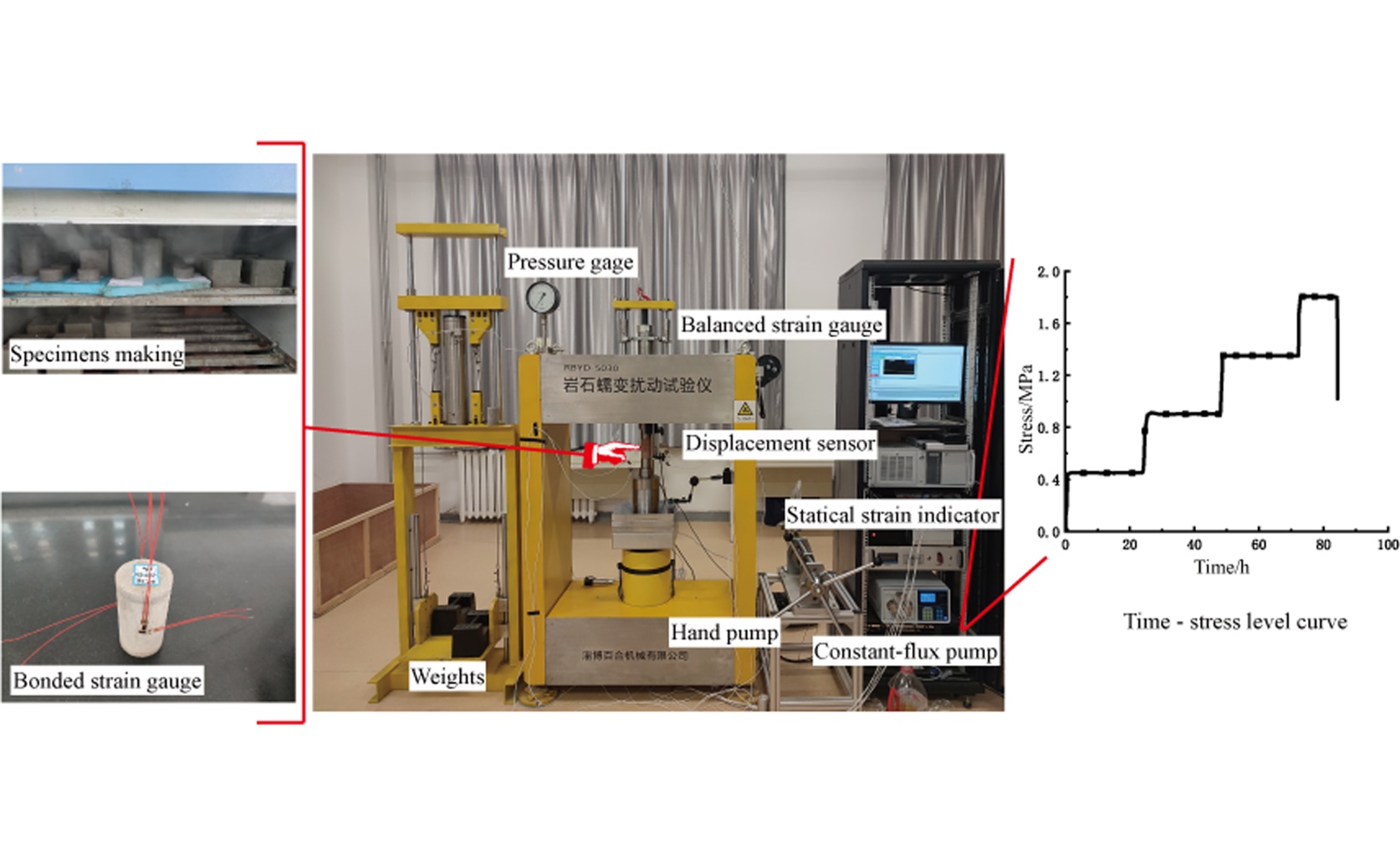
The process of creep experiment.

Image adapted from: Feng et al. / CC BY (Source)

Key Findings

  • Researchers in North China studied using cemented mining waste to stabilize underground quarries sustainably
  • They found that the material initially strengthens to prevent deformation but can weaken over time under constant pressure
  • A new predictive model was developed to better manage and ensure the long-term safety of mining operations
Maintaining the stability of mining operations while minimizing environmental impact is a crucial challenge in the mining industry. One effective approach to address this is the fill mining method, which aligns with the development concept of “green mountains are golden mountains,” emphasizing sustainable and environmentally friendly practices. A recent study by researchers at North China University of Science and Technology[1] investigates the long-term stability of cemented tailings backfill (CTB) used in underground quarries. This research is essential for ensuring the safety and sustainability of mining activities. Cemented tailings backfill involves using waste materials from mining operations mixed with cement to fill voids left after ore extraction. This method not only helps in managing mining waste but also supports the overlying rock layers, reducing the risk of surface collapse and environmental degradation. However, CTB is subjected to constant stress from the overlying rock, leading to creep—a time-dependent deformation that can compromise the stability of the backfill over time. The study conducted by North China University of Science and Technology focused on understanding the creep hardening-damage characteristics of CTB under uniaxial loading conditions. The researchers prepared samples with a cement-tailings ratio of 1:6 and subjected them to uniaxial grading loading creep tests. These tests simulated the long-term stresses experienced by the backfill in actual mining conditions. The maintenance age of the CTB was set at 28 days, allowing the cement to sufficiently bind the tailings. The findings revealed that the creep behavior of CTB is influenced by both hardening and damage effects. During the initial phase of creep, known as decelerated creep, hardening effects dominate, strengthening the backfill and slowing down deformation. As the creep progresses into the stabilized phase, both hardening and damage effects play significant roles. Eventually, in the accelerated creep stage, damage effects become predominant, leading to a weakening of the CTB and the accumulation of damage that results in a “Y” type damage pattern. This progression highlights the complex interplay between strengthening and degradation processes in the backfill material. To model these behaviors, the researchers developed a creep isomorphic model based on time-hardening theory. This model effectively characterizes the creep of CTB under different stress levels by introducing material constants K and r. The constant K influences the duration of the decelerated creep phase, while r affects the creep rate during the isokinetic creep stage. This model provides a more accurate representation of CTB behavior compared to traditional models, which often fail to capture the nonlinear stages of creep[2]. The study builds on previous research that has explored various aspects of backfill mining and material behavior. For instance, earlier work by Shen Kan Engineering and Technology Corporation[3] demonstrated that using cemented gangue backfill columns can mitigate environmental issues caused by mining waste. They found that deformation and instability in backfill columns are influenced by loading paths, a concept that aligns with the current study’s focus on how different stress stages affect CTB behavior. Additionally, research from Shandong University of Technology[4] utilized triaxial compaction creep tests to investigate creep characteristics of gangue backfill materials, further supporting the importance of understanding creep in backfill stability. Moreover, studies from the Green Mining Technology Innovation Center of Hebei Province[2] introduced advanced models to describe the creep and damage behavior of backfill materials under varying moisture conditions. These models, which incorporate fractional calculus and damage mechanics, complement the current study’s approach by providing a comprehensive framework for analyzing long-term backfill performance. Similarly, research from the Hebei Mining Safety Laboratory[5] emphasized the necessity of accurate creep damage models for ensuring the stability of mine structures, reinforcing the significance of developing reliable models like the one proposed in the main study. By integrating insights from these previous studies, the research at North China University of Science and Technology offers a robust model that captures the dual effects of hardening and damage in CTB. This advancement is crucial for designing effective backfill strategies that ensure the long-term stability of mining operations. Understanding the creep characteristics of CTB allows engineers to predict deformation patterns and implement reinforcement measures proactively, thereby enhancing the safety and sustainability of mines. The implications of this research extend beyond immediate mining applications. Effective backfill management contributes to reducing the environmental footprint of mining activities by utilizing waste materials and preventing surface subsidence. Additionally, reliable creep models support the development of safer mining infrastructure, protecting both workers and surrounding communities. In conclusion, the study conducted by North China University of Science and Technology significantly advances our understanding of the creep behavior of cemented tailings backfill. By developing a time-hardening-based creep isomorphic model, the research provides valuable tools for predicting and managing the long-term stability of backfill materials in mining operations. This work not only builds on existing research but also offers practical solutions for achieving sustainable and safe mining practices.

EnvironmentSustainability

References

Main Study

1) Study on creep hardening-damage constitutive model of cemented tailings backfill based on time-harden theory

Published 31st March, 2025

https://doi.org/10.1371/journal.pone.0319470


Related Studies

2) Study on Bingham fractional damage model of backfill material under different moisture content conditions.

https://doi.org/10.1371/journal.pone.0295254


3) Deformation and instability properties of cemented gangue backfill column under step-by-step load in constructional backfill mining.

https://doi.org/10.1007/s11356-021-15638-z


4) Research on the bearing creep characteristics and constitutive model of gangue filling body.

https://doi.org/10.1038/s41598-024-66271-y


5) A new shear creep damage model for rock masses after considering initial damage.

https://doi.org/10.1371/journal.pone.0280793


Related Articles

An unhandled error has occurred. Reload 🗙