Can Digital Governance Help Cities Save Energy and Reduce Emissions?

Jenn Hoskins
26th March, 2025

Can Digital Governance Help Cities Save Energy and Reduce Emissions?

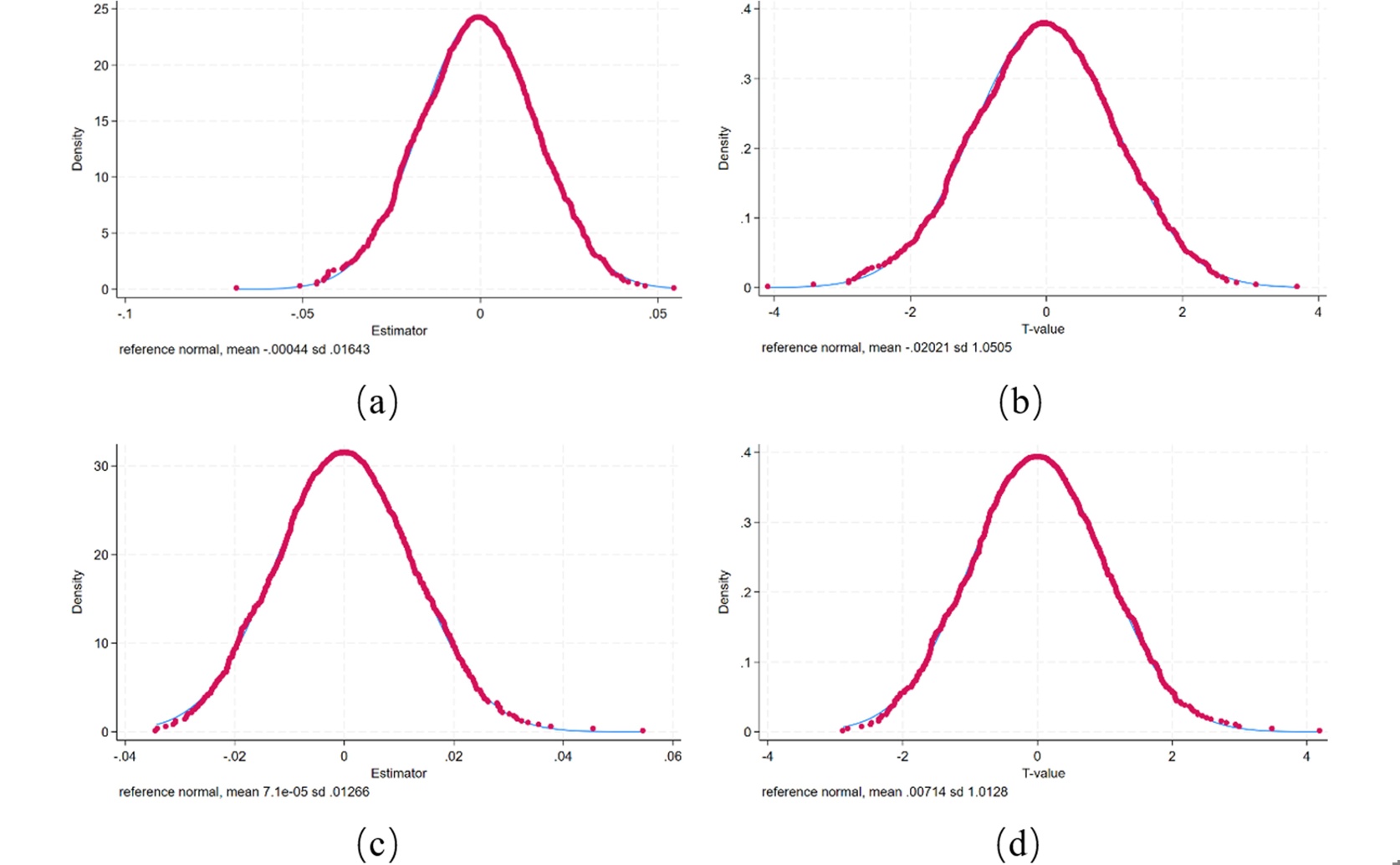
A placebo test confirms the study's main finding by showing that the policy's positive impact on urban energy efficiency (a, b) and carbon emission intensity (c, d) disappears when the policy is randomly assigned to cities, with the distribution of effects clustering around zero, indicating the result is not due to random chance.

Image adapted from: Zou et al. / CC BY (Source)

Key Findings

  • In China, digital government policies have significantly improved city energy efficiency and reduced carbon emissions
  • These advancements are driven by the adoption of green technologies and stricter environmental regulations
  • Larger and well-resourced cities benefit the most, showing greater improvements compared to smaller or less developed areas
The shift towards digital governance is increasingly recognized as a vital strategy for enhancing national governance systems and capacities. In China, the “National Pilot Policy of Information Benefiting the People” launched in 2014 serves as a cornerstone for this transformation, leveraging big data to improve public services and ensure their equitable distribution. A recent study conducted by researchers at Xi’an University of Science and Technology and Zhejiang Shuren University[1] investigates how this digital transformation influences urban energy conservation and emission reduction across 283 Chinese cities from 2006 to 2021. Energy conservation and emission reduction are critical for sustainable development, particularly as China strives to meet its dual carbon goals of peaking carbon emissions by 2030 and achieving carbon neutrality by 2060. Previous research has highlighted various approaches to reducing carbon emissions. For instance, one study examined the effects of renewable and non-renewable energy sources on China's carbon emissions, finding that renewable energy helps decrease pollution while reliance on fossil fuels continues to drive emissions higher[2]. Another study explored how different environmental regulations impact green economic transformation in Chinese cities, noting that certain policies can both promote and inhibit regional green initiatives[3]. Additionally, research on the energy-saving and emission-reduction (ESER) policy demonstrated its effectiveness in lowering carbon emissions through energy savings, structural optimization, and technological advancements[4]. Building on these insights, the study from Xi’an University of Science and Technology and Zhejiang Shuren University uses a rigorous difference-in-difference (DID) methodology to assess the causal effects of the digital governance policy. This method compares changes in energy conservation and emission levels in pilot cities that implemented the policy against those that did not, controlling for other variables that might influence the outcomes. The comprehensive dataset spans 15 years, providing a robust basis for analysis. The findings reveal that digital governance significantly promotes energy conservation and reduces emissions in urban areas. This positive impact is primarily achieved by fostering green technology innovation and enhancing environmental regulation. Digital tools enable more efficient monitoring and enforcement of environmental standards, while also facilitating the development and adoption of new green technologies. These improvements align with the "Dual-control" strategy emphasized in China's 14th Five-Year Plan, which seeks to limit energy consumption and reduce energy intensity relative to GDP[2]. Furthermore, the study uncovers that the benefits of digital governance are not uniform across all cities. Differences emerge based on regional characteristics, city size, and resource endowments. For example, metropolitan areas with greater technological infrastructure and financial resources tend to experience more pronounced improvements in energy efficiency and emission reductions. This heterogeneity echoes findings from earlier research, which indicated that the effectiveness of environmental regulations can vary significantly depending on local conditions and policy implementation[3][4]. The research also explores the transmission mechanisms through which digital governance exerts its effects. By promoting green technology innovation, digital governance encourages the development of cleaner production processes and energy-efficient technologies. Additionally, strengthened environmental regulation ensures that cities adhere to stricter emission standards, further driving down pollution levels. These mechanisms highlight the multifaceted role of digital tools in enhancing both the technological and regulatory frameworks necessary for sustainable urban development. Importantly, this study contributes to the broader understanding of how digital transformation can support environmental goals. While previous research has focused on specific policies or energy sources, the integration of digital governance offers a more comprehensive approach to tackling carbon emissions. By leveraging big data and digital platforms, governments can make more informed decisions, optimize resource allocation, and engage citizens more effectively in sustainability initiatives. In conclusion, the digital transformation of government, as exemplified by China's "National Pilot Policy of Information Benefiting the People," plays a crucial role in advancing urban energy conservation and emission reduction. The positive outcomes observed in the study underscore the importance of integrating digital tools with environmental policies to achieve long-term sustainability goals. As China continues to pursue its climate objectives, the insights from this research provide valuable guidance for policymakers and stakeholders aiming to foster a greener and more sustainable future.

EnvironmentSustainability

References

Main Study

1) Can digital governance promote urban energy conservation and emission reduction? A quasi-natural experiment based on “National Pilot Policy of Information Benefiting the People” in China

Published 25th March, 2025

https://doi.org/10.1371/journal.pone.0320007


Related Studies

2) Assessing the environmental impacts of renewable energy sources: A case study on air pollution and carbon emissions in China.

https://doi.org/10.1016/j.jenvman.2023.118525


3) Which works better? Comparing the multiple effects of heterogeneous environmental regulations on urban green economic transformation in China.

https://doi.org/10.1016/j.jenvman.2024.122124


4) China's efforts towards carbon neutrality: Does energy-saving and emission-reduction policy mitigate carbon emissions?

https://doi.org/10.1016/j.jenvman.2022.115286


Related Articles

An unhandled error has occurred. Reload 🗙