
COVID-19 Spread and Virus Evolution Analyzed with Public Data
Jenn Hoskins
23rd March, 2025


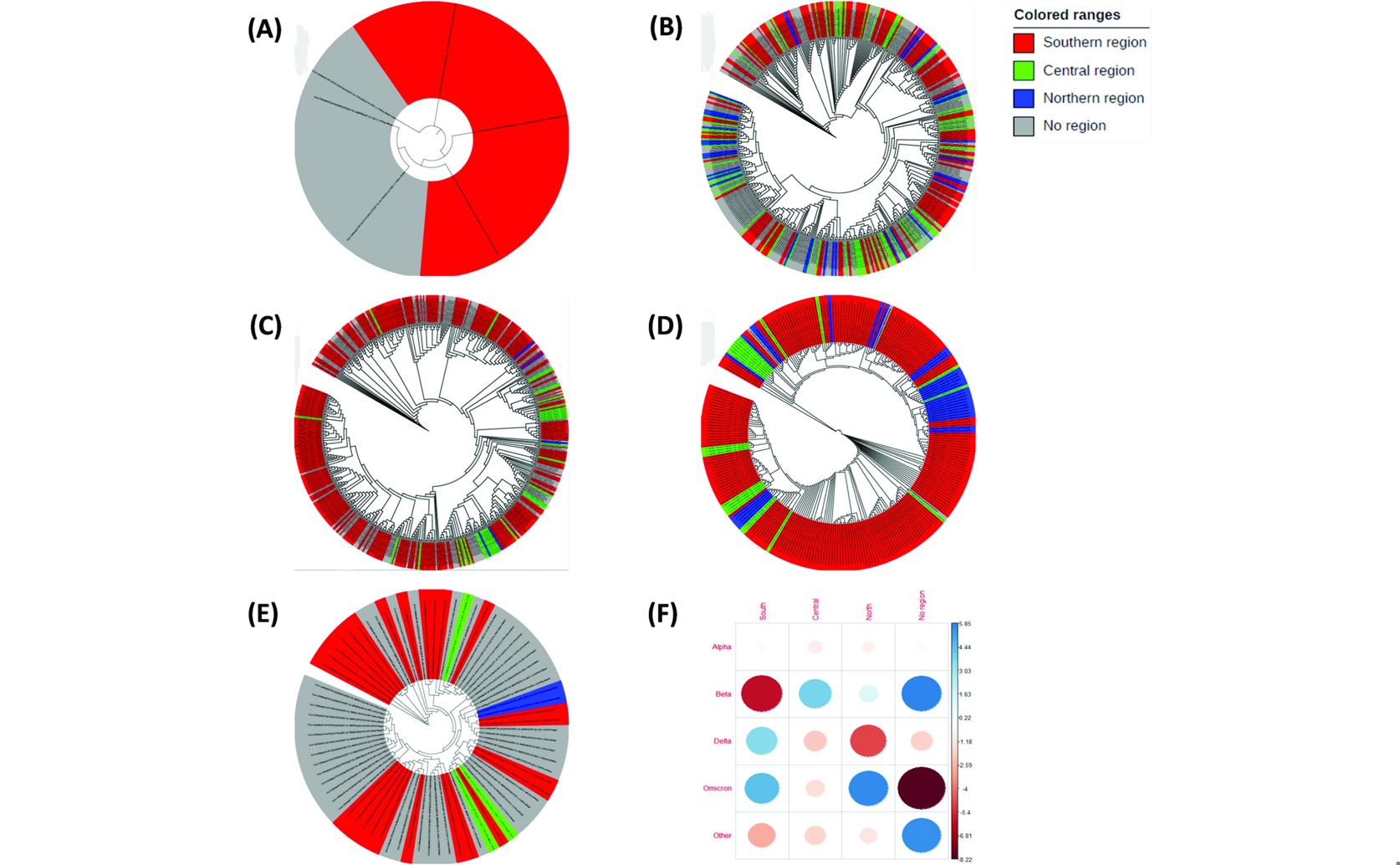
Phylogenetic trees for individual SARS-CoV-2 variants (Alpha in a, Beta in b, Delta in c, Omicron in d, Other in e) reveal that Alpha, Delta, and Omicron were predominantly detected in Malawi's southern region, while chi-square residual analysis (f) confirms significant regional heterogeneity, with Omicron disproportionately affecting the southern and northern regions and Beta having limited impact in the south.
Key Findings
- In Malawi, researchers identified five COVID-19 waves from April 2020 to October 2022, each driven by different virus variants
- The Delta variant caused more deaths, while the Omicron variant spread more easily but resulted in fewer fatalities
- Major cities like Lilongwe and Blantyre were more affected, highlighting the need for targeted health strategies in urban areas
References
Main Study
1) Epidemiological and phylogenetic analyses of public SARS-CoV-2 data from Malawi
Published 21st March, 2025
https://doi.org/10.1371/journal.pgph.0003943
Related Studies
2) Spatial temporal distribution of COVID-19 risk during the early phase of the pandemic in Malawi.
3) COVID-19 pandemic in Malawi: Did public sociopolitical events gatherings contribute to its first-wave local transmission?
4) TreeTime: Maximum-likelihood phylodynamic analysis.
Related Articles
 18th March, 2024 | Jim Crocker